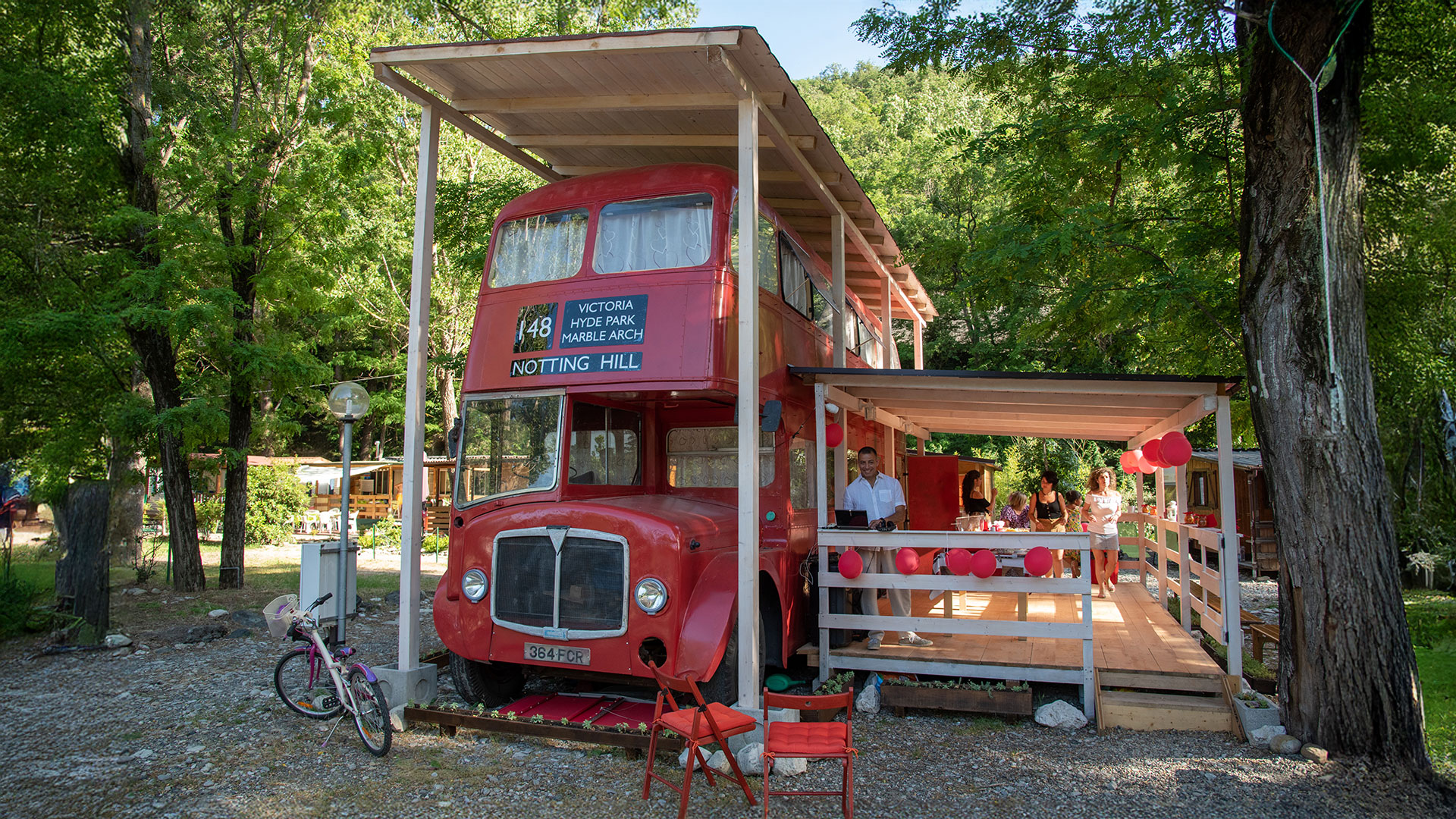

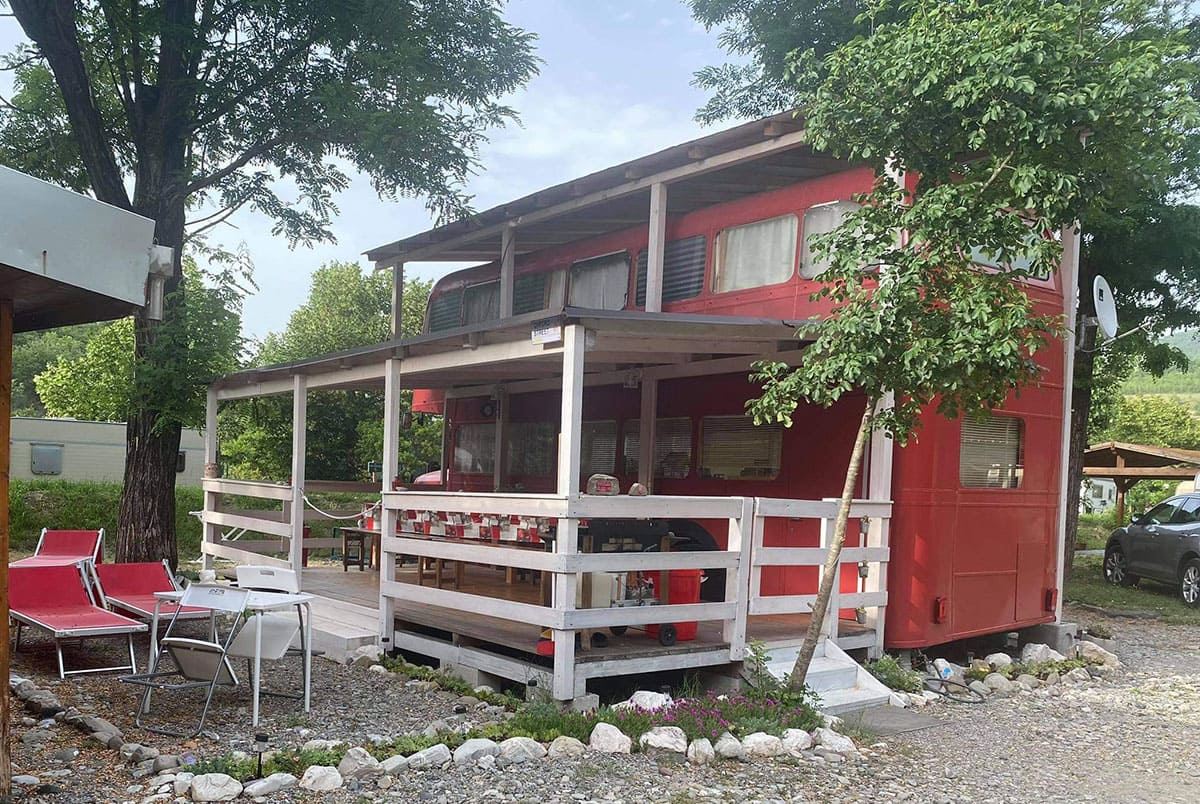
Nestled in the lush green hills of the Val Trebbia, just outside the historic village of Bobbio in northern Italy, stands something you’d never expect to find: a bright red, vintage London double-decker bus. It’s not a photo opportunity or a roadside attraction; it’s a fully renovated, livable space where we can sleep, cook, relax, and rediscover the joy of slowing down. This is the story of the London Bus di Ponte Barberino, a visionary project that combines British charm, Italian craftsmanship, and the growing trend of people wanting to get away.
An Unusual Idea in the Heart of Emilia-Romagna
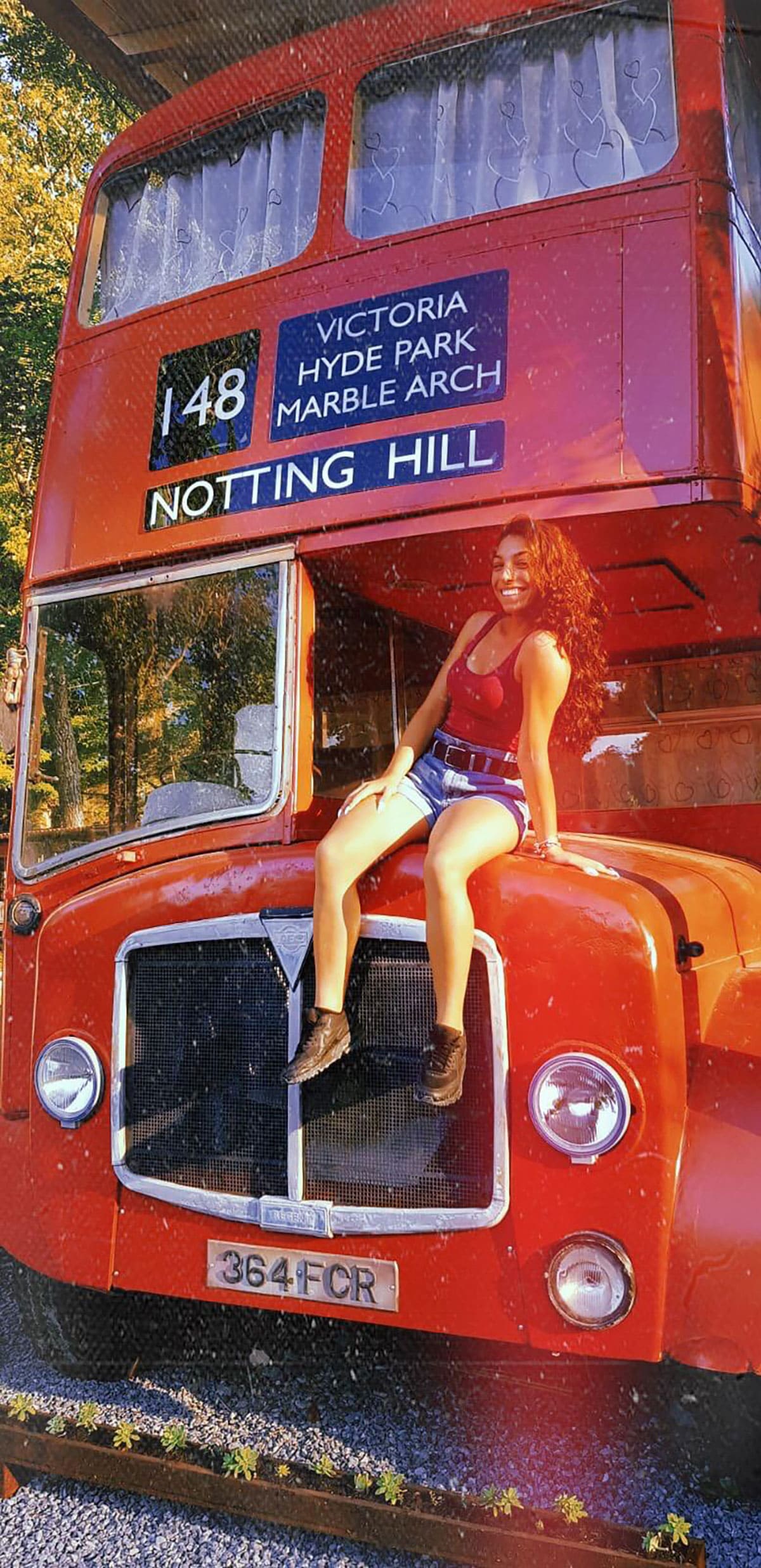
It all began in 2018, when Roberto “Bob” Marino, an Italian artisan with a passion for restoration and a penchant for the unusual, stumbled upon an online listing for an authentic London bus. The vehicle, a classic red double-decker still bearing signs of Route 148 to Notting Hill, had ended its public service years earlier and was resting in a dusty parking lot in southern Italy.
Where others saw rust, wear, and junk, Bob saw potential. Together with his wife, Silvia, and their two daughters, Martina and Mayla, he envisioned transforming this relic of urban transportation into a unique holiday accommodation. Their goal? To offer something magical and memorable at a family-run camping site, Ponte Barberino, nestled at the confluence of river, forest, and the rolling Apennine mountains.

The Logistics of Moving a 4.5-Meter-Tall Icon
Getting the bus to its final destination was an engineering feat in itself. The 8-meter-long, 4.5-meter-high vehicle had to be dismantled just enough to travel along narrow Italian roads and under medieval bridges. With the help of a specialized hauler, Bob arranged for the removal of the wheels and braking system. After several tense hours of transit, the bus finally arrived at Ponte Barberino, much to the amazement of locals, who initially thought it was a publicity stunt.


The family poured their weekends, holidays, and evenings into the project. What followed was a year of intense manual labor, design decisions, problem-solving, and community curiosity. What they created is nothing short of remarkable.
The Transformation: A Technical Breakdown
Converting a bus into a home is no simple task. It requires a deep understanding of materials, space optimization, insulation, and, in this case, weather resistance, as the vehicle will be parked outdoors year-round in a mountainous region.
Foundations and Structure
The bus was positioned on a concrete base to provide long-term stability. The floor was reinforced with steel brackets and new wooden panels, over which laminate flooring was installed. The entire structure was leveled and sealed to ensure no moisture or insects could enter.
Thermal Insulation and Interior Cladding
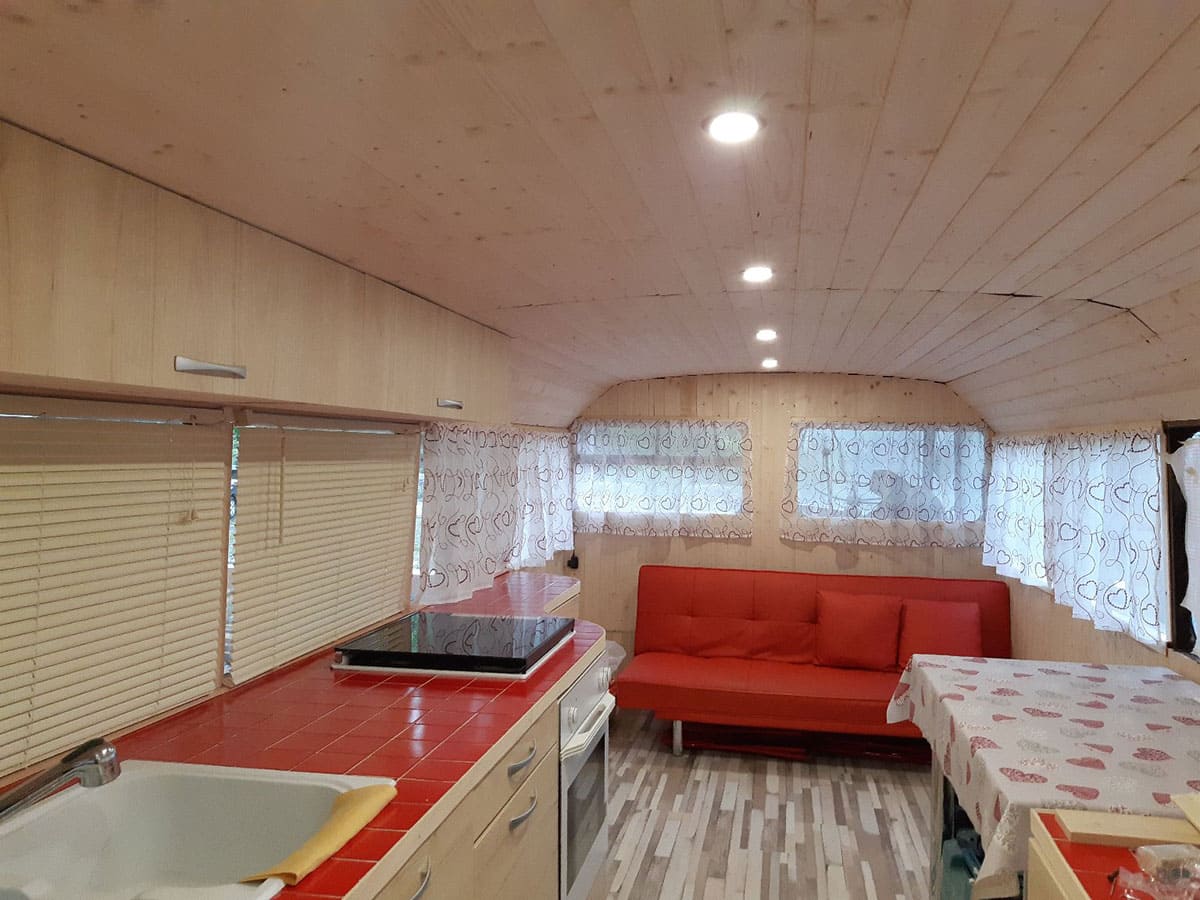
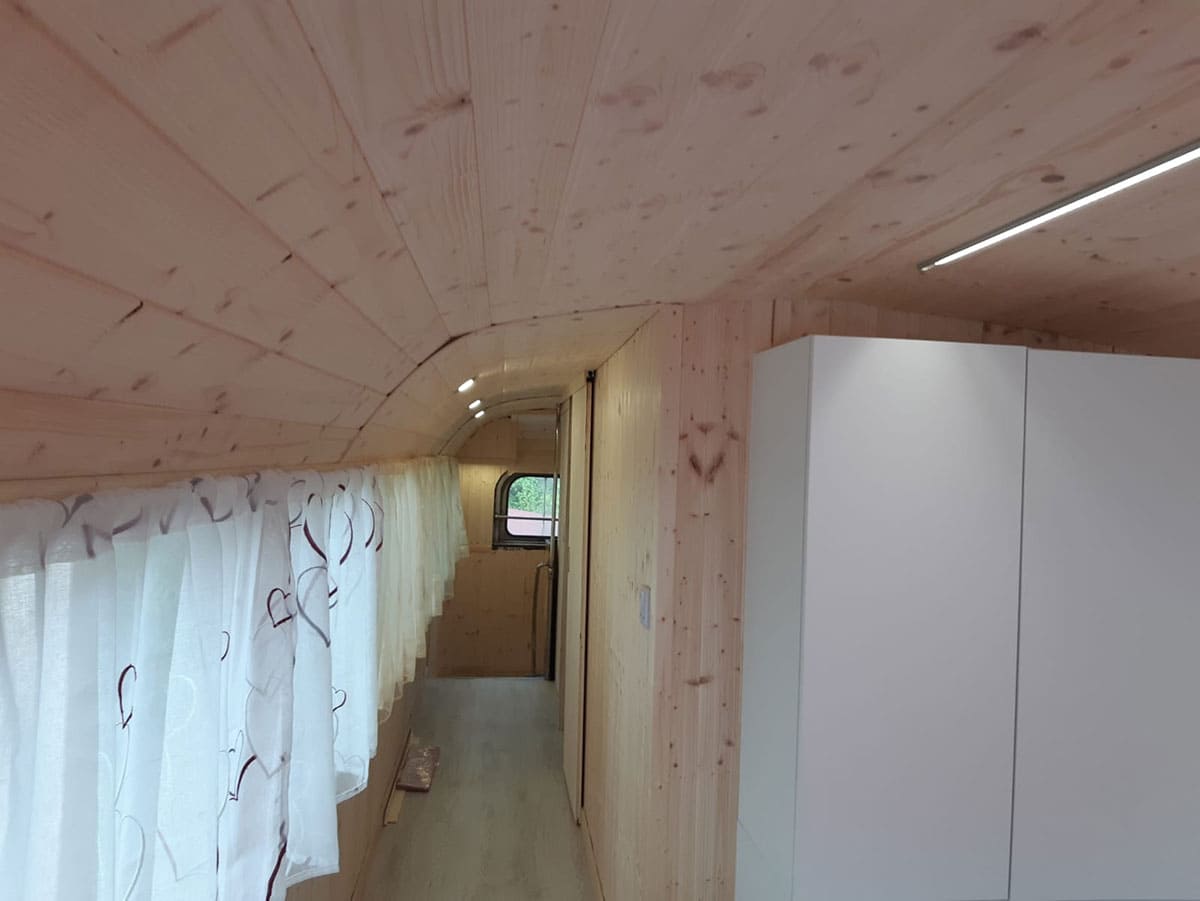
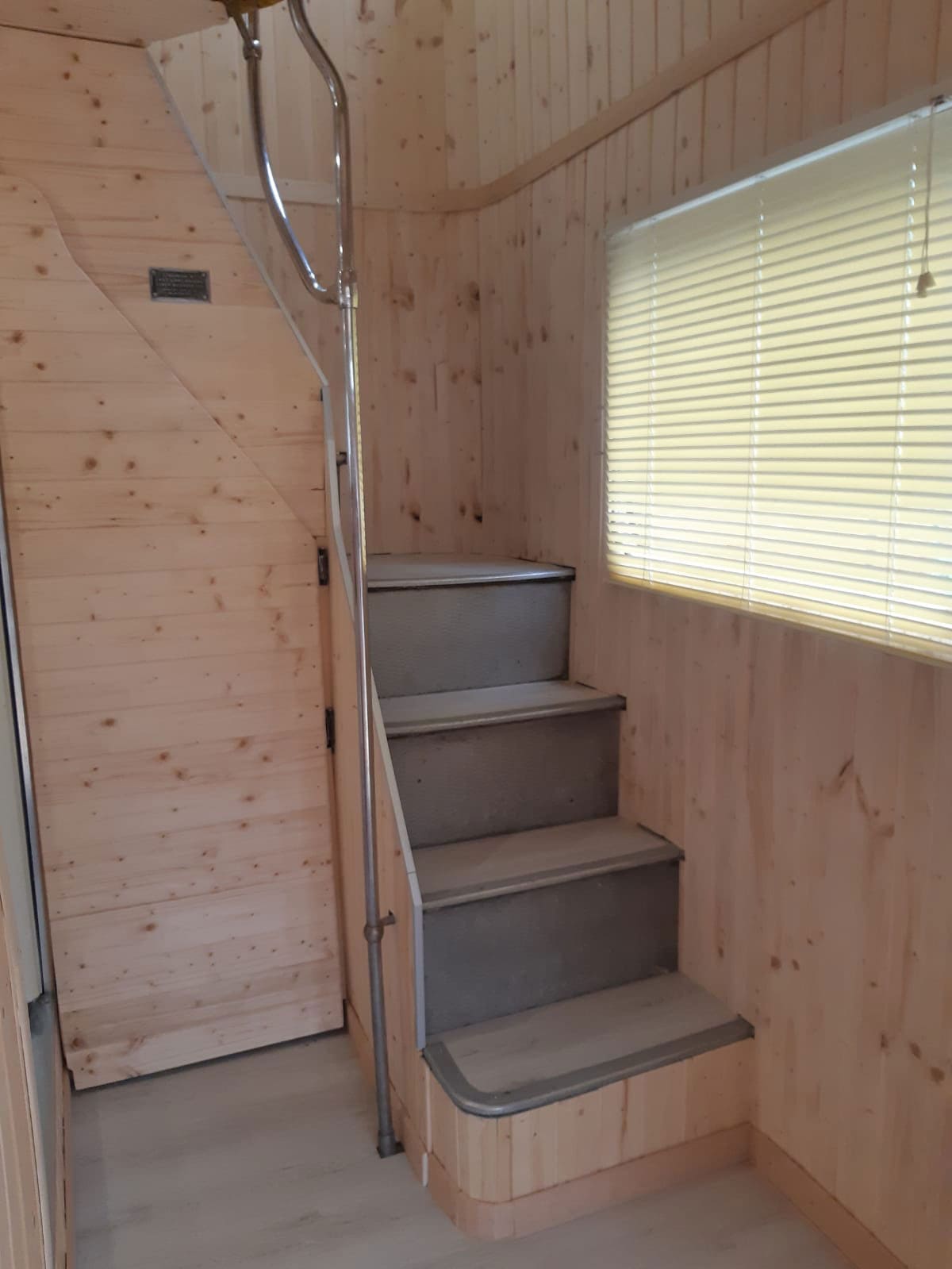
Given the regional climate, characterized by chilly winters and hot summers, insulation was essential for maintaining a comfortable indoor temperature. The team used sprayed polyurethane foam to line the interior cavity walls, covering them with locally sourced fir paneling for a warm, alpine aesthetic. The upper and lower decks were both treated with thermal barriers to maintain consistent internal temperatures.
Functional Layout
Being a two-story tall bus, there is more room to work with than in a regular bus. Here are some of the amenities.
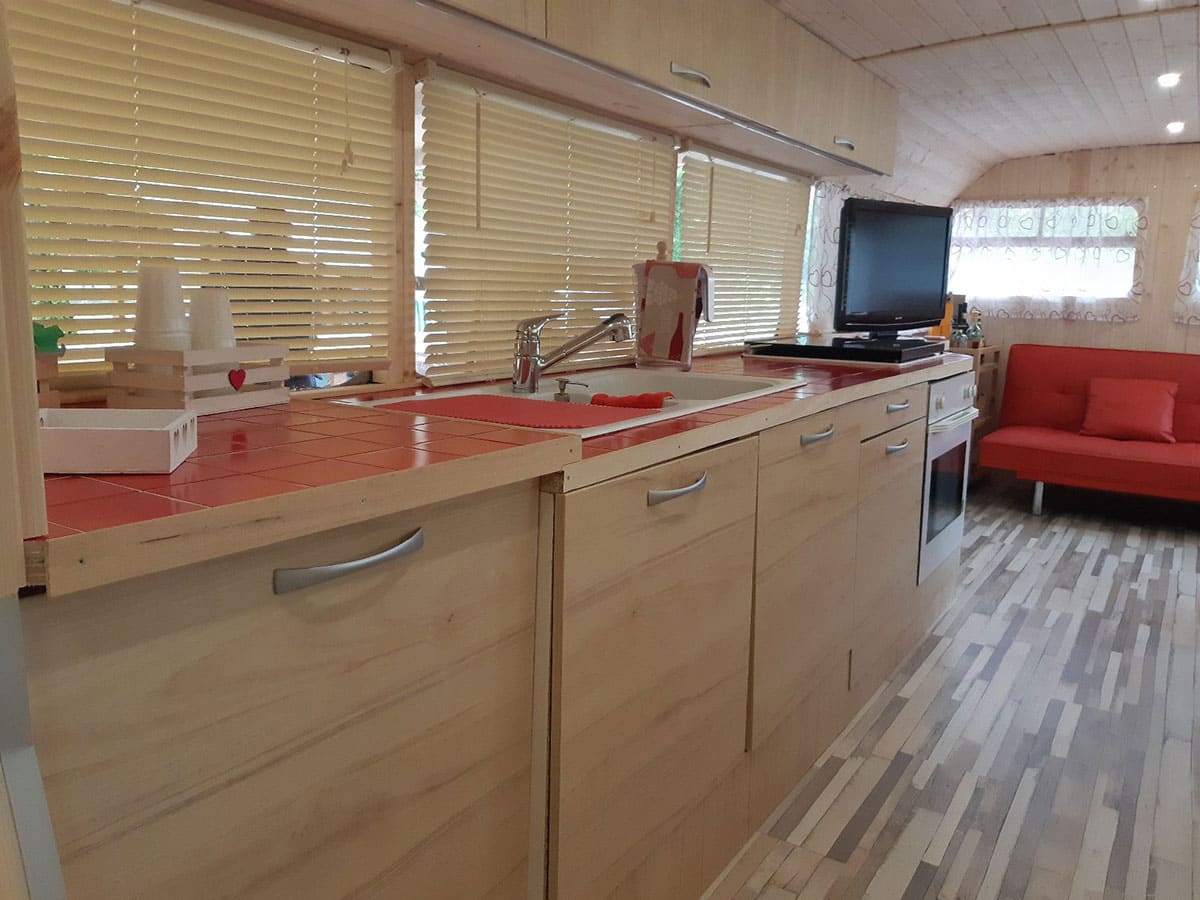
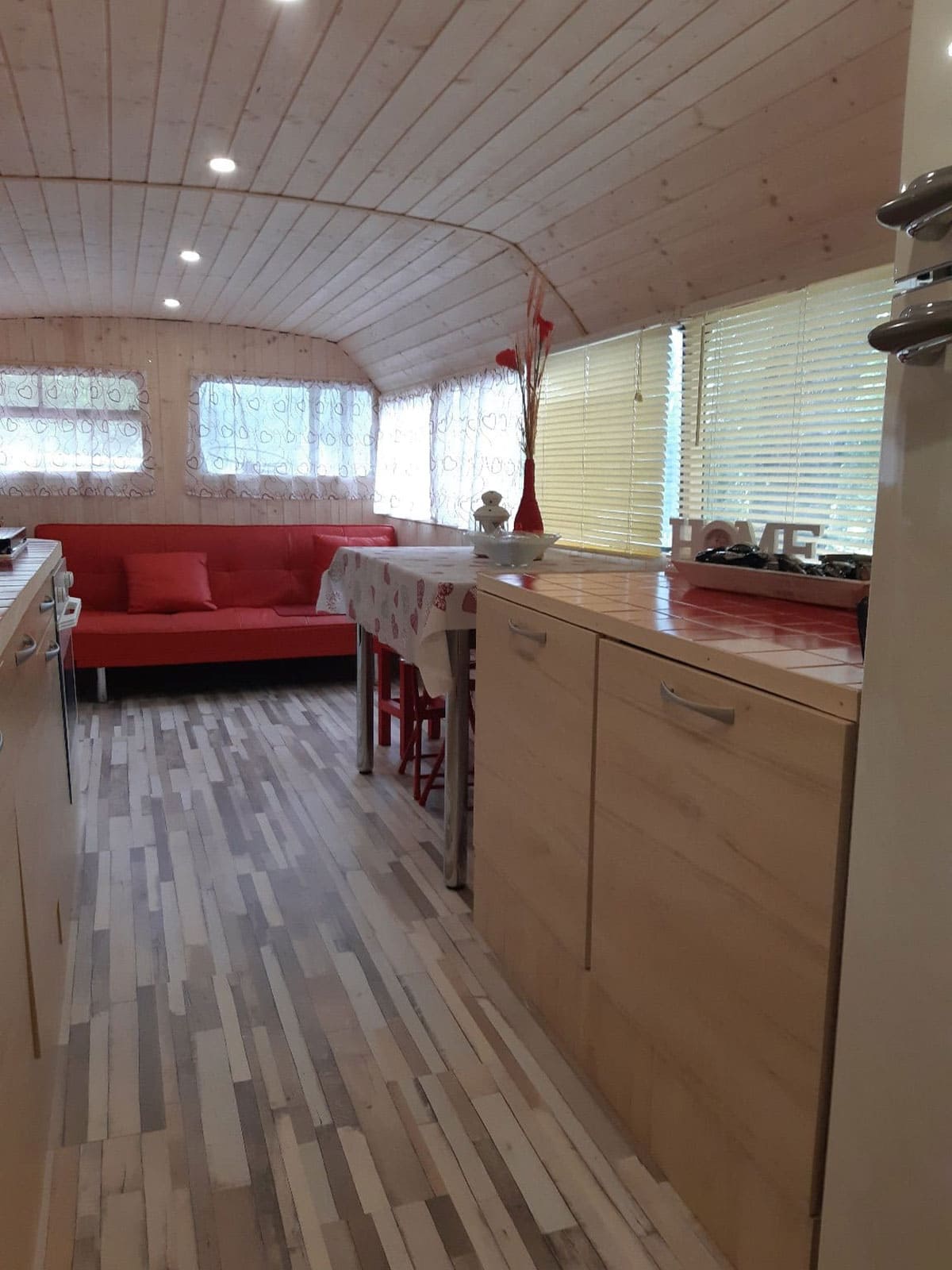
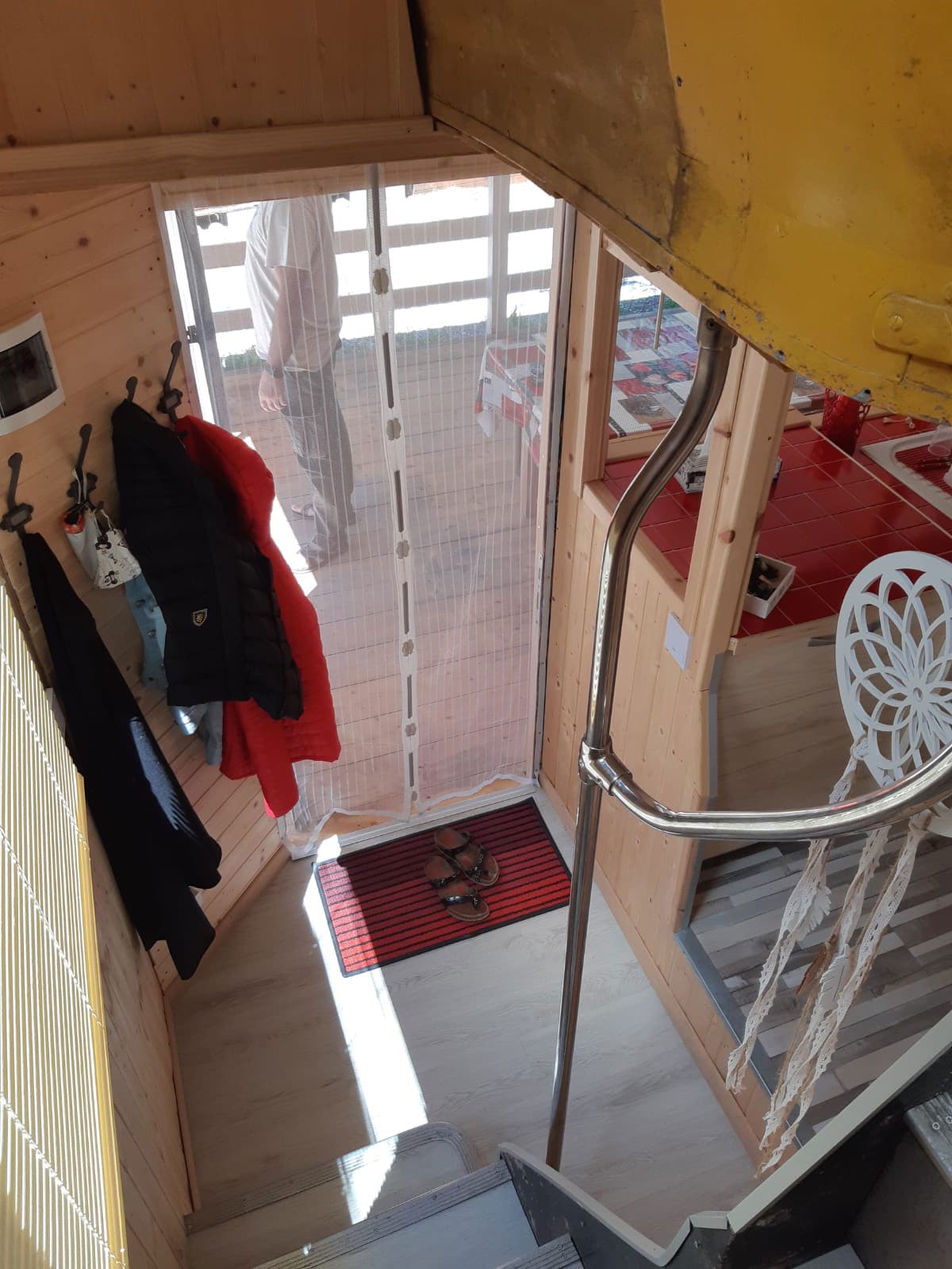
- Lower deck: Contains a fully equipped kitchenette with a stove, refrigerator, sink, and cupboards. There is also a dining and living area featuring a custom-built, foldable table and a small electric fireplace for added ambiance.
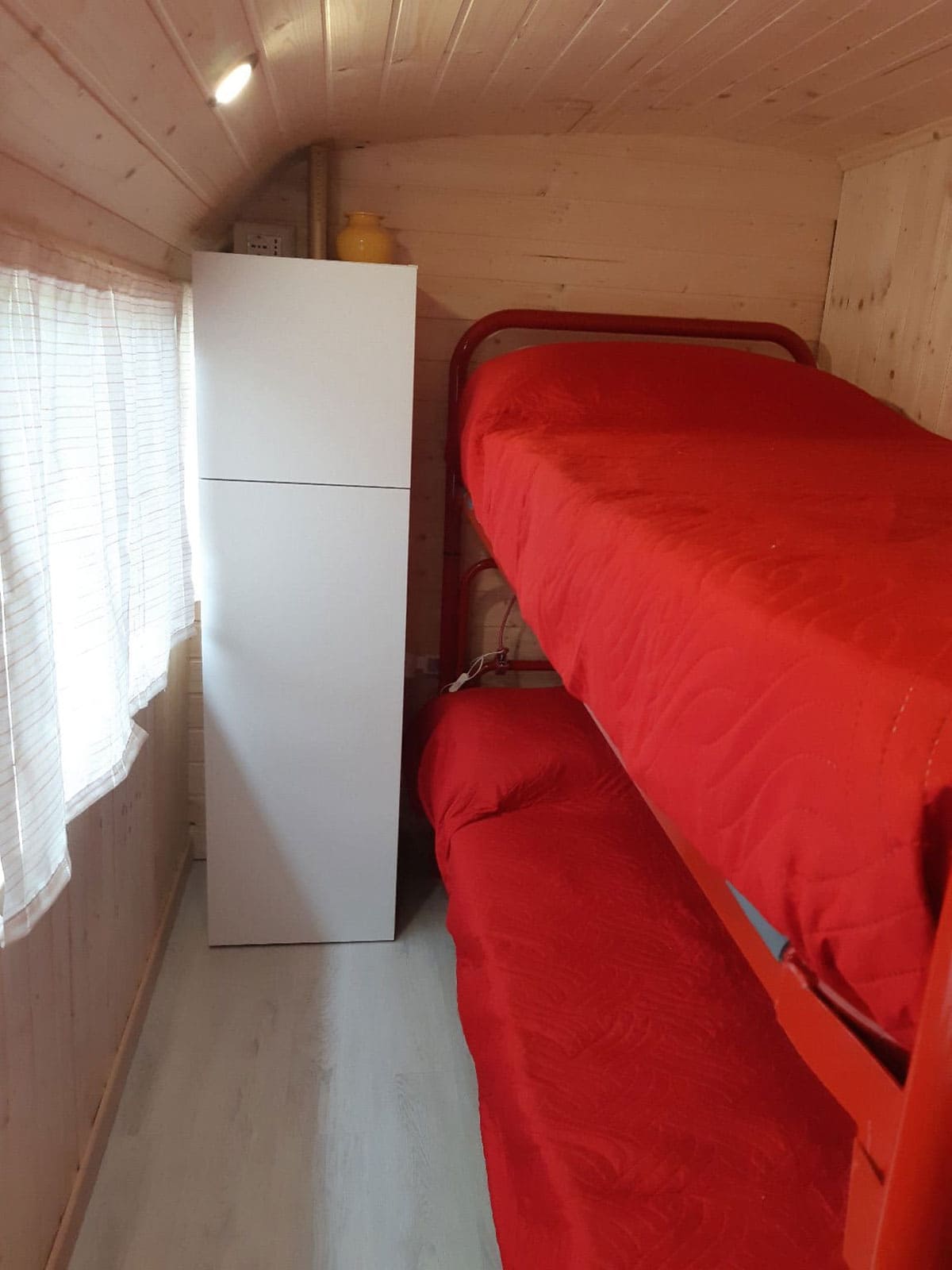
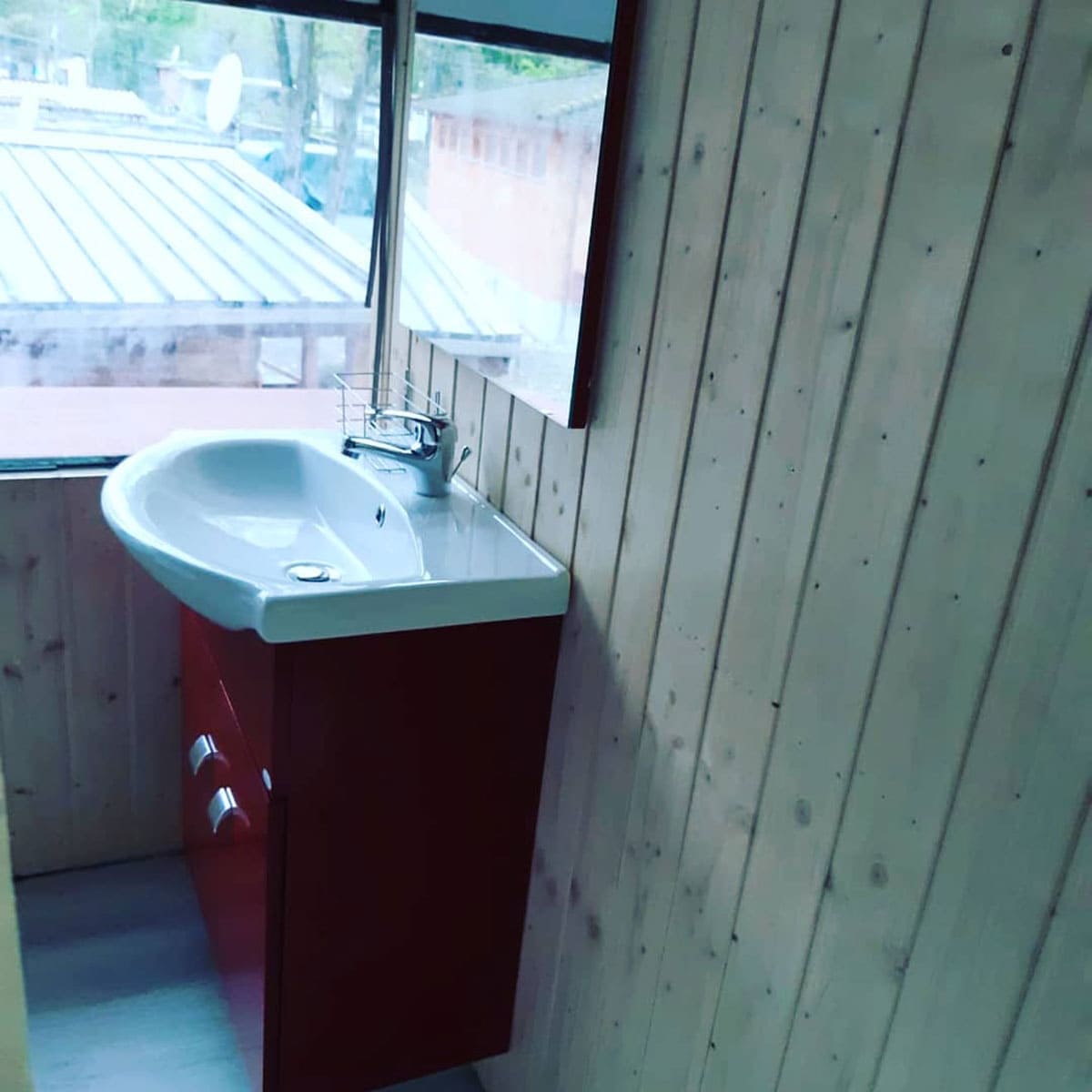
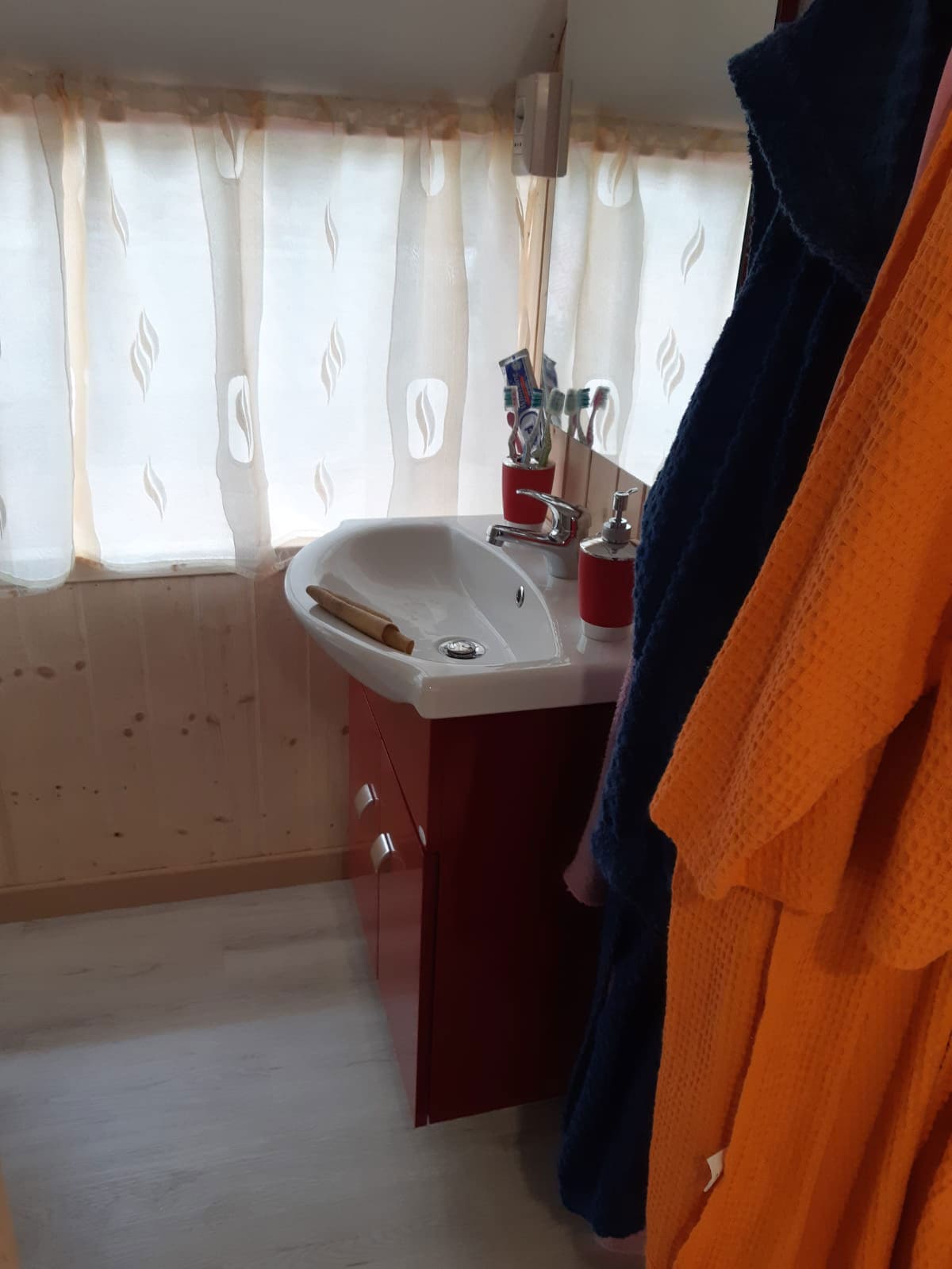
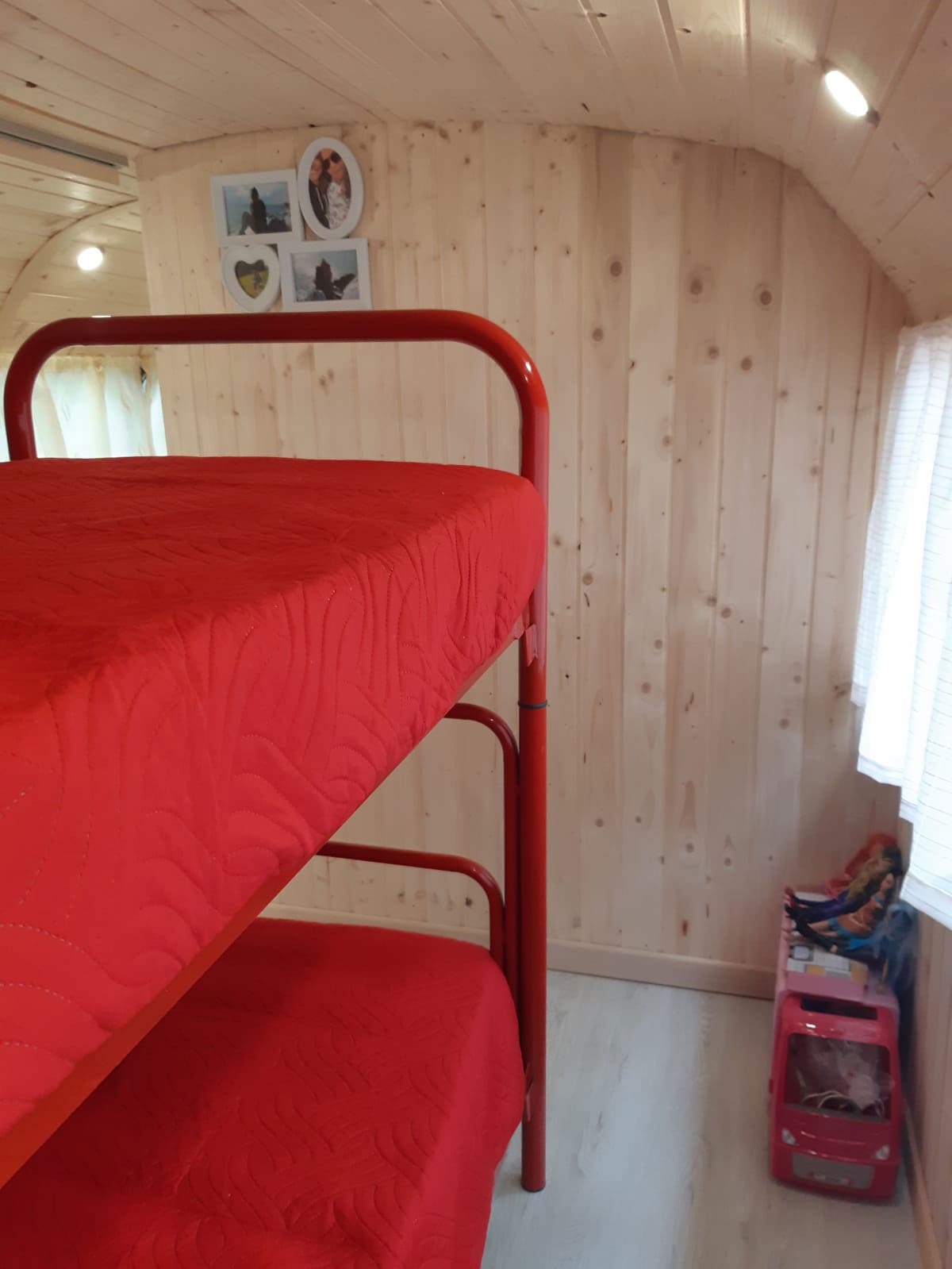
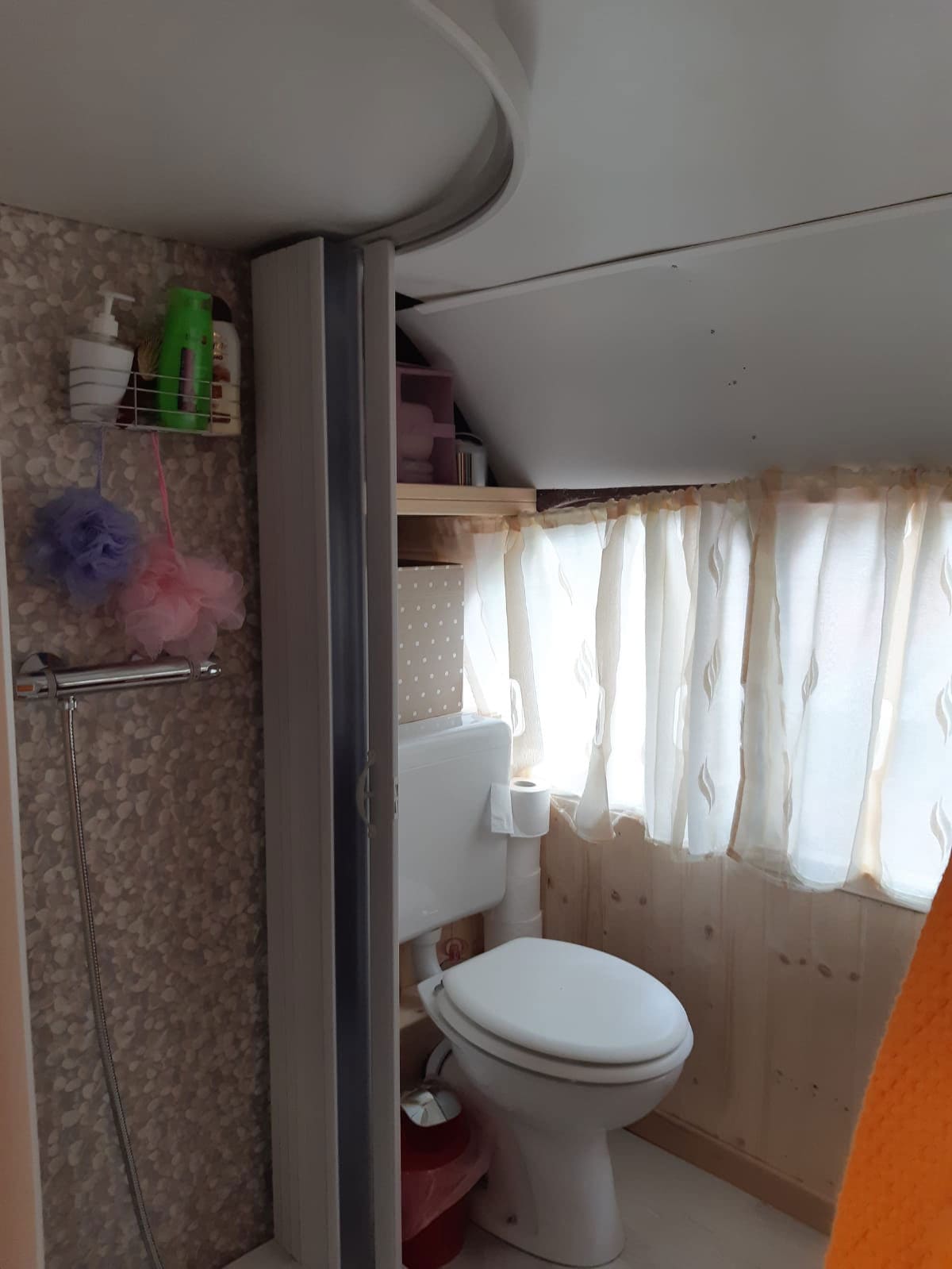
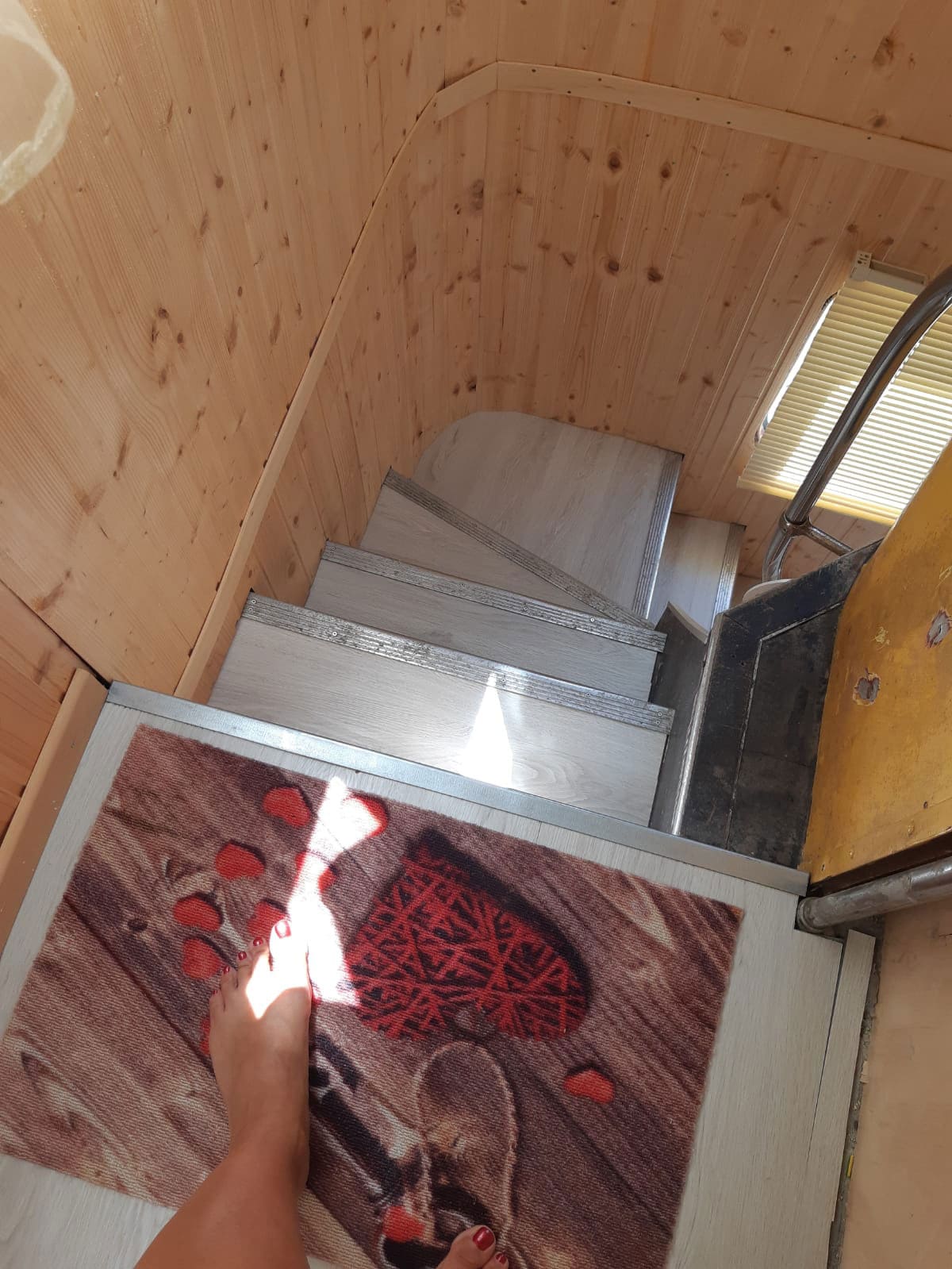
- Upper deck: Houses two bedrooms, one double, one with bunk beds, a compact bathroom with a dry toilet, and a cleverly installed sink and mirror setup.
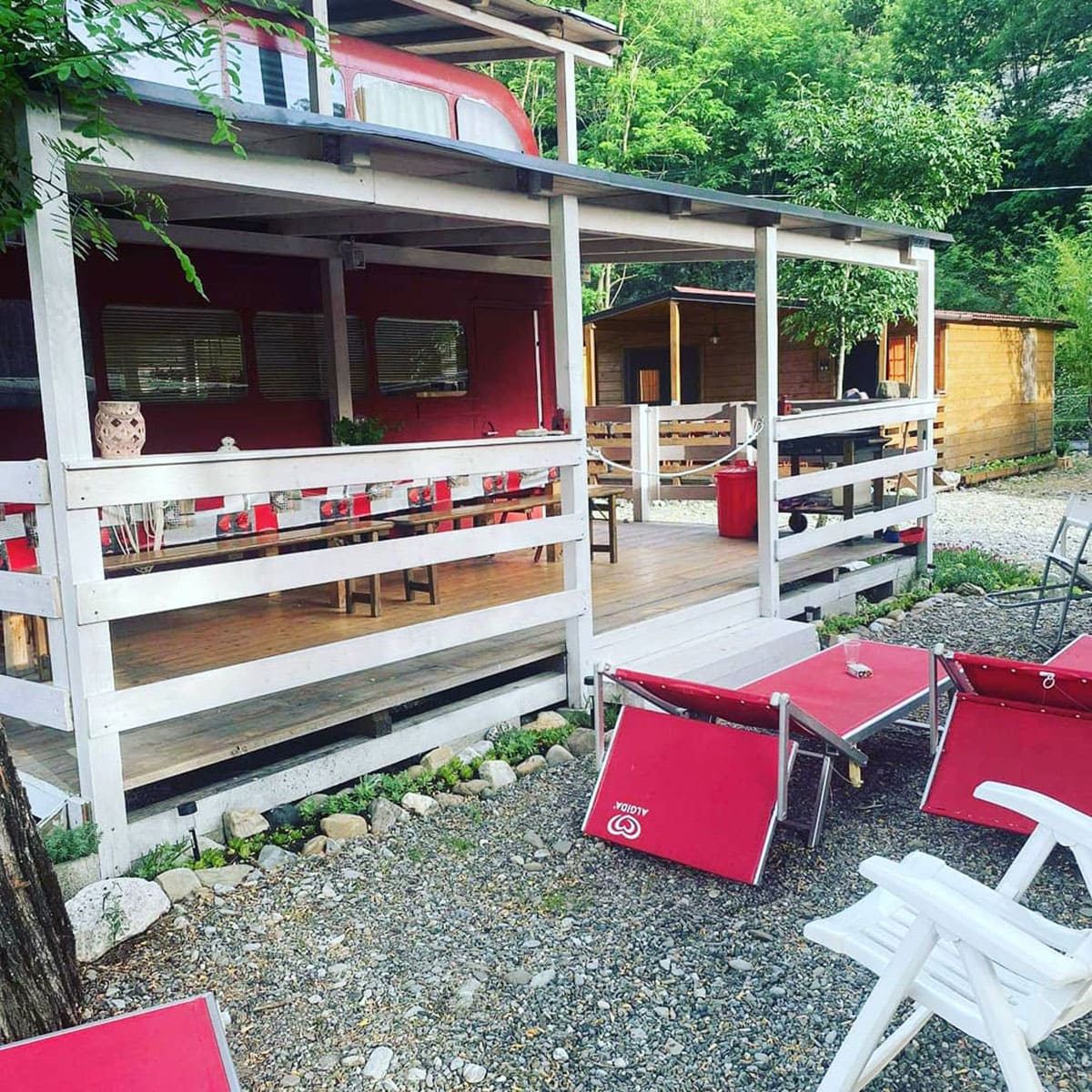
- Exterior: An outdoor wooden patio was constructed around the entrance, providing an ideal spot to enjoy morning coffee with views of the Trebbia River.
Electricity and Heating
The bus is powered by a hybrid energy system, connected to the campsite’s grid but partially powered by solar panels. For heating, the team repurposed old electric stovetop salvaged from abandoned buildings, in keeping with the project’s low-waste philosophy.
Aesthetic and Preservation
While the interior was fully remodeled, the exterior remains faithful to its British origins. The red paint, reapplied entirely by hand using rollers, replicates the classic livery of Transport for London. The original signage was restored, and authentic decals, such as “Notting Hill Gate,” were maintained intact, preserving the nostalgic aura.
A Media Sensation in Italy and Beyond
Since its inauguration in May 2019, the London Bus has attracted the attention of bloggers, journalists, and media outlets across Italy. It has been featured on major travel websites (Il Turista, Viaggiamo, CamperLife), mentioned on national radio (Radio Deejay), and even showcased on national television (I Fatti Vostri on Rai 2).
Social media platforms have amplified their reach, with influencers, travel enthusiasts, and photographers flocking to Bobbio to get a glimpse of the bus.
Why This Bus Is More Than a Gimmick
The project resonates on multiple levels:
- Cultural hybridization: A London bus in Italy is unexpected, delightful, and symbolic of how travel connects places and people.
- Eco-conscious design: Reuse of materials, upcycling of a vehicle destined for the scrapyard, and sustainable operation make this a green tourism initiative.
- Family values: The fact that it was restored entirely by a family, during weekends and holidays, lends it heart and authenticity.
- Tourism evolution: Travelers are increasingly seeking “experiences,” not just accommodations. This bus offers both.
The Future of Alternative Stays
Roberto Marino is already thinking ahead. Inspired by the success of the London Bus, he’s considering other forms of mobile or decommissioned transport, such as a vintage airplane fuselage or an old train carriage, as the base for future builds. His vision? To create a thematic village of unconventional accommodations within nature, where each space tells a story.
Meanwhile, the London Bus stands as a one-of-a-kind example of what can happen when imagination meets dedication.
Location: Ponte Barberino, Località Mezzano Scotti, Bobbio (PC), Italy
Website: www.londonbuspontebarberino.it
Instagram: https://www.instagram.com/londonbusitaly
Facebook: https://www.facebook.com/Londonbusitaly
Conclusion: A Rolling Dream, Now at Rest
What started as a quirky dream is now a working, living, breathing piece of art and hospitality. The London Bus di Ponte Barberino is not just a story of renovation, but of regeneration: of ideas, objects, and the way we experience travel.
Take a virtual tour of this bus here: https://www.londonbuspontebarberino.it/tour-virtuale/
About the bus
The AEC Regent V was a front-engine double-decker bus produced by the Associated Equipment Company between 1954 and 1969. This model was the latest in the Regent double-decker bus range produced by AEC and was built as a successor to the AEC Regent III.
The Regent V retained the front design of AEC vehicles, featuring the typical hidden radiator. Either the AEC engine or the Gardner 6LW was used as the engine, while the transmission was manual synchronized or of the AEC Monocontrol semi-automatic or fully automatic type.
The 24V electrical system uses four 6V lead-acid batteries mounted under four of the seats downstairs. The vehicle was equipped with an alternator with a new CAV power supply.
The brakes are operated directly by the air, with a 2-cylinder air compressor mounted under the floor, driven by a belt from the gearbox input shaft. Both the compressor and the combined brake unit, as well as the air tank, were manufactured by Westinghouse. The brake lights are operated by a mercury inertia switch, which illuminates the brake lights when it detects a decrease in vehicle speed.
The fuel tank capacity is 35 gallons. This provided the vehicle with a range of approximately 255 miles in service and a range of approximately 315 miles, at 9 MPG in current use.
AEC Regent V
Double-Decker Bus Specifications
| Specification | Details |
|---|---|
| Bus Specifications | |
| Chassis Number | 2D3RA1420 |
| Year of Manufacture | 1963 |
| Manufacturer | AEC (Associated Equipment Company) |
| Model | Regent V |
| Configuration | Double-Decker, 2-Axle Rigid Body |
| General Characteristics | |
| Chassis Type | Ladder-frame, rigid |
| Body Material | Aluminum or riveted steel panels |
| Original Bodybuilders | Park Royal, Weymann, East Lancs |
| Passenger Capacity | Approximately 72 (H40/32F) 40 upper deck, 32 lower deck |
| Overall Length | ~8.2 m (~27 feet) to 9.1 m depending on version |
| Height | 4.3 m (~14 feet) |
| Engine & Transmission | |
| Engine | AEC AV590 Diesel, 6-cylinder inline, 9.6 liters |
| Power Output | 125-135 BHP |
| Transmission Options | • Synchromesh manual gearbox • AEC Monocontrol semi-automatic gearbox |
| Drive | Rear-wheel drive (RWD) |
| Steering | Power-assisted (on later models) |
| Brakes | Air or hydraulic, depending on specification |
| Historical Notes | |
| Production Period | 1959 to 1967 |
| Usage | Used extensively by municipal and regional bus operators in the UK |
| Notable Features | Popular for its robustness and adaptability for post-service conversion (e.g., motorhomes, promotional vehicles) |
| Chassis Significance | Chassis 2D3RA1420 is representative of early-1960s British double-deckers |
| Restoration & Heritage Use | |
| Restoration Potential | Ideal for preservation, conversion, or display purposes |
| Corrosion Resistance | Aluminum body construction makes it highly resistant to rust |
| Historical Authentication |
AEC Society (UK) Leyland Society |
Epilog
Nothing worth doing is easy. We, too, have encountered several obstacles along the way, but we do not regret any of them. During our journey, we put our skills to the test in the real world. Now we can leverage all this experience. Silvia and Bob, a couple in life, had this incredible project to transform this London bus into their summer residence.
Let’s start from the beginning. After venturing into the construction of three wooden bungalows at the Ponte Barberino campsite in Bobbio, Val Trebbia, I began to get involved in a whirlwind of what was to be our next challenge, obviously bigger and more complicated: to build a permanent camper on a mechanical chassis derived from an original vehicle intended for road travel.
The choice of the right vehicle begins with searching for a bus, and the first option was an old model from the Milan transport company. However, the idea was soon abandoned once we discovered these vehicles cannot be sold to private individuals.
The web, as always now in everyone’s life, helped me in the search for an alternative solution, alowing me to find an incredible and very rare (in Italy) London double-decker Layland Regent V bus, in the province of Caserta in the hands of a private individual who urgently needed to sell it.
A short negotiation, and the battered bus, fortunately not rusty since it is built of aluminum, becomes our property. The emotion reaches adrenaline levels, but then the rationality imposes a profound reflection on how to bring to the final destination a “beast” 4.50 meters high and 8 meters long.
The solution was to disassemble the wheels and brakes from the axles, thereby not exceeding the legal size limit for road travel, which was only possible after finding a transportation company capable of handling such an exceptional load. This was the most complicated part of the entire project.
In the autumn of 2018, the bus arrived at its final location, and restoration work began. This was an enormous effort, involving the whole family, including Roberto, his wife Silvia, and their daughters Martina and Mayla, as well as a friend, Claudio, who camps nearby on weekends.
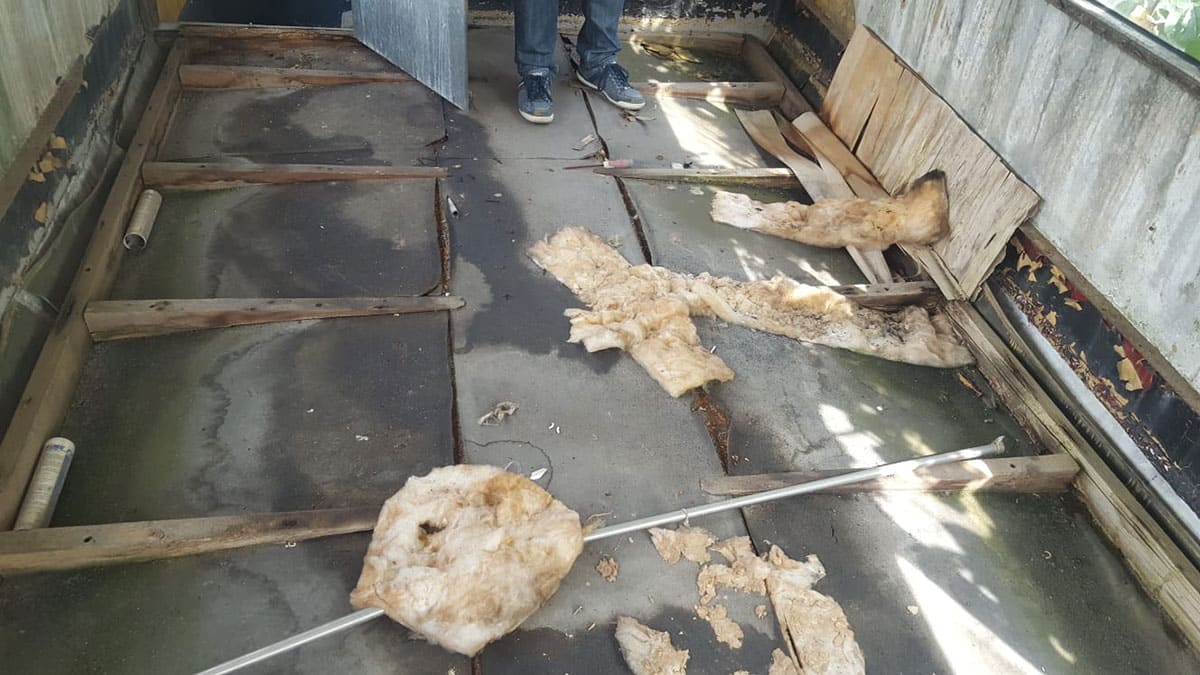
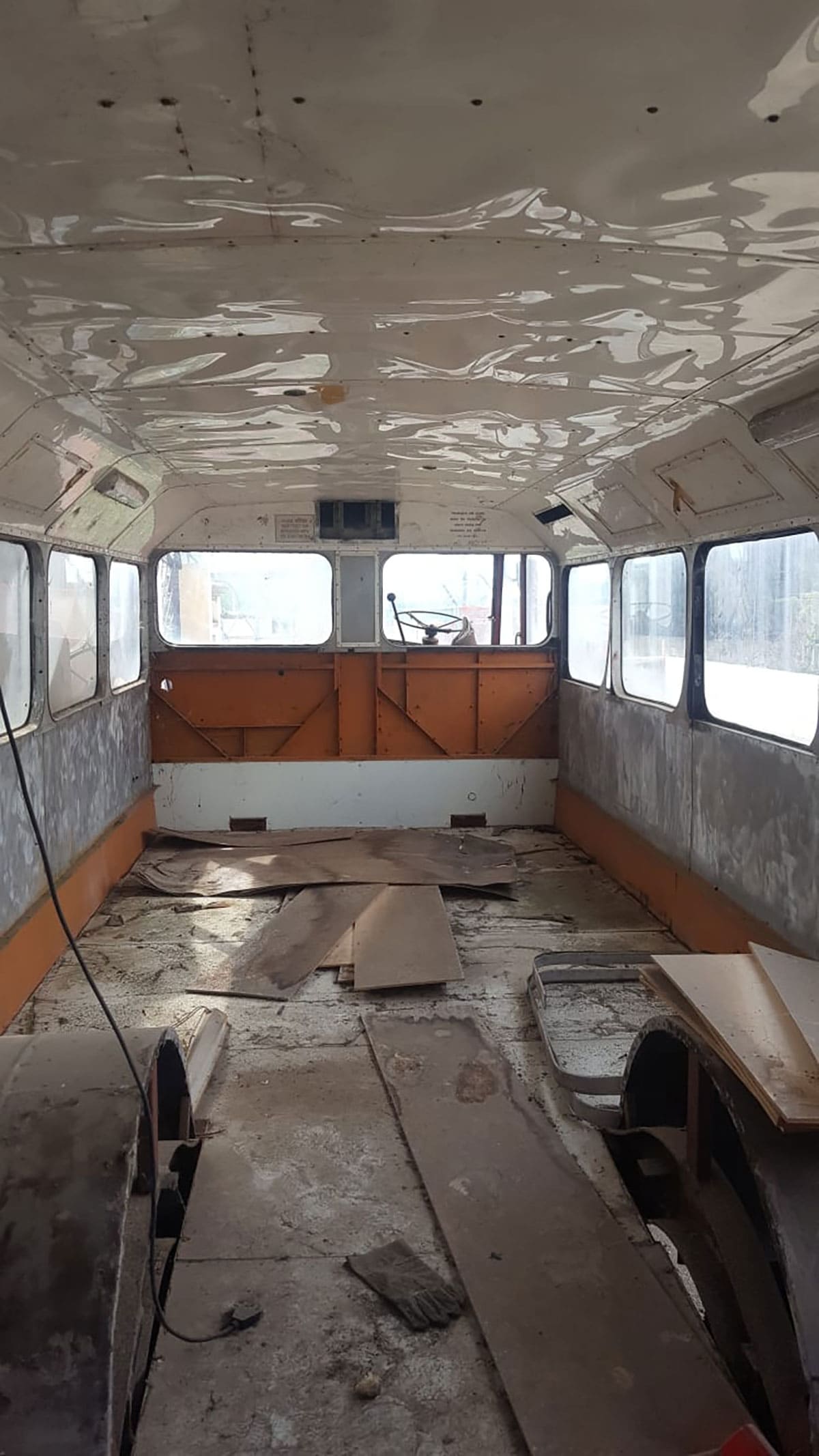
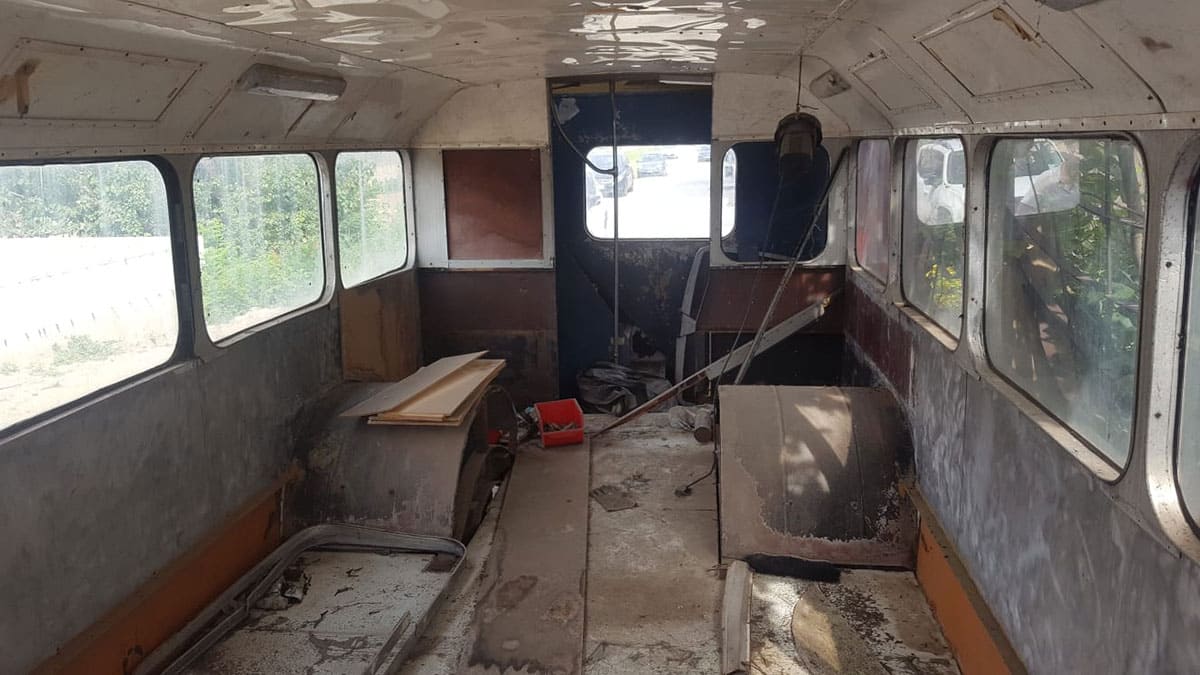
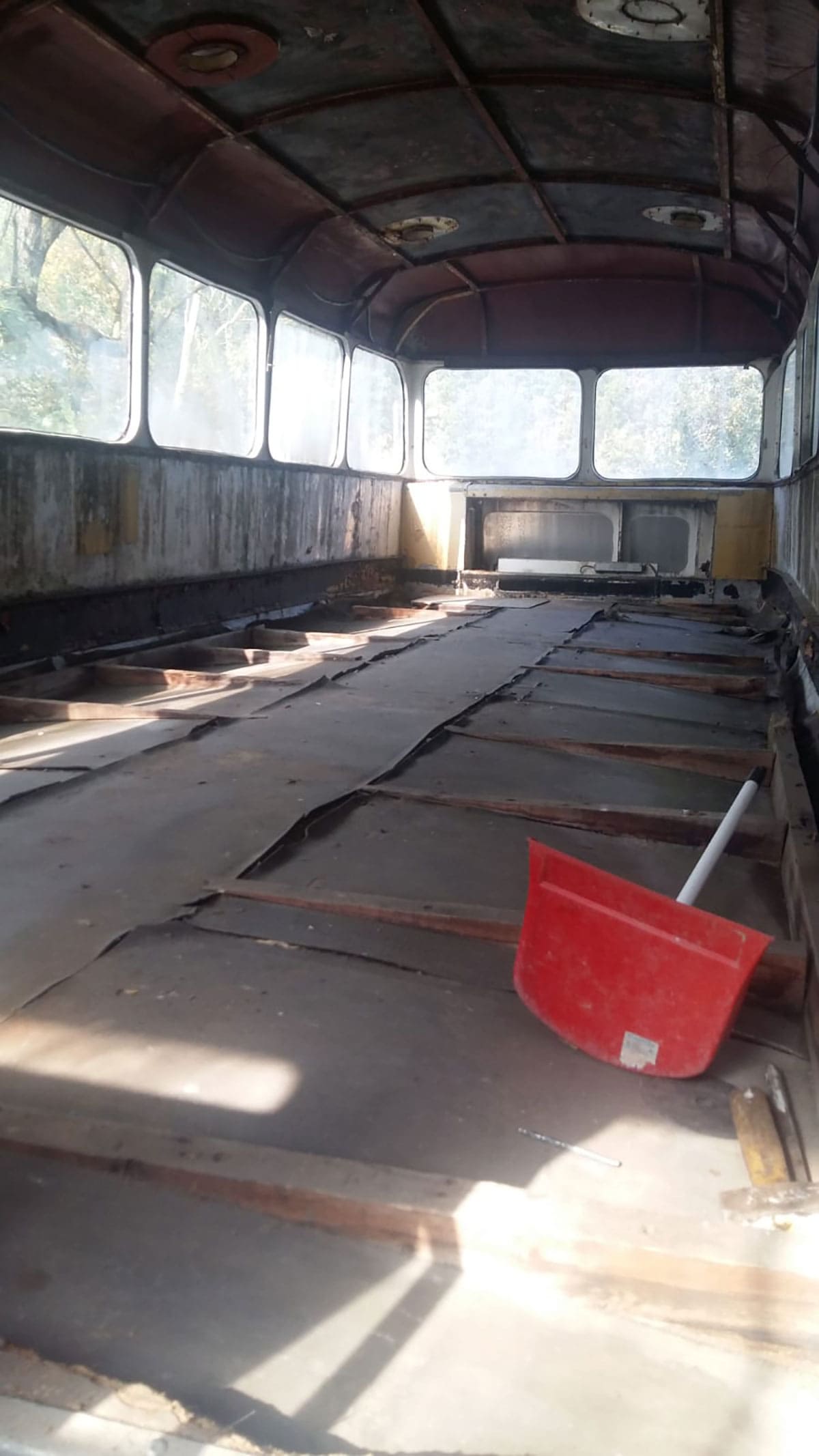
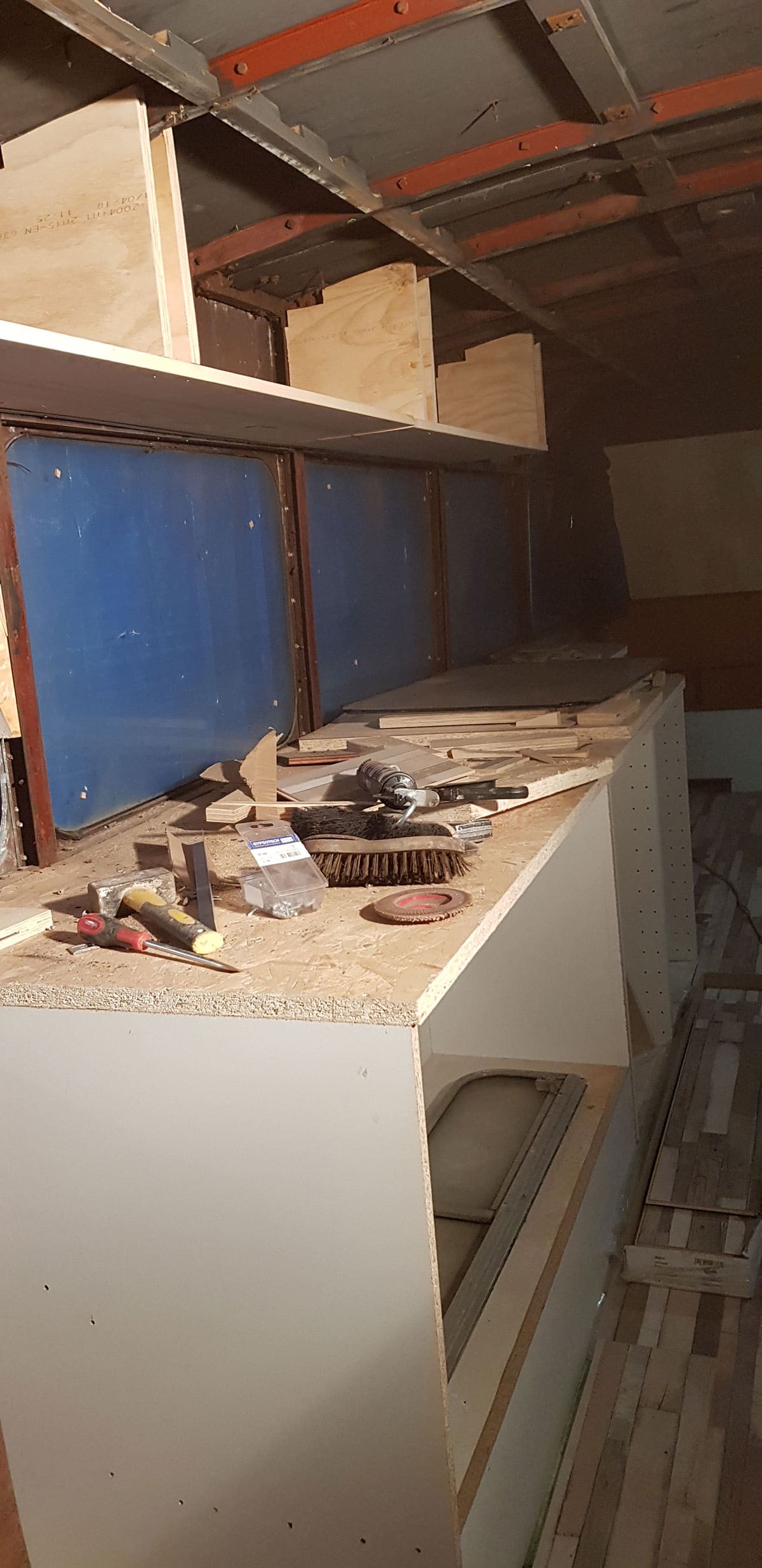
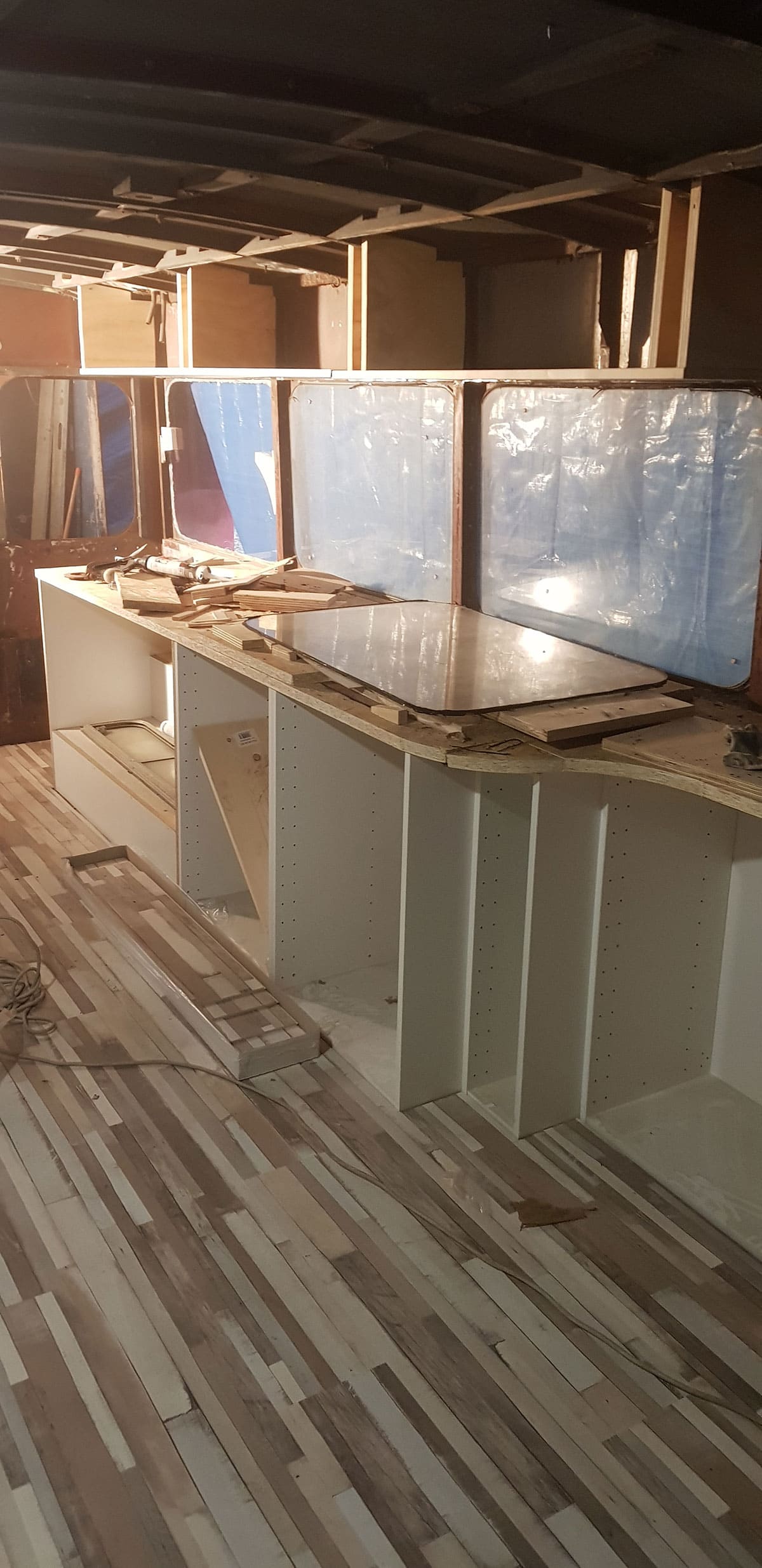
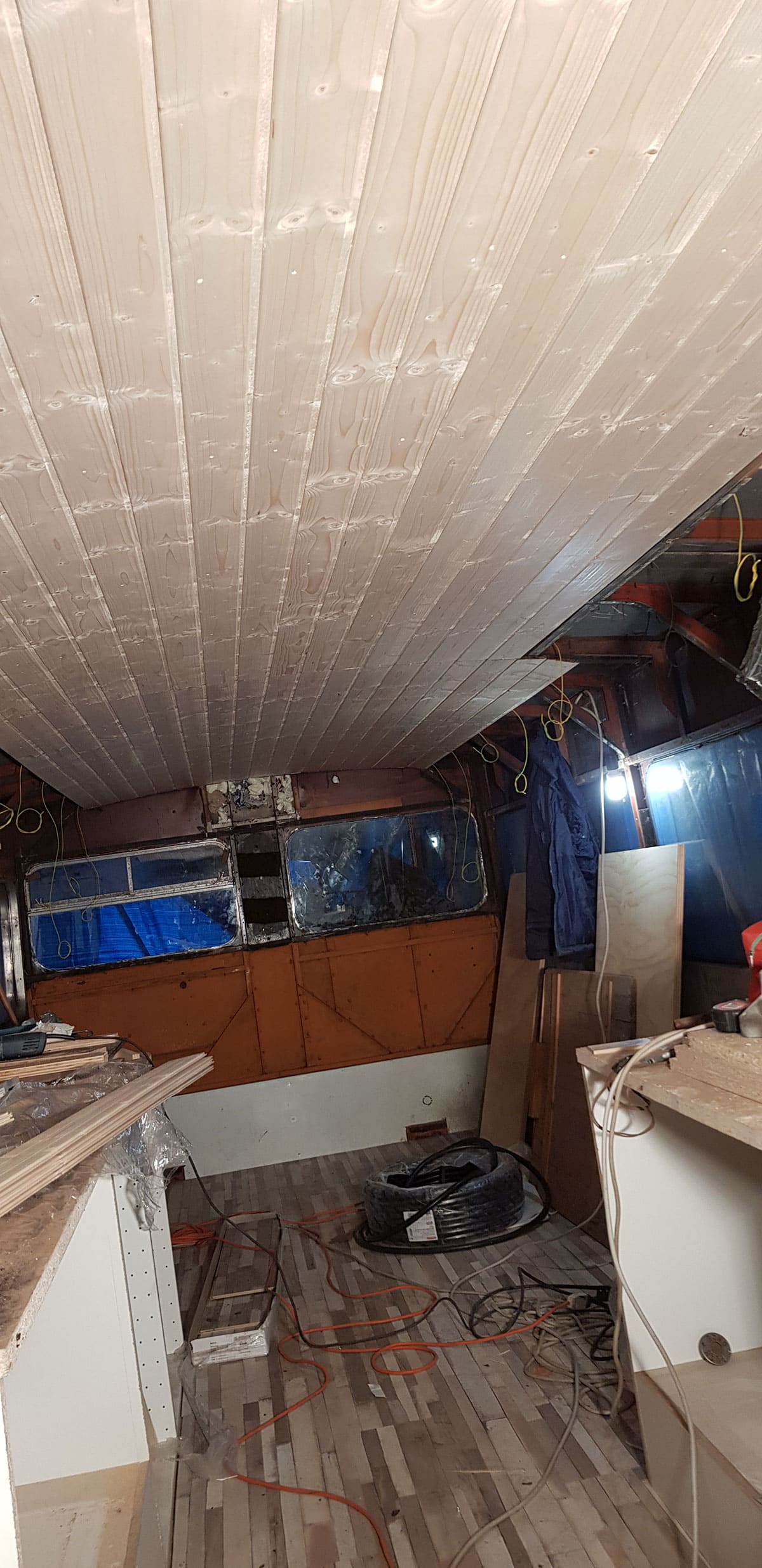
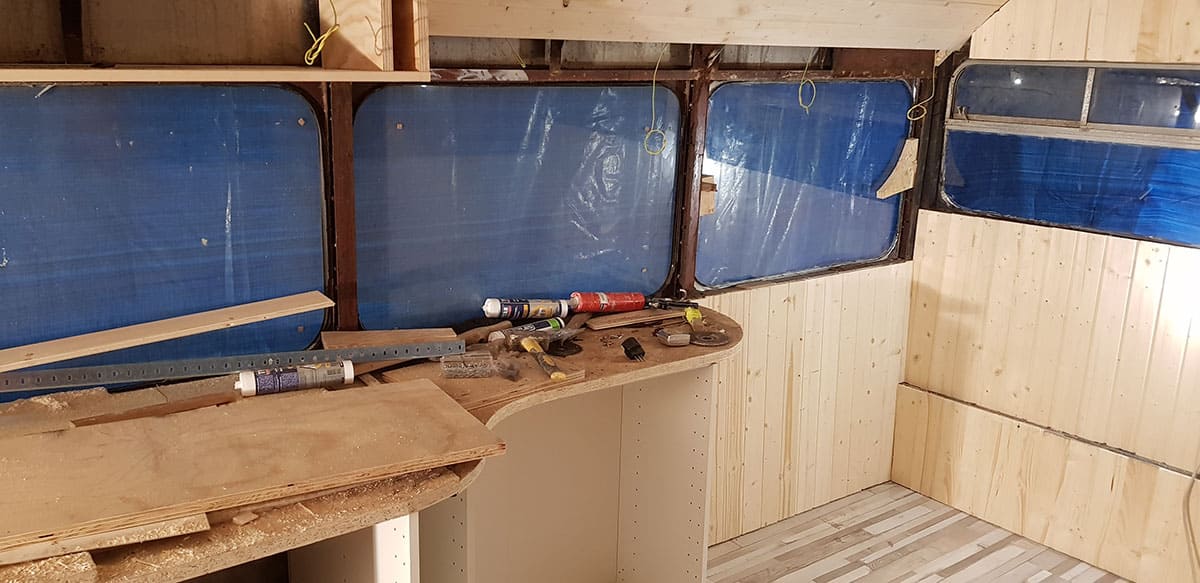
After building a canopy to protect it from the weather, the restoration of the bus interior began. Once the base was stabilized on a concrete slab that serves as a foundation and on which a laminate floor has been installed, we removed all the old and worn interior coverings and replaced them with new ones made of polyurethane and fir wood, which are modern and technologically advanced.

As for the “layout” – since we are almost talking about a camper, albeit a special one – the upper floor has been used as a sleeping area, with two bedrooms, one double and one twin for the girls, plus a full bathroom. The “ground floor” features a large kitchen and a spacious living room, as well as an outdoor patio that serves as a terrace for dining out in perfect relaxation, complete with comfortable seating areas.
Electrical services have been provided for the construction of a heating system equipped with electric heaters. For the furnishings, we have resorted to IKEA’s proposals, which complement the project well.
The final total expenditure, including the external red paint, was applied using a paint roller to achieve a vintage effect, stopping shortly before the 18,000 euros ($21,118 USD); to which we added the countless hours of work that have not been tracked. When passion calls, labor becomes a negligible element compared to the beautiful final result that you see in the finished product. The result was so impressive that the campsite became the destination of a minor pilgrimage of curious people to see this work.
Roberto and Silvia not only accepted the role of guide to the public willingly, but, proud of what had been accomplished, they paid homage to visitors with an original bus ticket from the time it was in service on the streets of London.
Now, with its original plate and table (n. 148, Notting Hill destination) on display, the bus is the “lookout” of the Ponte Barberino campsite, where it can be admired as soon as the structure opens this spring after the usual winter closing.
Here are some photos of the bus before we started renovation. (Click on each photo to enlarge them.)
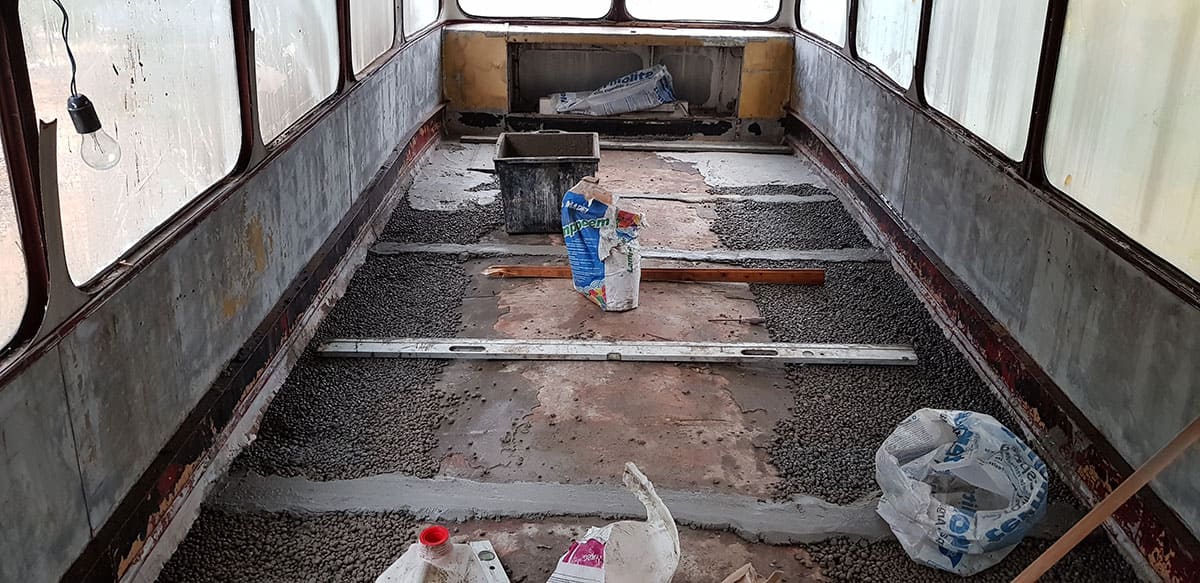
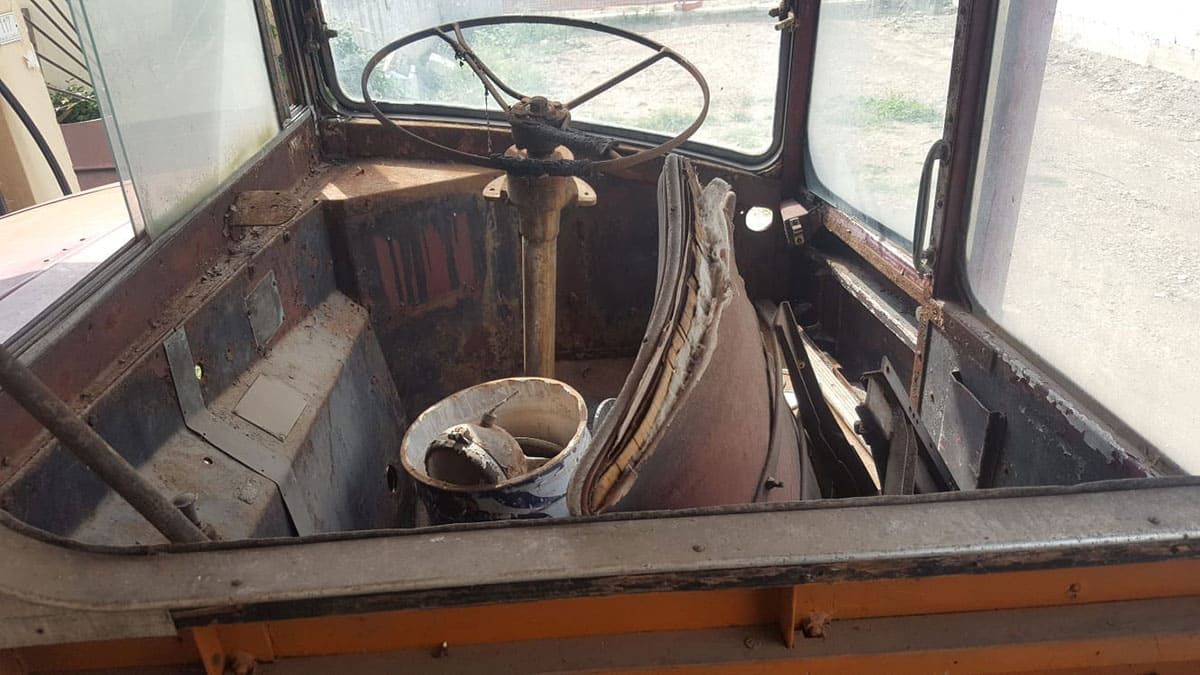
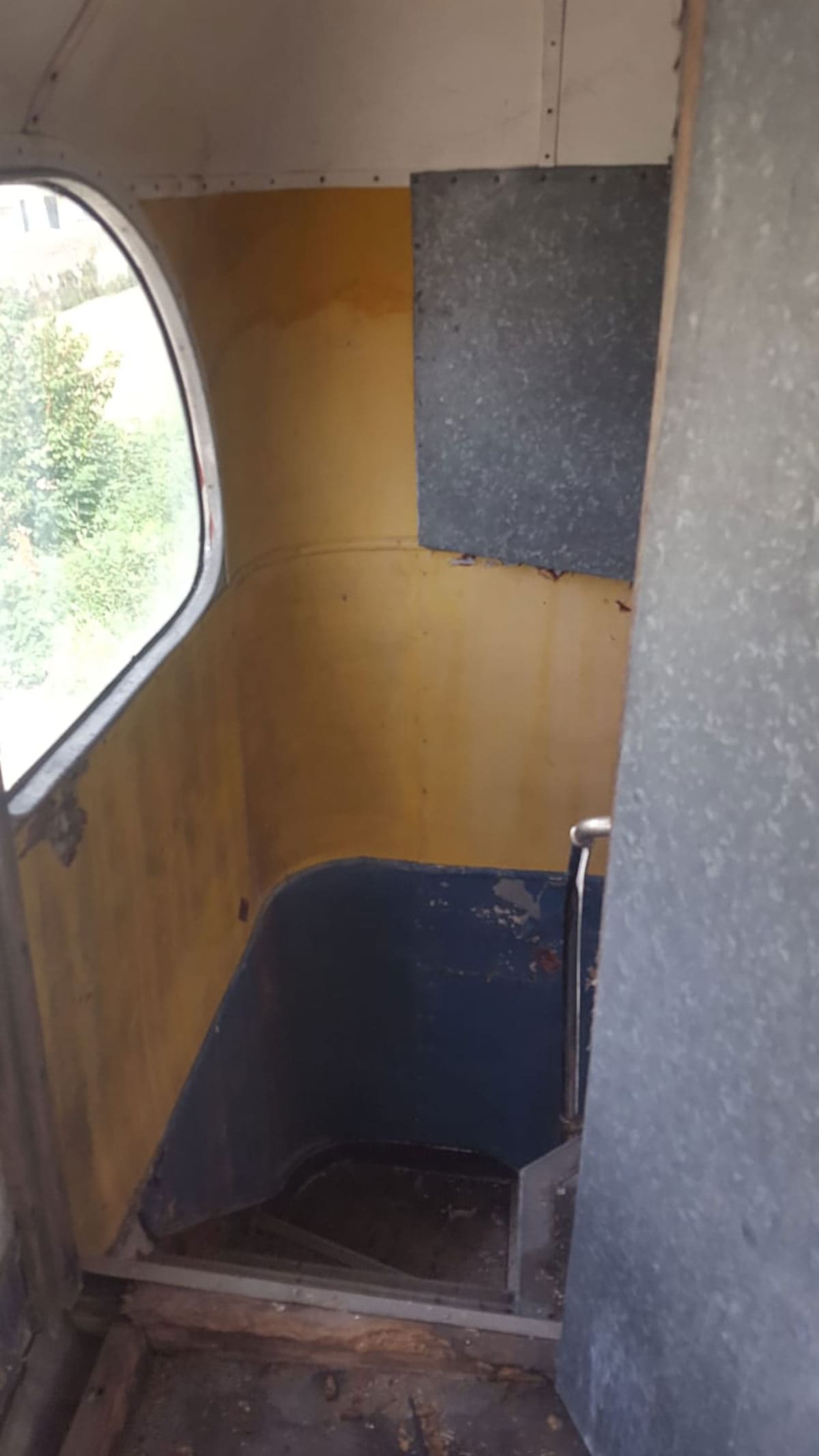
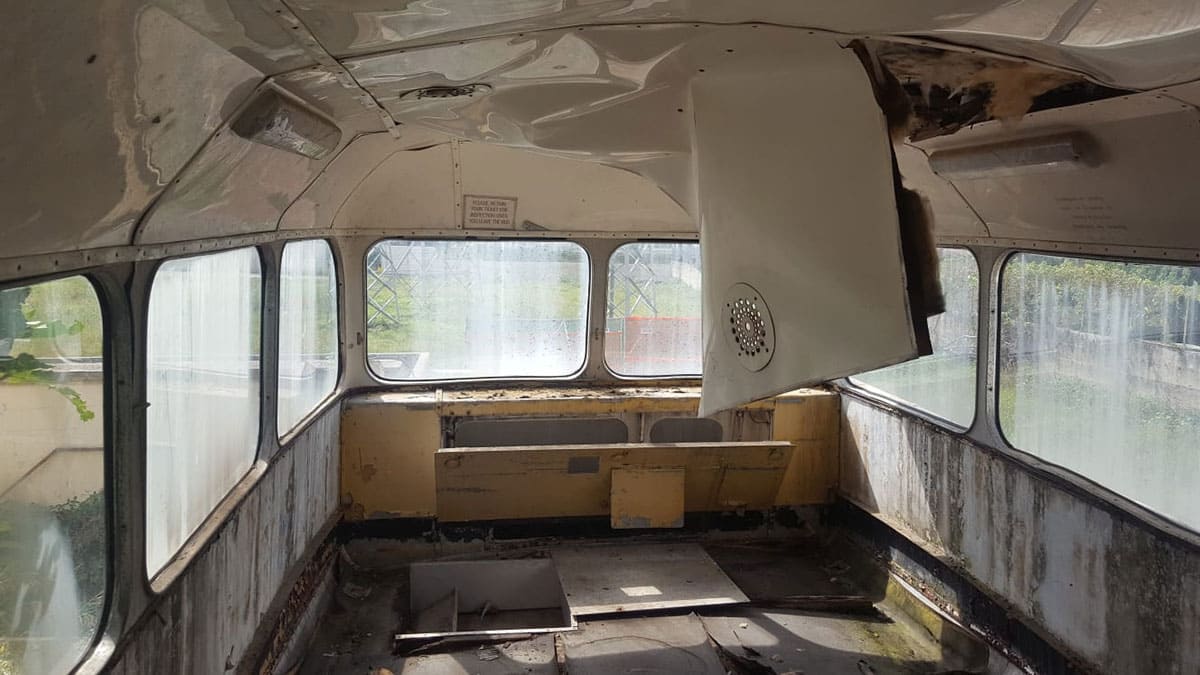
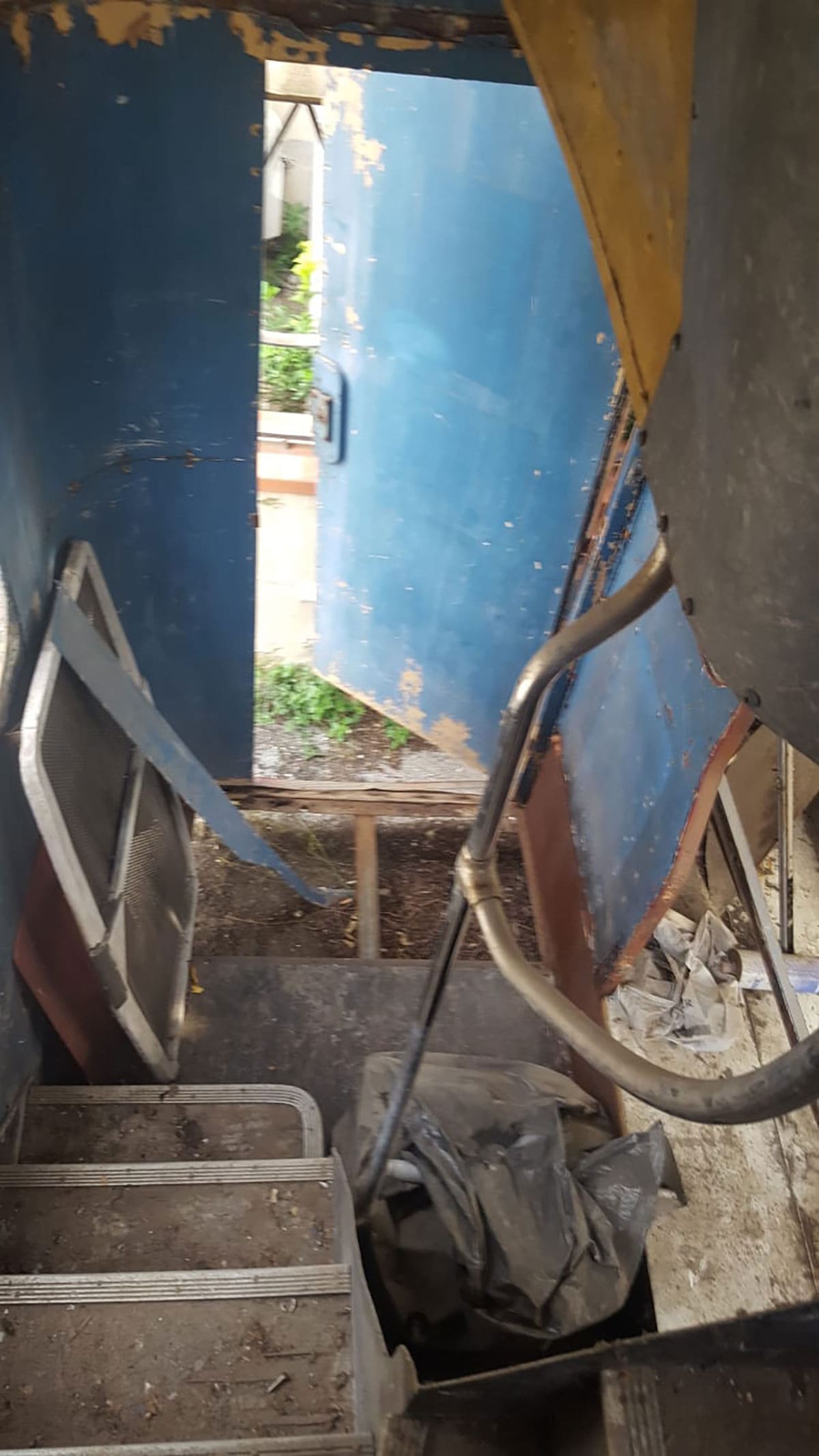
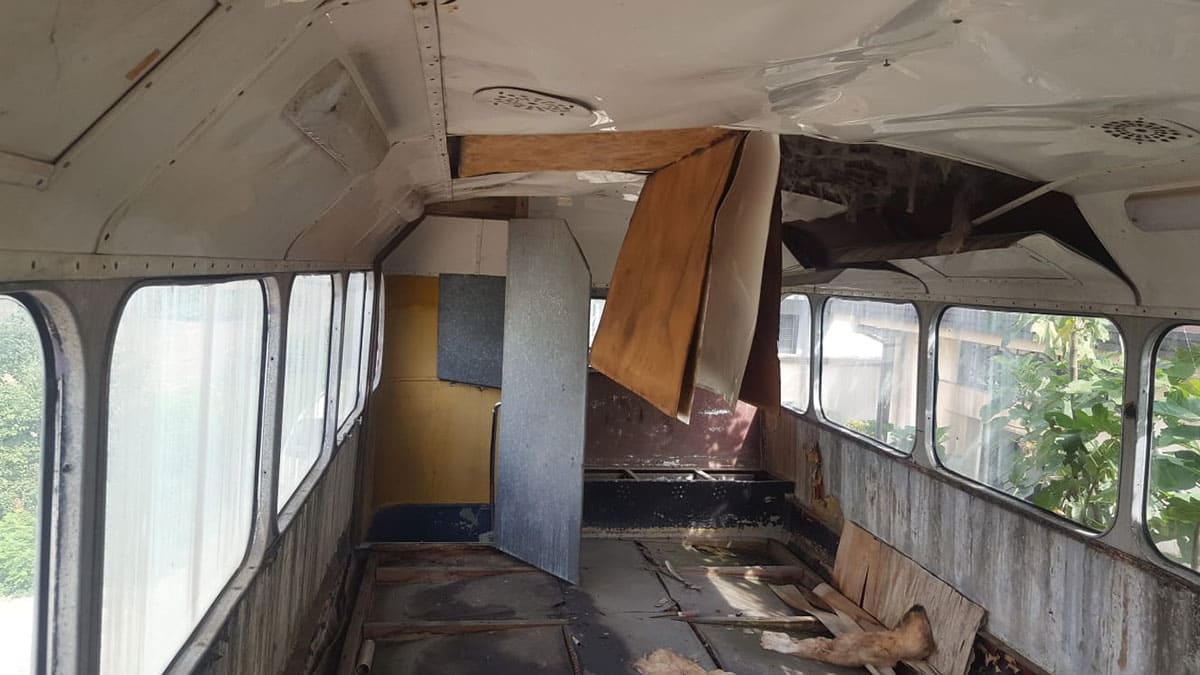
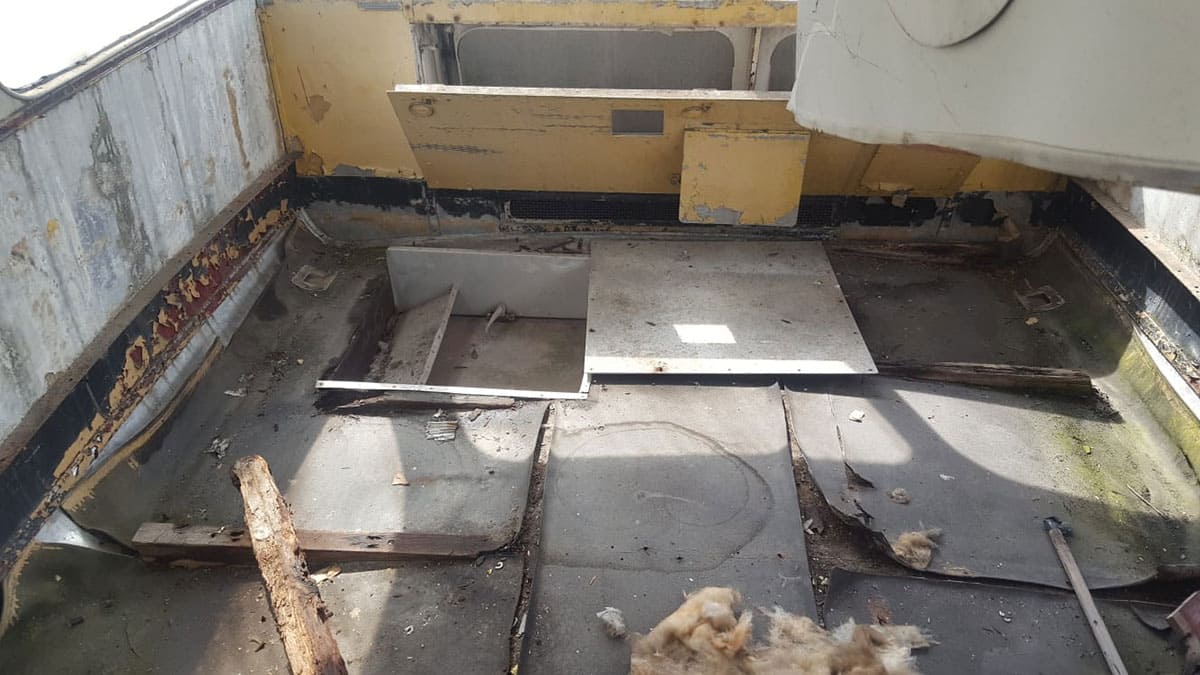
Here are some photos of the demolition and construction.
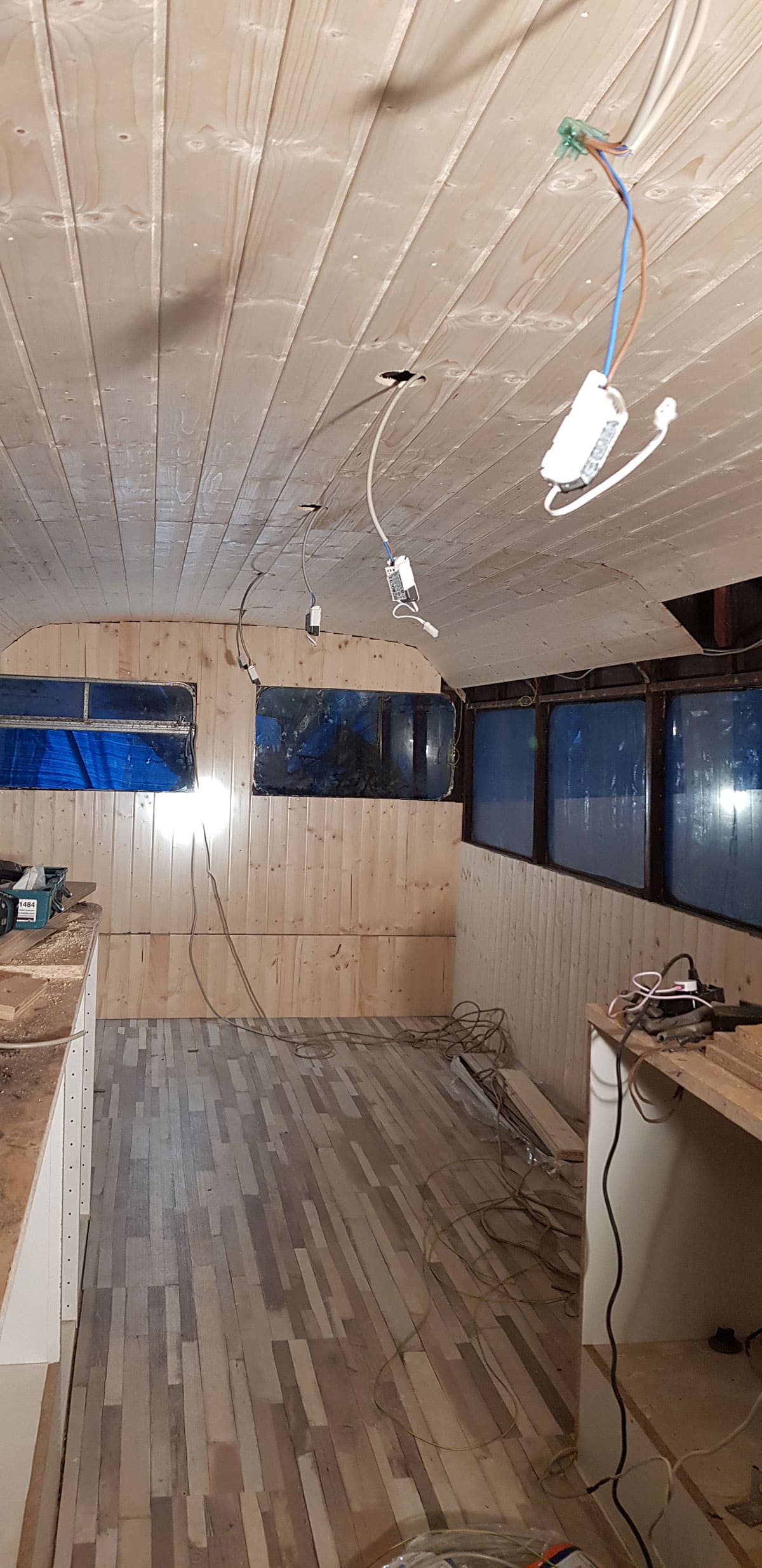
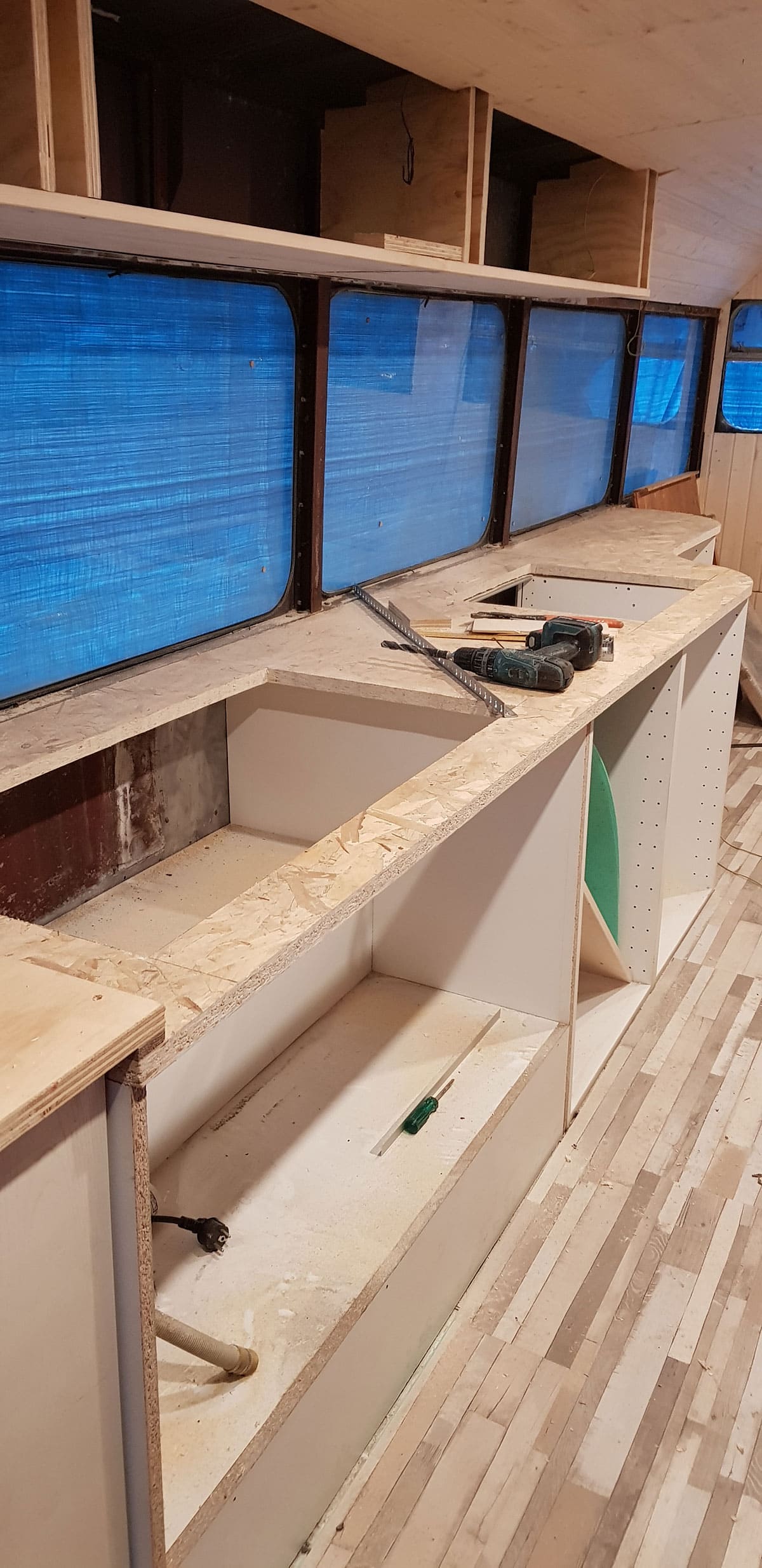
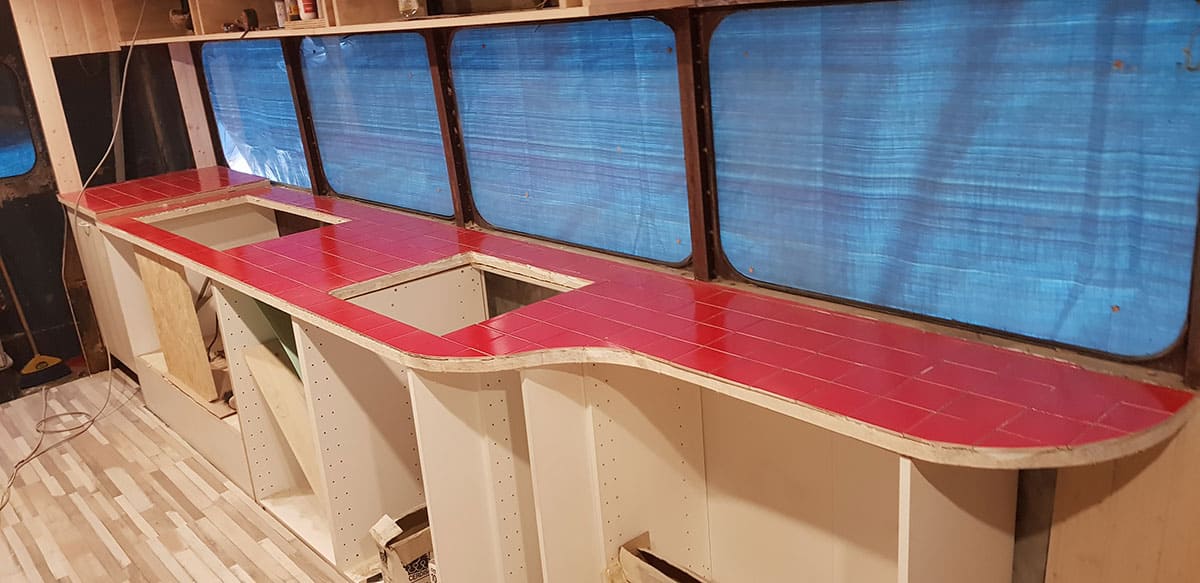
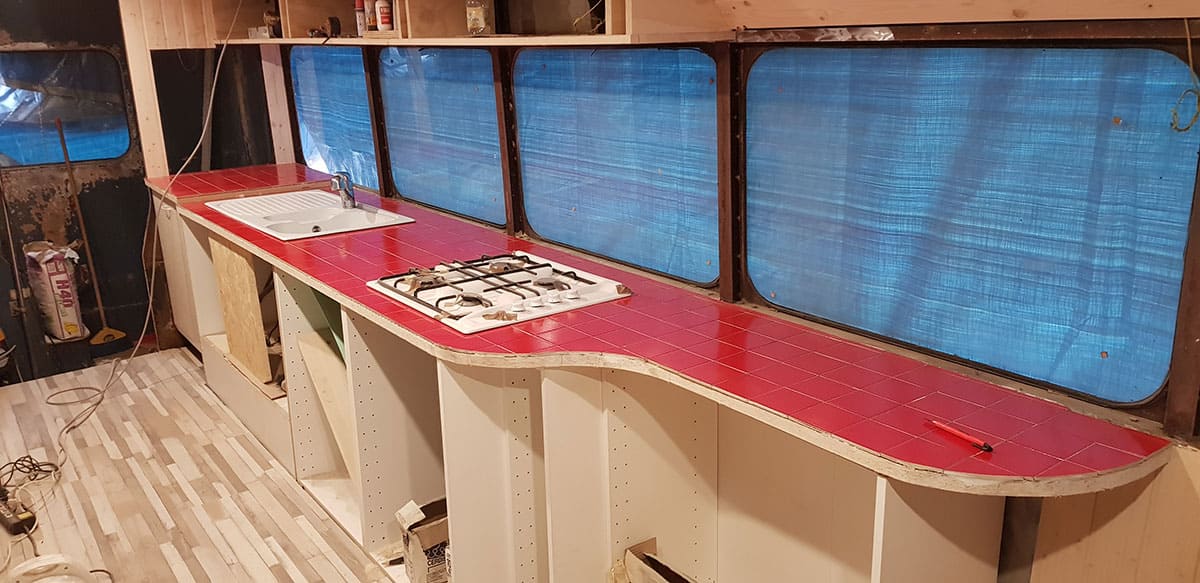
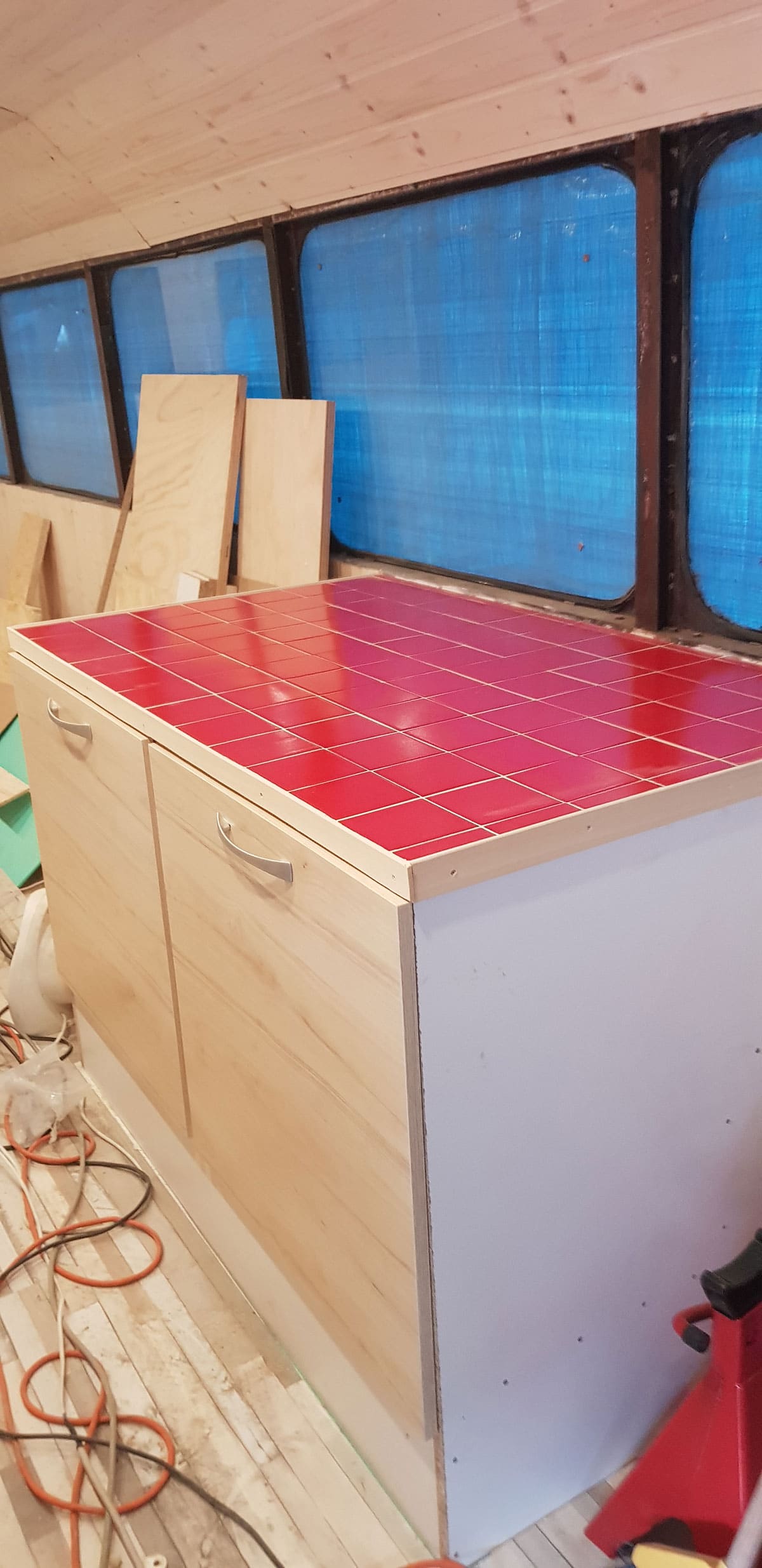
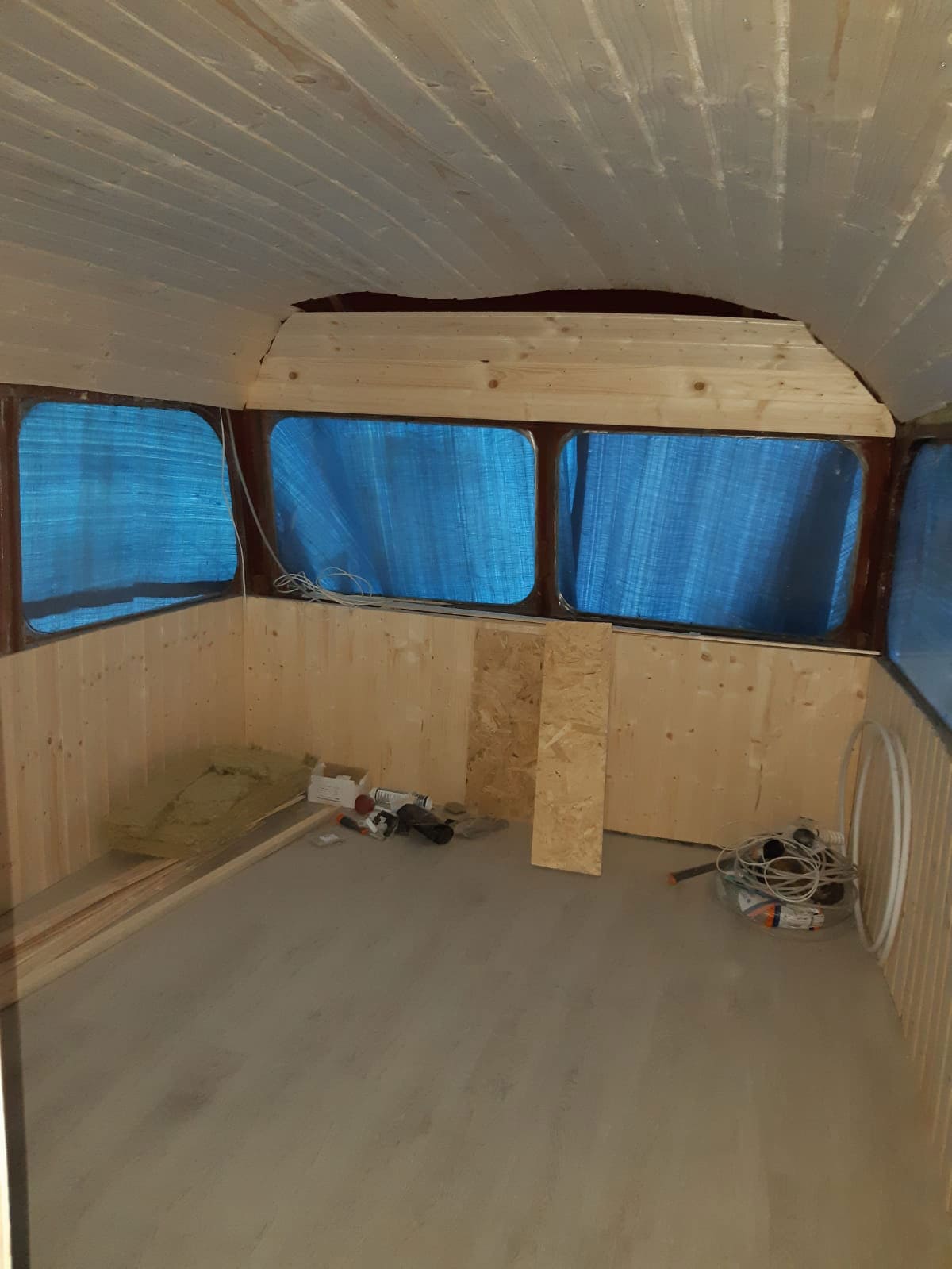
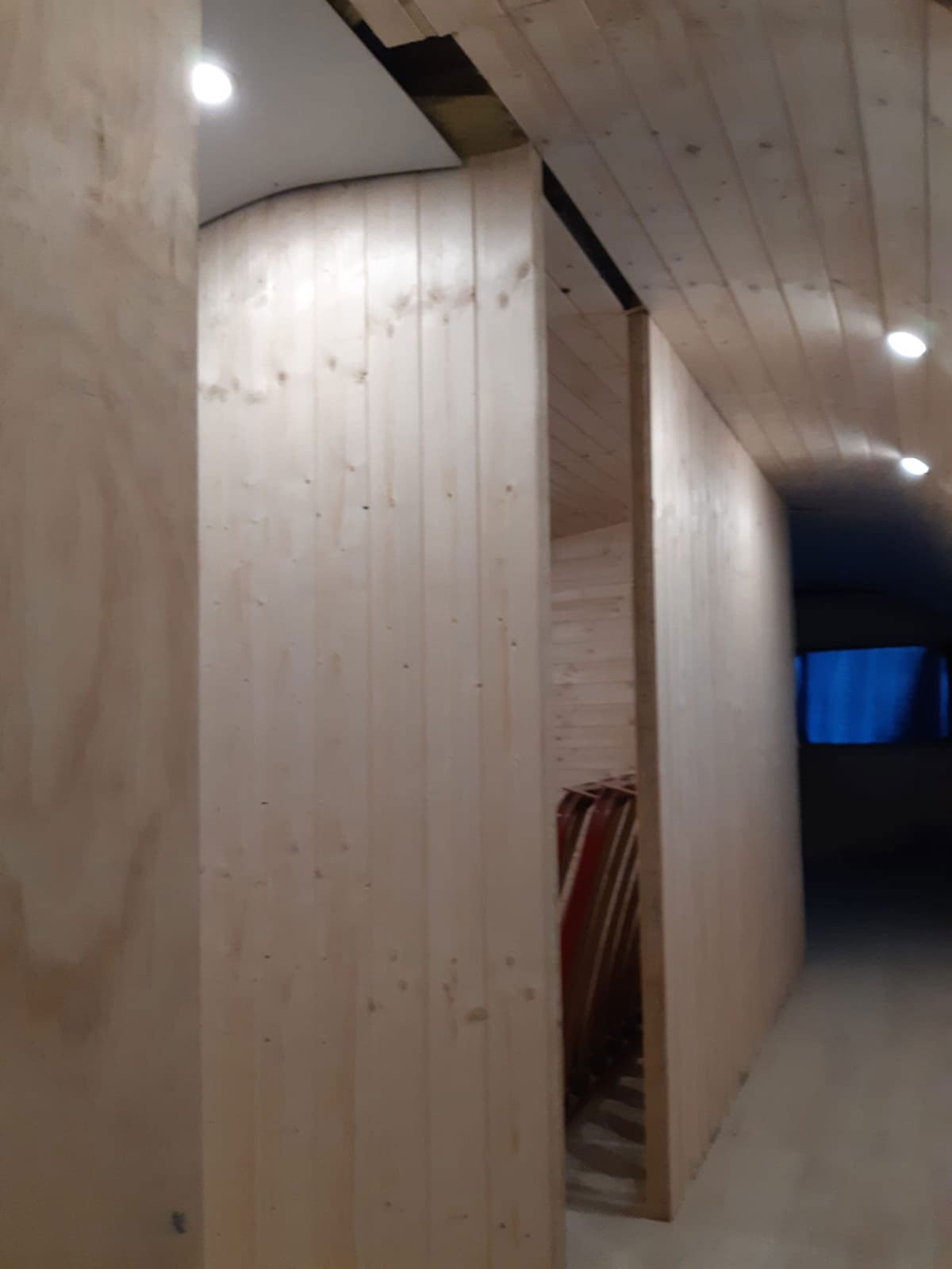
Here are some photos of the outside of the finished bus.
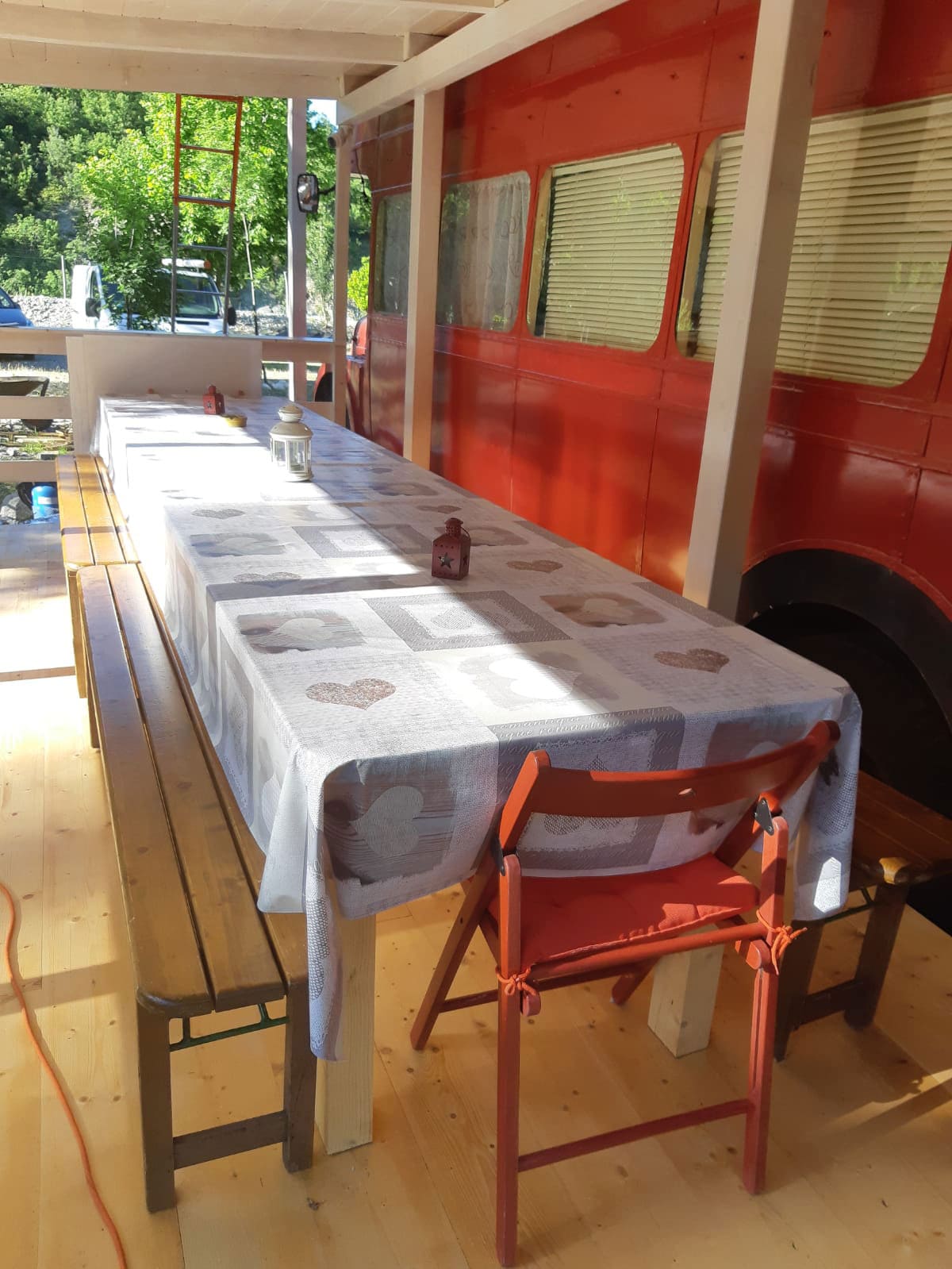
Here are some photos of the inside of the finished bus.