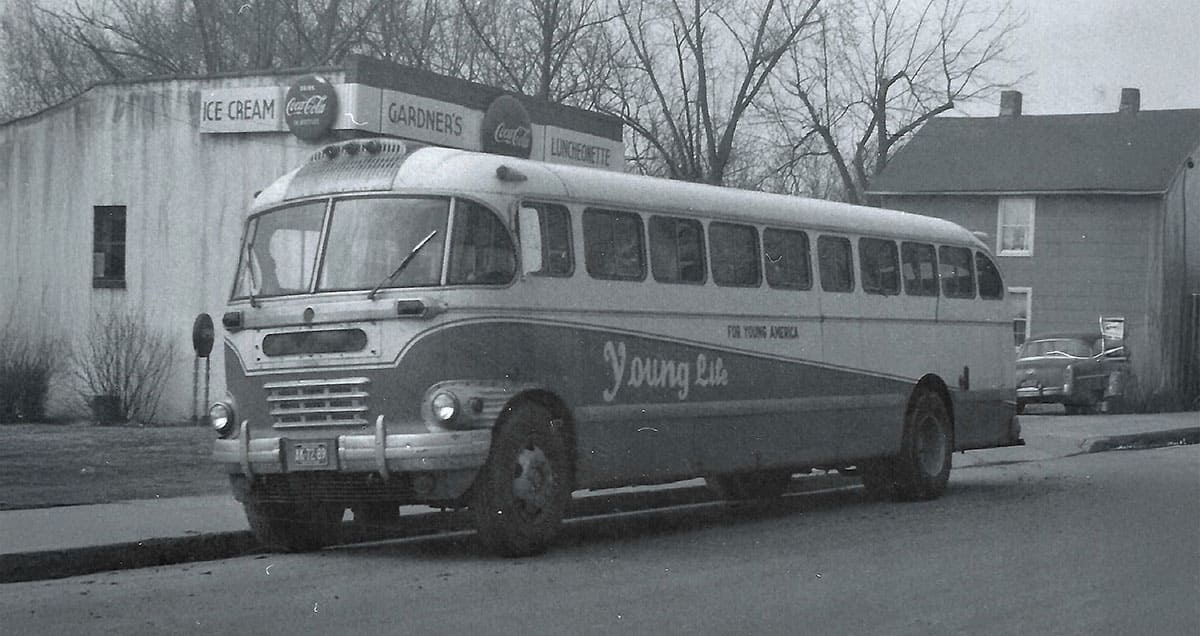

It seemed a strange way to get from Kansas to Buena Vista, Colorado: dropping down off the highway to Kit Carson, Cheyenne Wells, cruising through Eads and Ordway, and then along the Royal Gorge. Skinny dark roads through the middle of the Plains at night. JJ, the convoys’ leader, let it slip that by spiraling in like this, we avoided the dread “Ports of Entry” where they might charge us the “ton-mile tax” and weigh us.
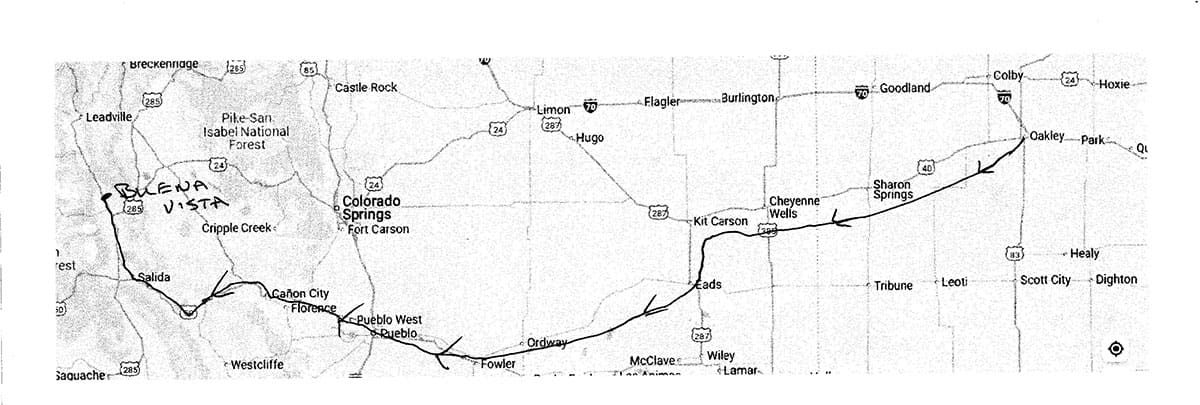
Taking a side road to avoid weigh stations.
This was 55 years ago; hopefully, the statute of limitations has expired. LOL!
Weight is a significant issue that affects all commercial vehicles and could soon affect motorhomes and all vehicle conversions as well.
In the past, I’ve mentioned two significant concerns about weight: the regulatory “road beating” concept, where heavy vehicles damage roads more than lightweight vehicles, and the safety concern that arises when a bus carries more weight than it and the tires are designed for.
Currently, Coaches, RVs, and bus conversions, titled as motorhomes, are largely exempt from the “road-breaking” aspect, but in the wake of several accidents, regulators are also examining the relationship between weight and safety of these privately owned vehicles as well.
You can’t fool Mother Nature. If a bus weighs more than its components are designed for, it handles poorly, blows tires, and stays stationary for long periods of time, causing it to be a road hazard. The DOT is scrambling to catch up with Momma Nature, and sooner or later, they will get there.
If your coach is weighed at a station or during an inspection and exceeds the Gross Vehicle Weight Rating on its builders’ plate, it will not be allowed to continue. This will likely result in inconvenience for you and your passengers and fines levied. Leaving us calorically challenged folks behind is not a viable option.
Coach weight is determined by these factors. How heavy is that sucker when it’s empty, how much weight you put in it during the conversion process, and how much all the stuff and people you load into the bus weigh in before hitting the road. (am I smart… or what?).
There’s little you can do about empty weight. When three-axle coaches went from 40’ to 45’, they began nudging weight limits. Add modern emission systems and wheelchair lifts, and it gets ugly. Manufacturers do their best but aren’t responsible for how a coach is used, and are not designed to be used as motorhomes with all the added weight.
Coaches converted to RV’s have a couple of concerns. The conversion components have weight, some quite a lot. In addition to that, where you place them in the bus is crucial.
Fresh, black, and gray water tanks aren’t too heavy… until you fill them. Generators, inverters, and batteries are not light. You get it. Too much weight on one wheel can be nasty, let alone the angst of putting all the heavy stuff in one corner of your rig.
As an aside, ambulances are often perilously close to maximum GVWR right out of the factory. Customarily, before leaving the factory, each wheel is weighed, and that data is included in delivery paperwork. In an even bigger and further off-center tangent, they also do, and document, an electrical load audit. You’d be surprised at the differences observed in two identically specked units.
One worthwhile exercise would be to detour your fully loaded rig onto a scrapyard’s scale. After explaining to your friends WHY they are in a scrapyard, take a peek at the bus’s weight. Betcha, it exceeds the GVWR, or is darn close. Many truck stops have scales, too, but scrapyards are more fun, and there is more cool stuff to see, and you may find cool things to buy there to add even more weight to your bus.
If you convert your own bus, truck, or van, you have control over what goes inside, and it’s your skin in the game if it gets weighed or has an accident caused by a weight-related doo-doo. A blown front tire at 80 mph is mind-boggling. (Don’t ask how I know).
When the Olympic Weightlifting squad rides with you, ask them to hire a truck to carry their barbells.
If a coach has a Wheelchair lift, as many newer buses include, consider its’ weight penalty. They are very heavy.
As more ADA-equipped coaches enter the “used” coach market, some people choose to retain them in a conversion. A friend tells me they are ideal for loading beer kegs, and you can even use one for a tiny porch.
That said, they are finicky and heavy (reminds me of a relative of mine).
GVWR is based on the weight-bearing capacity of the vehicle’s weakest component, generally the tires. You want to mount the highest-rated tires available and bear in mind that an underinflated tire can carry fewer pounds. Inspectors may check the rating and the inflation pressure if you are stopped or involved in a motor vehicle accident. Increasingly, state inspectors are being encouraged to scrutinize tires. The real issue is safety. Overweighted tires have nasty habits; refer back to the blown front tire ;-).
Many coach operators are lowering their coach’s governed speeds. In addition to obvious safety benefits and fuel savings, the faster a tire spins, the hotter it gets. A tire that safely handles 9,000 pounds at 72 MPH may be able to take 9,200 at 68 MPH. It doesn’t sound like much till you count all eight tires.
Mother Nature is not impressed with your desire to go fast in wide-open spaces or down steep grades and doesn’t change the laws of physics to suit higher speed limits.
Individual axles may also be scaled, with weight distribution being a potential issue. You’re not likely to ask all of us fatties to move forward, and in the case of a conversion, other than emptying the fresh, grey, black water tanks, lowering your fuel level, and removing your spare tire, there isn’t much you can do.
Since RVs currently slide by weigh stations and DOT inspections, remember that you might be able to avoid crossing scales, but Mother Nature won’t be fooled. I’m not a fan of arbitrary regulation, but controlling bus weight does make sense. I’m fine with taking overweight coaches and dangerous vehicles off the road. Many private individuals are driving on old or weather-cracked tires, which can blow at any minute.
Having said that, it can be difficult to know how much a loaded coach weighs. Drivers need to understand that they should never pull into a weigh station unless it is required. Once on the scales, authorities must deal with a vehicle that exceeds its GVWR, and won’t let it continue on down the road until it conforms with the weight and tire ratings for that vehicle.
My buddy asked why his converted GM PD-4106 bus accelerated poorly and had anemic brakes on his scuba diving jaunts. The trips were called “Hell Rides,” Massachusetts, to the Florida Keys, and back in four days. He carried 20 divers, each with four scuba tanks and weight belts, along with their other gear, luggage, and camping equipment and wondered why his bus seemed to have no power on the hills.
Bottom line: Before heading out on the road, be cognizant of the weight of your bus, with all components and appliances built in, the weight of a full fresh water tank, the weight of the fuel, and the weight of all commonly carried passengers and their stuff. If you convert your own bus, consider the weight of each component you build into your bus and the placement to even out the weight distribution. Know the GVWR rating of your bus and tires, and always stay within the safety margin of your bus.