

Back in 2004, Wayne Shell purchased a 1994 Eagle Model 1545 (Model 15, 45 feet long) bus shell, which had already had its seats, luggage racks, and bathroom removed. Someone had started a conversion, but they didn’t get very far. This was a rare find, as there were only a few 45’ buses available, and even fewer that were rust-free like this bus.
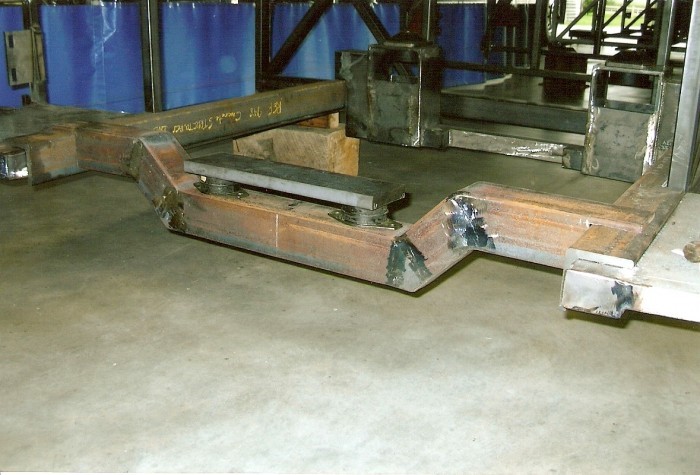
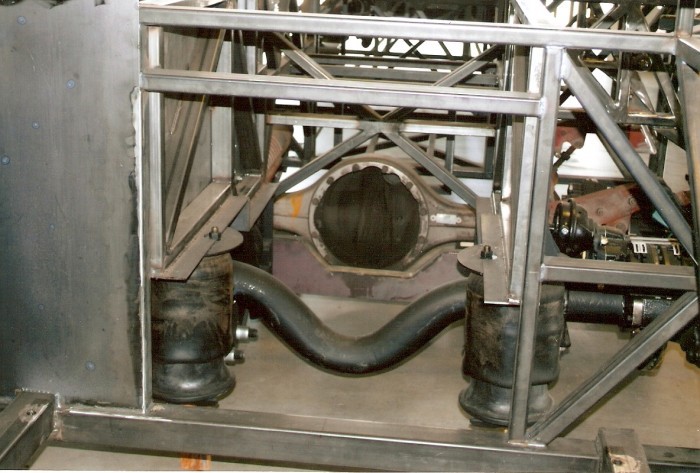
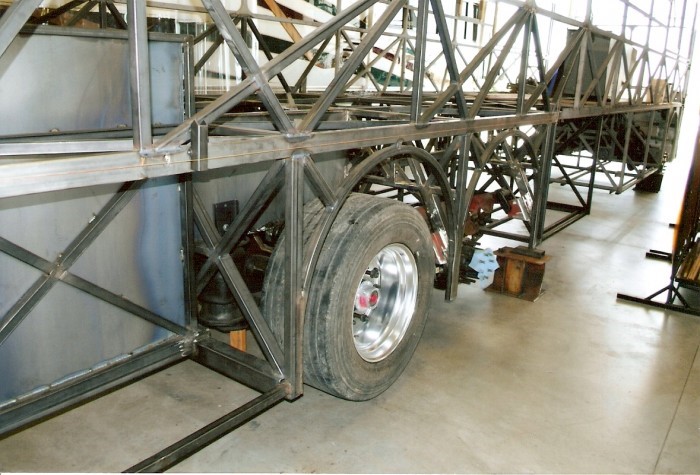
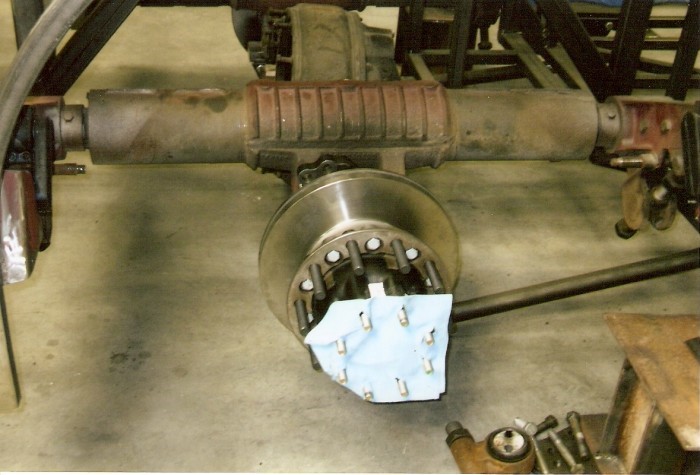
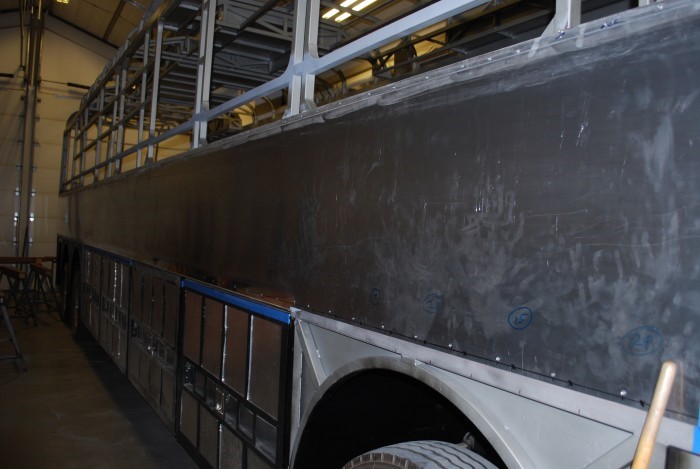
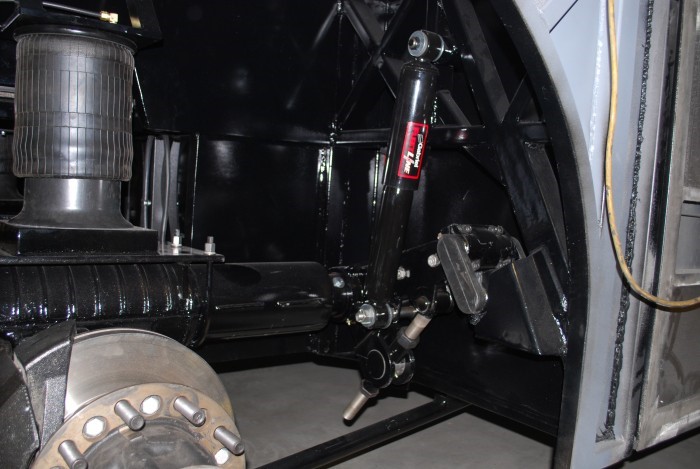
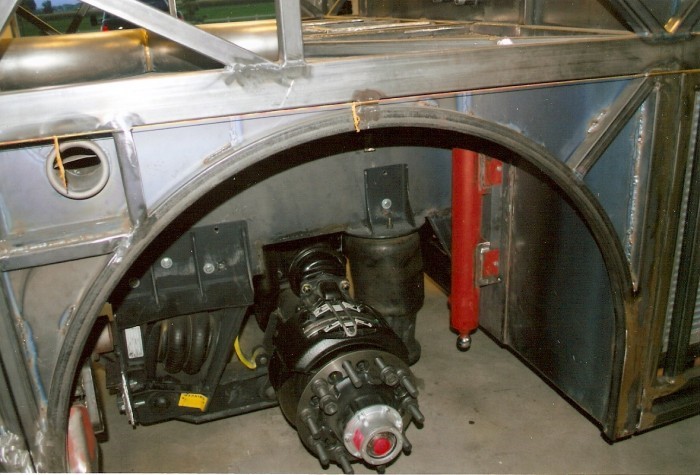
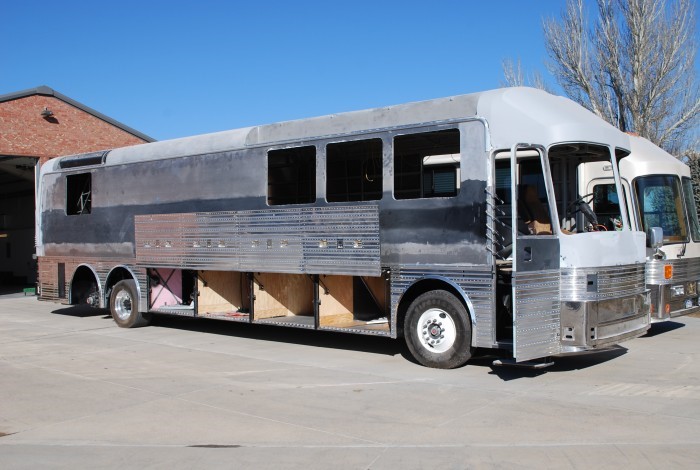
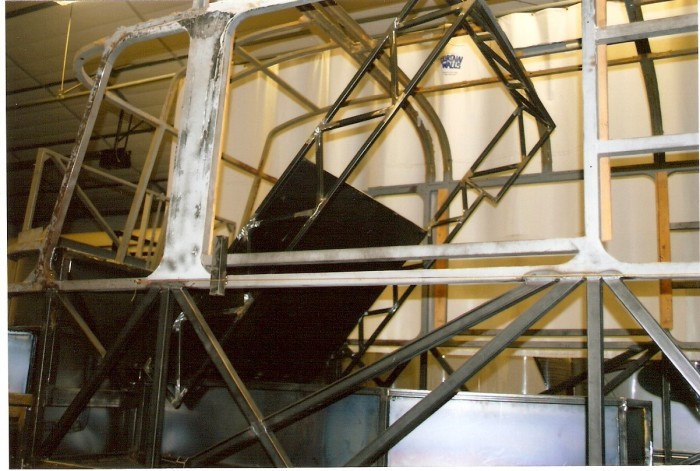
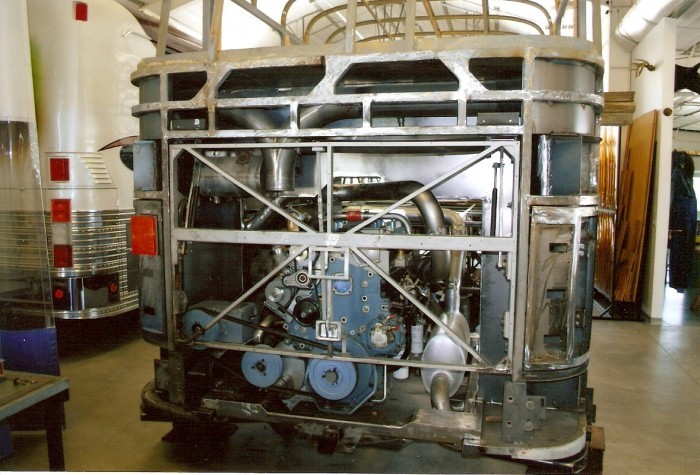
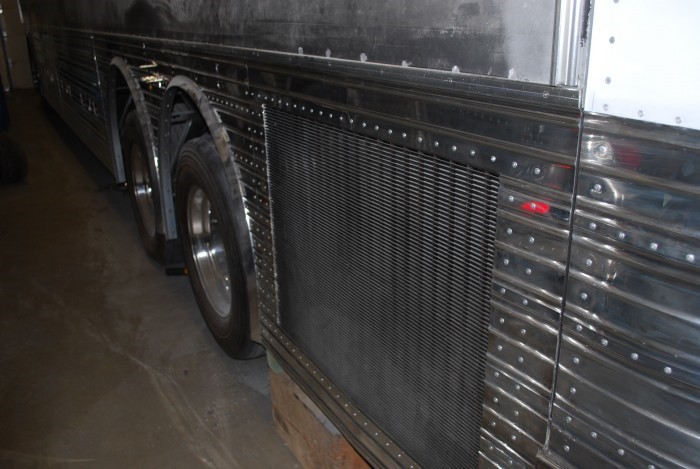
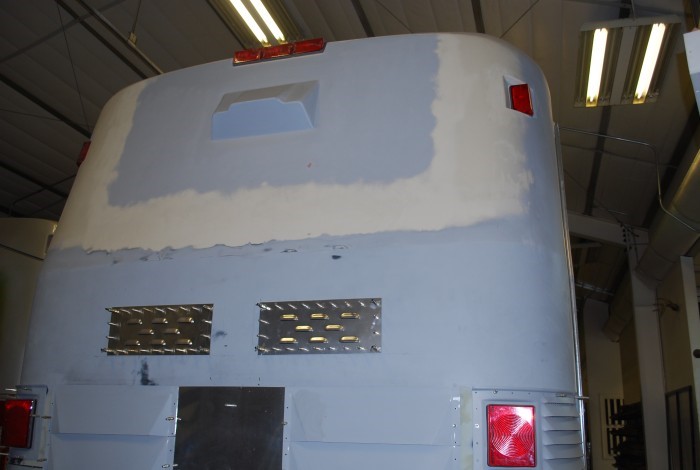
This bus came from the factory with smooth sides, i.e., no rivets. Wayne removed all the siding and rebuilt everything from the ground up. He also moved the rear axle forward and converted the bogie into a tag axle, essentially reversing the factory configuration. The rear end is an Eagle T-drive that came from the Eagle bankruptcy sale. All other 45-foot buses had dropboxes, where the input drive shaft comes in at the top front and the output shaft comes out of the bottom rear, except for two that are still on the road — somewhere. Wayne designed the tag axle so it can be lifted off the ground from the cockpit using airbags for tight turning or for added traction if needed. He can also lift the tag axle if it has a flat tire, allowing him to drive the bus to the closest tire shop.
Wayne converted his driveline to a T-drive to eliminate the need for a dropbox. One: I don’t think the dropbox was designed for these higher-horsepower motors. Two: A dropbox uses more horsepower. Three: There are more choices of gear ratios. Four: By moving the rearend forward, the turning radius in his 45-foot bus is about the same as a 40-foot bus.
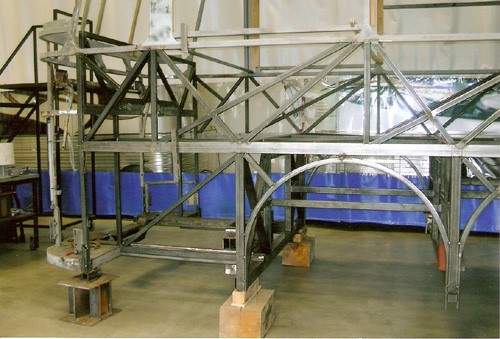
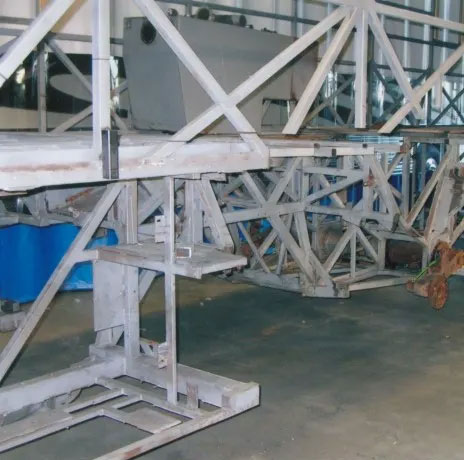
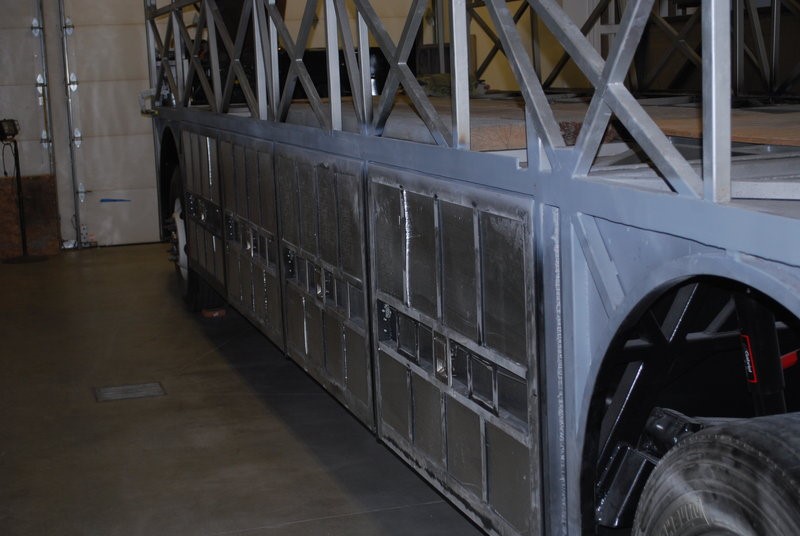
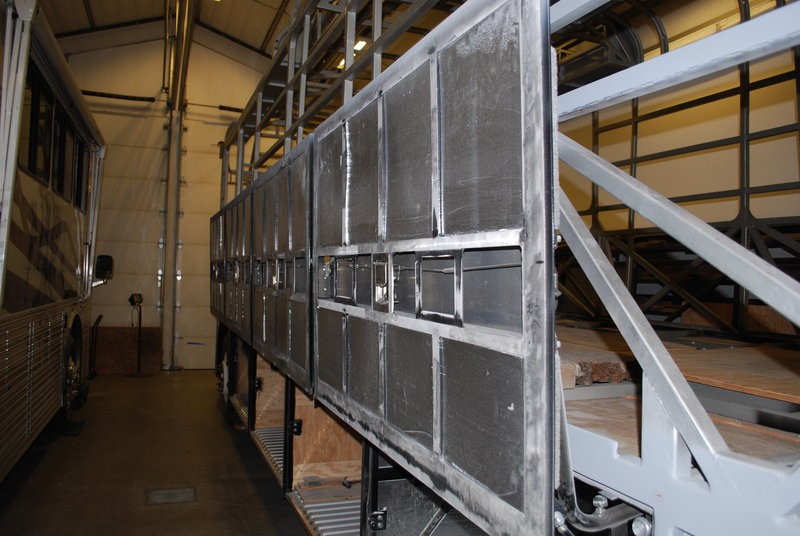
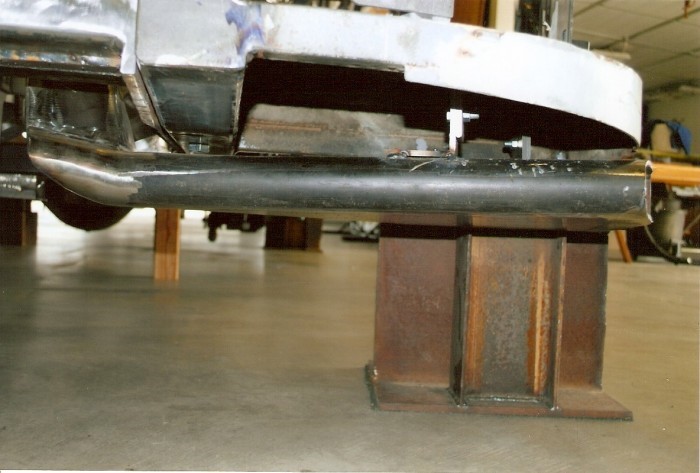
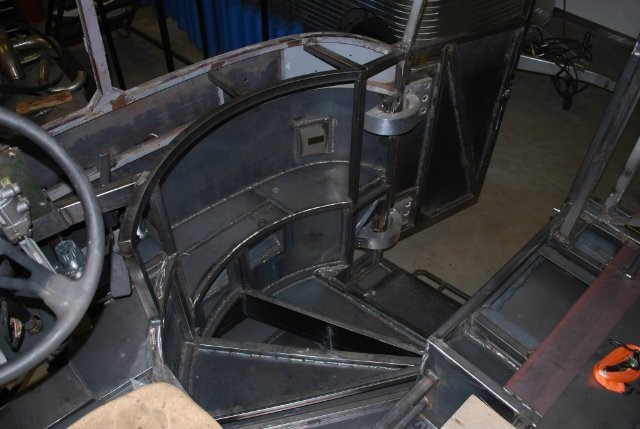
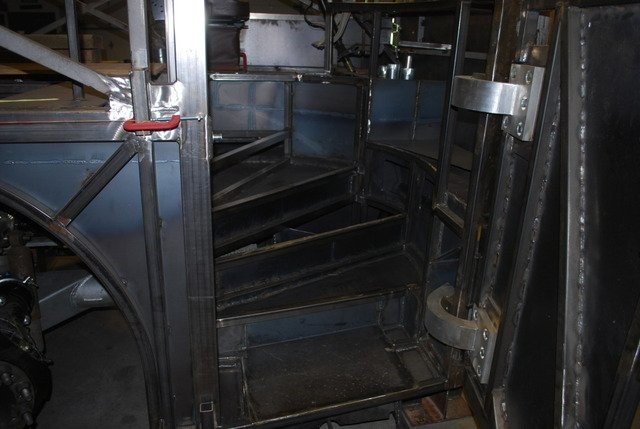
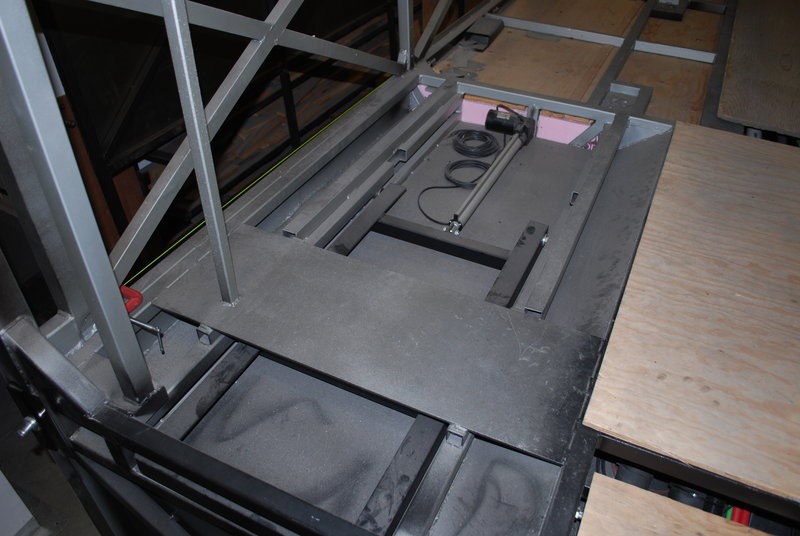
The entire bottom of the bus structure from the floor down was reconstructed from scratch with standard 1-1/2” square tubing instead of the metric tubing the bus came with, as it was easier to obtain in the U.S. The front end was also rebuilt, such that the torsilastic’s are mounted to an adjustable plate, allowing for more adjustment than what was provided by the factory. He also added additional structural support for his four homemade hydraulic leveling jacks.
All of the bays have new flooring. He used new Eagle floor material, and the two runner supports under the floor were replaced with four runners, using metal that was slightly heavier to reinforce it better than what the factory provided.
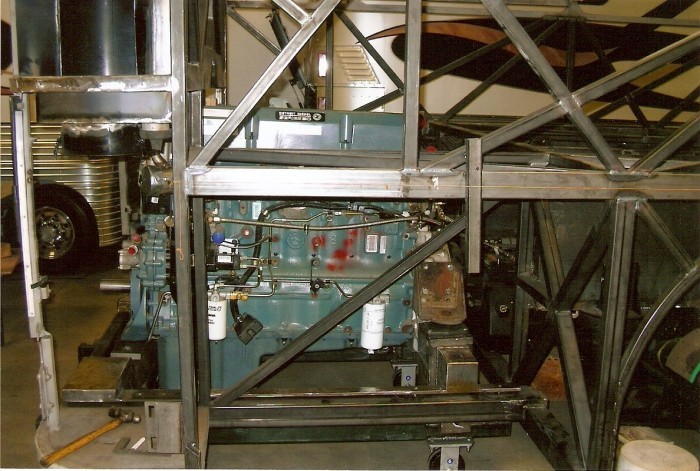
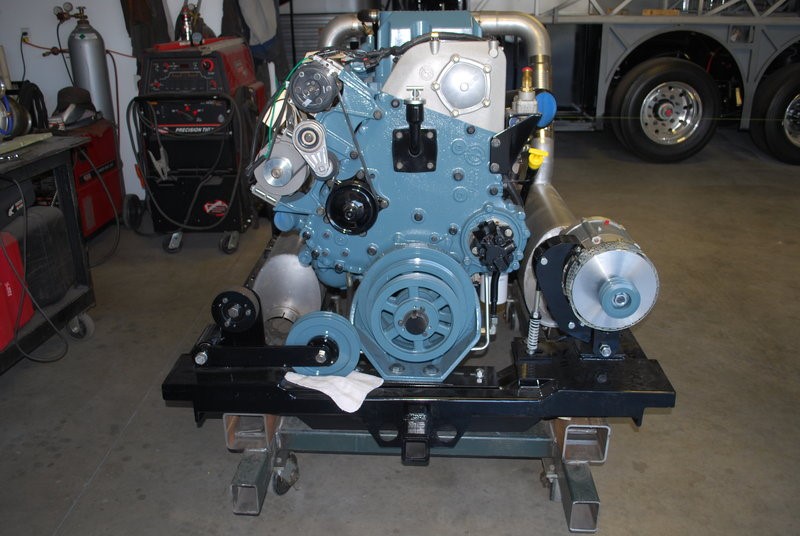
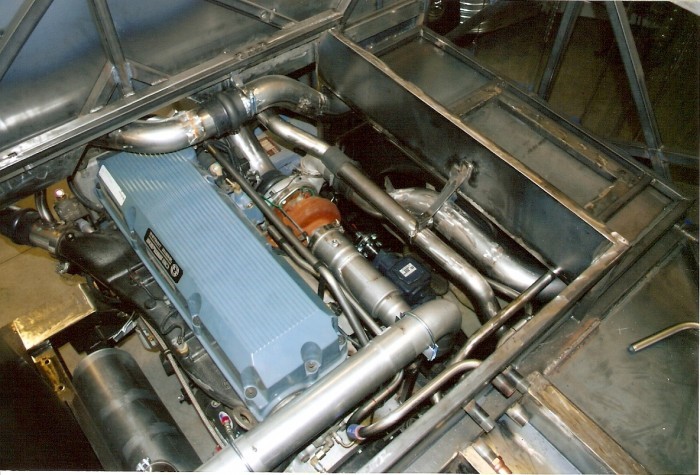
He replaced the original Detroit Diesel Series 60 engine that came with this bus with one from a wrecked semi-truck that had been damaged during transportation from the factory to the dealer. The engine had only three miles on it. The bus originally came with a 12.7-liter engine, but Wayne replaced it with a 14.0-liter engine to provide more horsepower so that it could climb hills more quickly. The exhaust system, from the turbo outward, has two mufflers wrapped in insulation to keep the heat out of the bus.
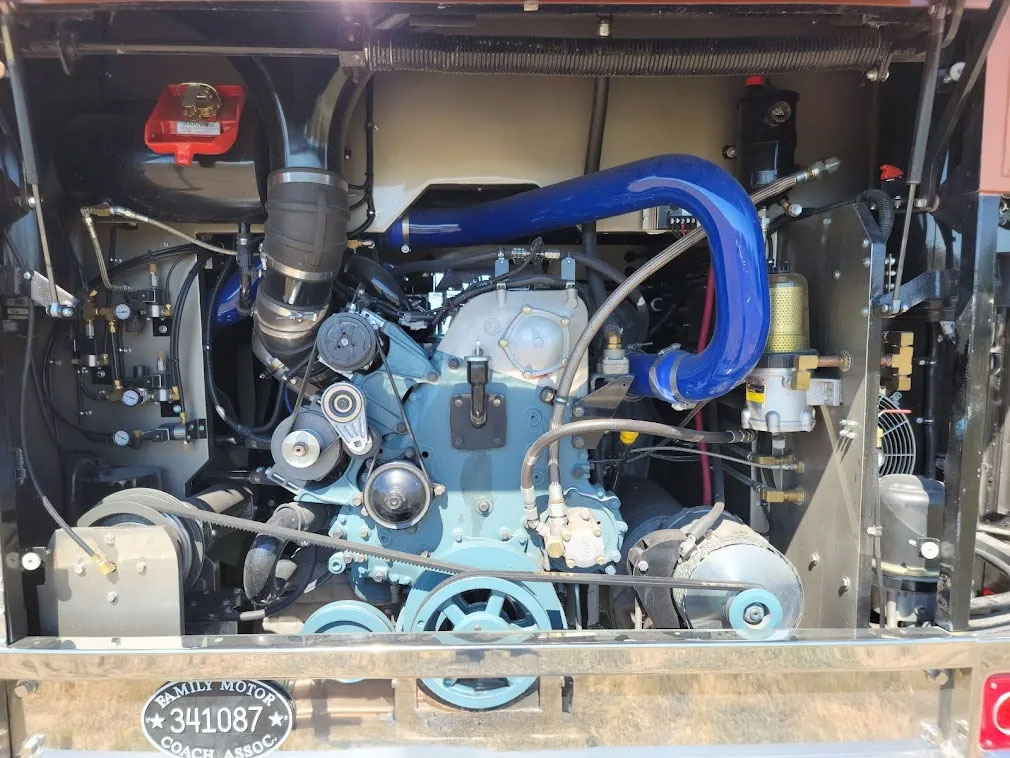
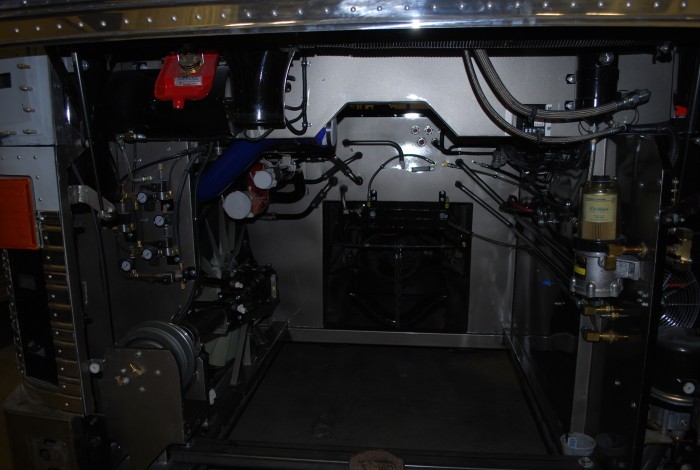
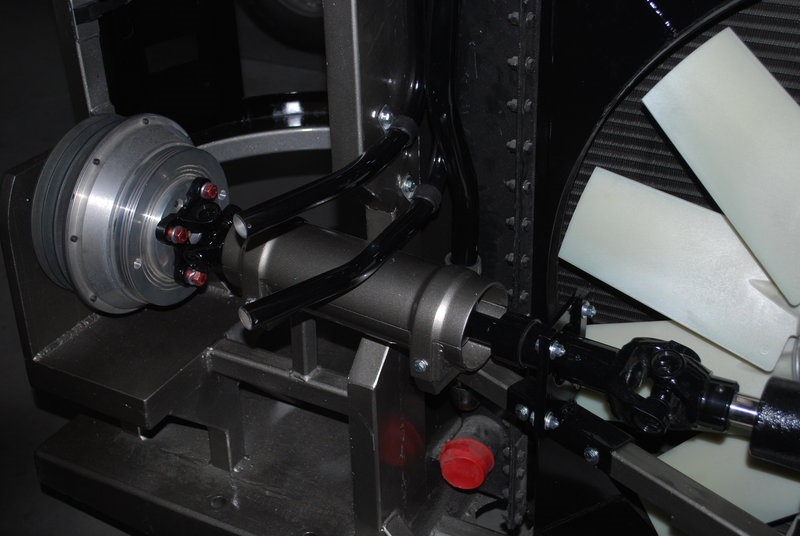
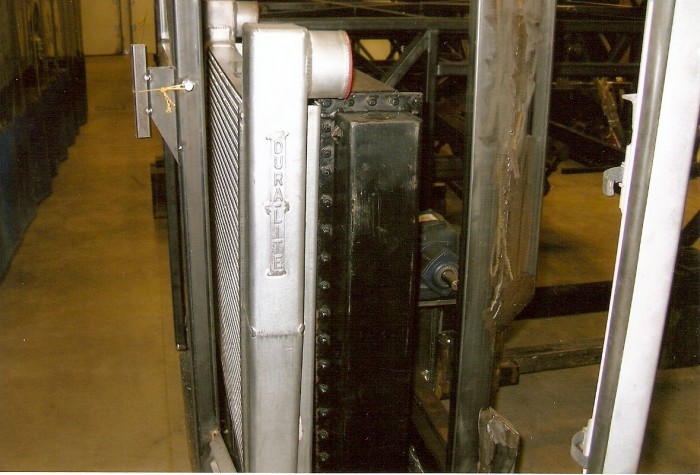
The main engine cooling fan features a 2-speed air-operated clutch, thermostatically controlled, and can also be manually operated in the event of clutch failure. He installed a large D50 double V-belt alternator to charge his 12V electrical system while driving.
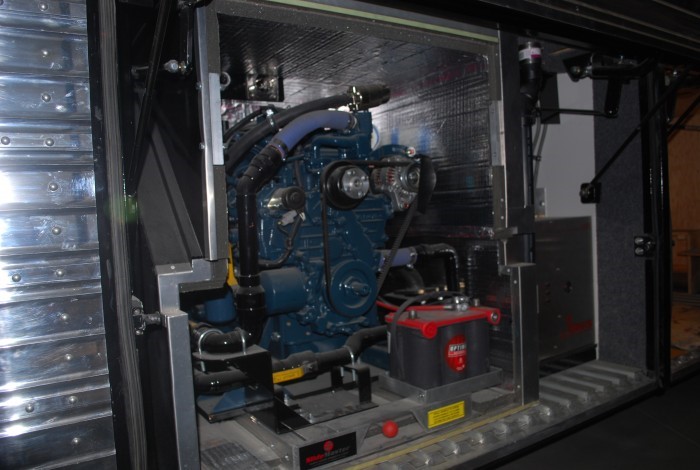
The generator cooling can be accomplished in three different ways: one using its internal generator cooling system, the second through the main engine radiator cooling system, or both. The coolant circulates through the entire cooling system of the generator and the Series 60 engine to ensure maximum cooling. However, if there is a problem with the engine, he can shut off the valves to isolate the generator cooling system from the engine cooling system. He also has an auxiliary pump in his cooling system to ensure he has pumping capacity to move the extra coolant through his system.
The generator’s 2” exhaust is wrapped with both wet blanket and rollboard insulation from Engine Heat Protection and extends up through the coach behind the bathroom cupboards, exiting up through the roof. This allows him to run his generator in a crowded area when dry camping and prevents dust from being stirred up on the ground. It also keeps exhaust fumes away from the side of the coach and windows, and makes the generator much quieter.
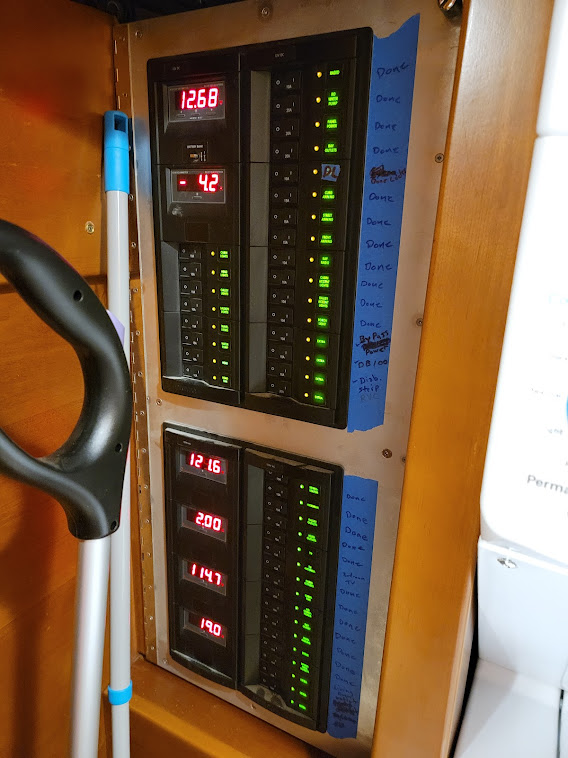
He installed a Blue Seal electric breaker panel system, which features one section for the 120V and another for the 12V. It has lights that indicate which circuits are energized.
This bus features antilock disc brakes all around, providing the driver with more security when braking. Disk brakes do not heat as easily as drum brakes when descending long grades. Drum brakes tend to fade as they get hotter, while disk brakes do not. It also features a Big Foot leveling system to ensure the coach is level when parked.
He mounted a Silverleaf Glass Dashboard that monitors everything from the ECM of the motor, including fuel levels, inverter voltage, as well as holding tank levels, generator voltage, and it also indicates the distance remaining before the vehicle runs out of fuel. Only two standalone gauges are on his dash. One is the brake pressure gauge, and the other is the tag axle air pressure gauge.
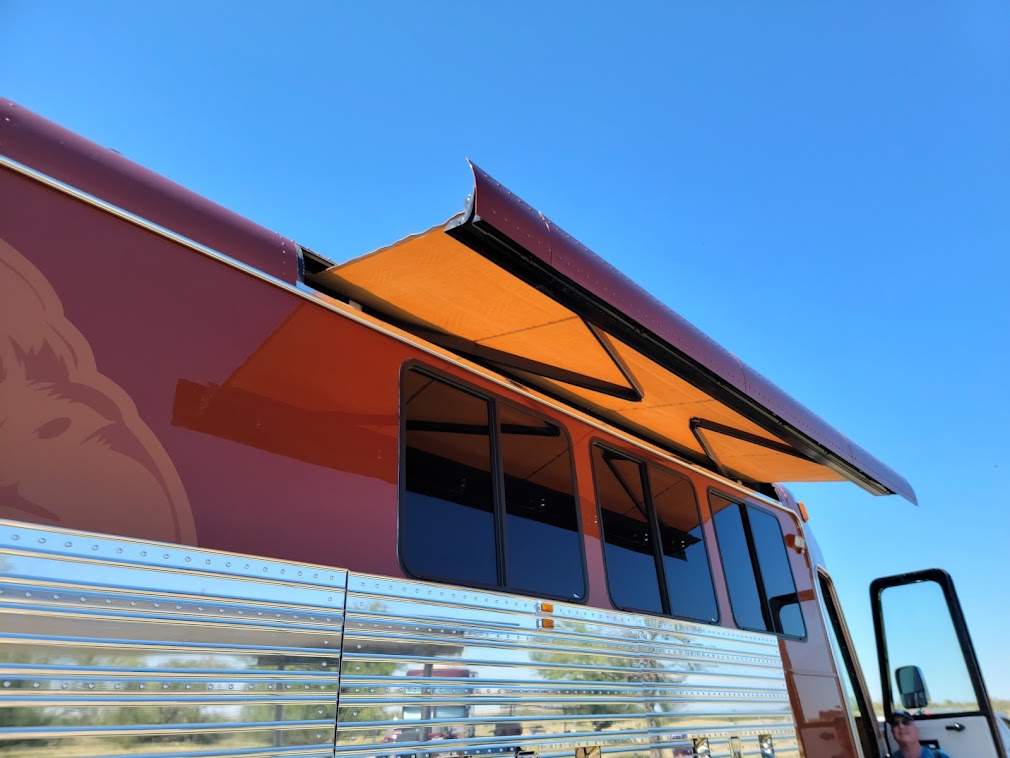
There are four awnings, two on each side of the coach. The main awnings are 16’ long with a 12’ extension on each side. The rear windows are also covered by two 6’ x 4’ awnings. All awnings are concealed within the roofline when retracted, making the bus look just like a high-end factory-built coach.
The bus has an RVC (Regulated Voltage Control) system with a backup panel located in the bathroom, which will override the electronic system in case of a problem. In such a scenario, he can manually turn all lights on or off if necessary.
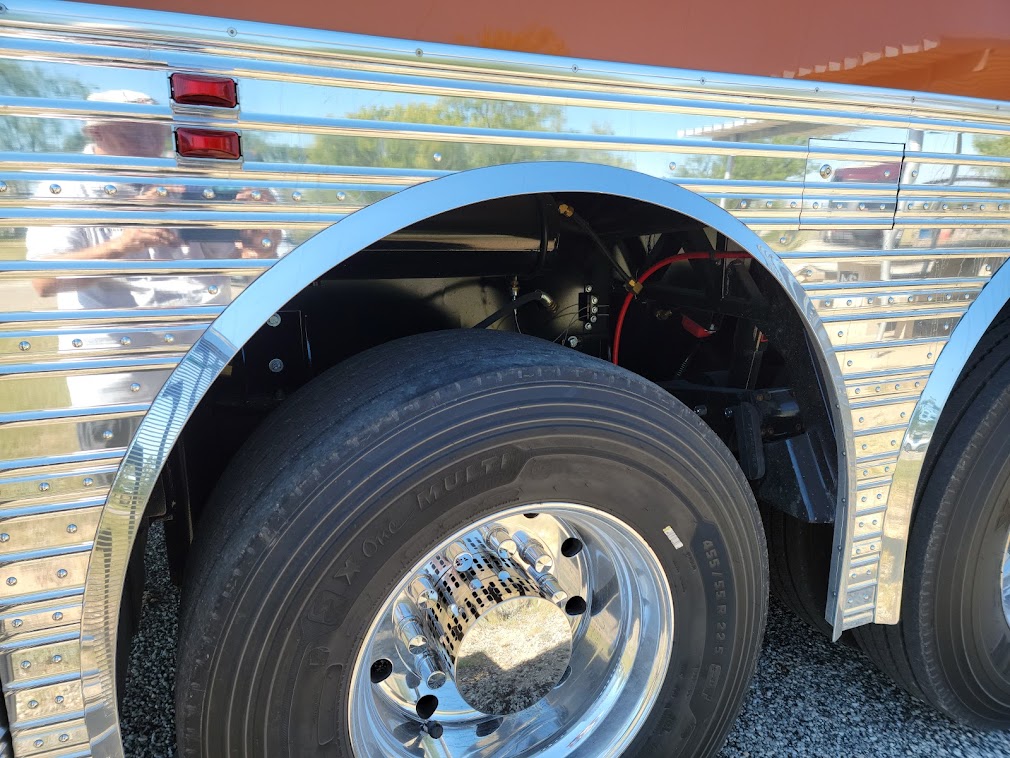
The front tires are 315, the rear drive tires are 12R 22.5, and the tags are 455/80 Wide Base (Super Single) tires mounted on Alcoa aluminum wheels.
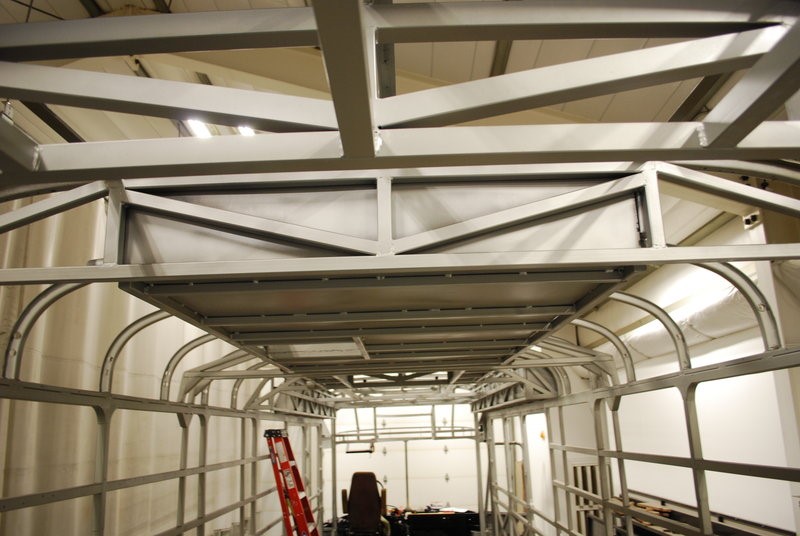
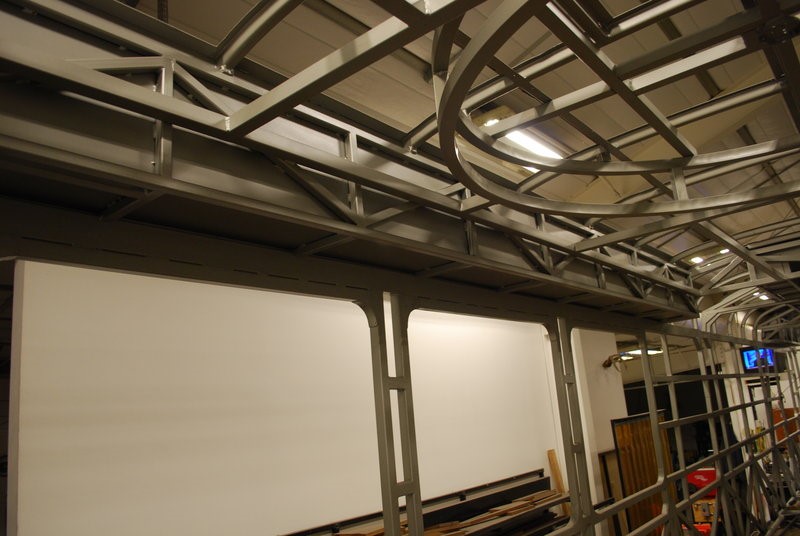
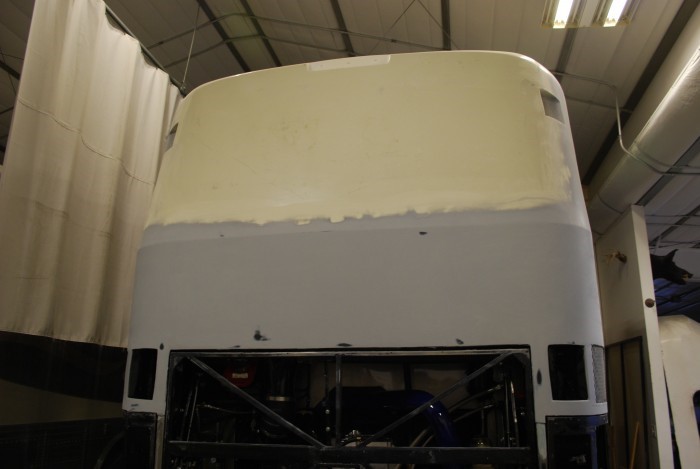
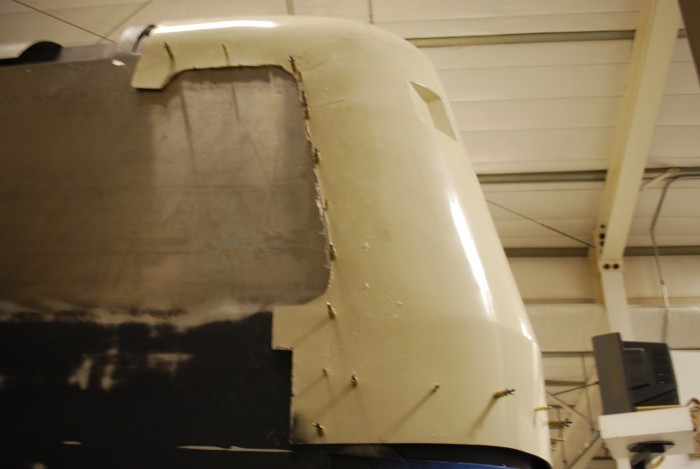
Wayne also removed most of the factory roof and rebuilt it with trusses he manufactured in his garage, making it stronger than the original coach. Everything on the roof, including the three air conditioners and the satellite, is concealed and cannot be seen from the ground. He can receive TV reception in three different ways. He can use a Satellite antenna, a TV antenna, or cable, if available in an RV park that provides it.
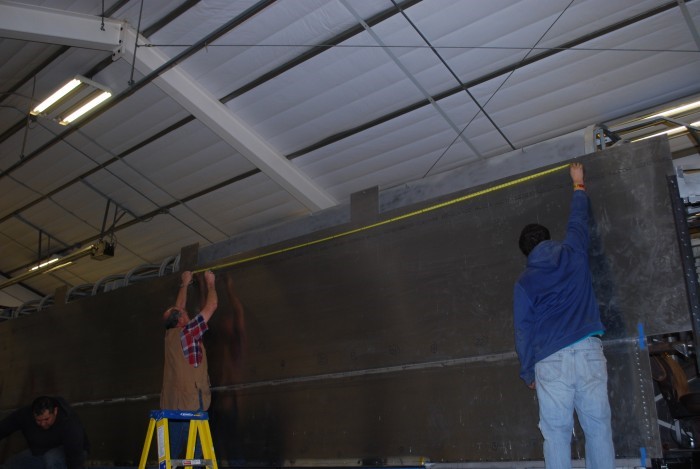
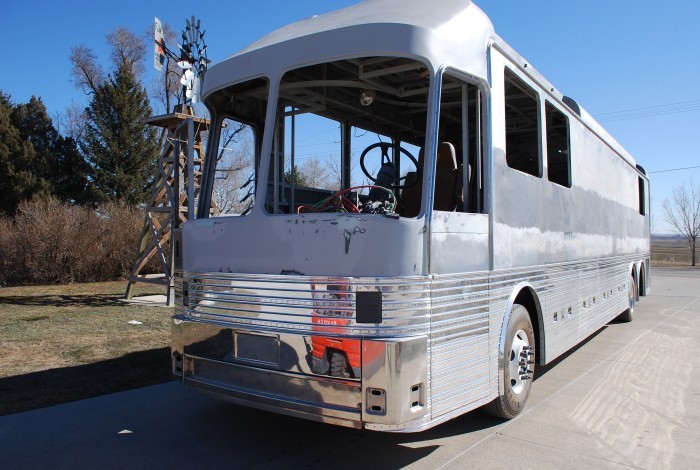
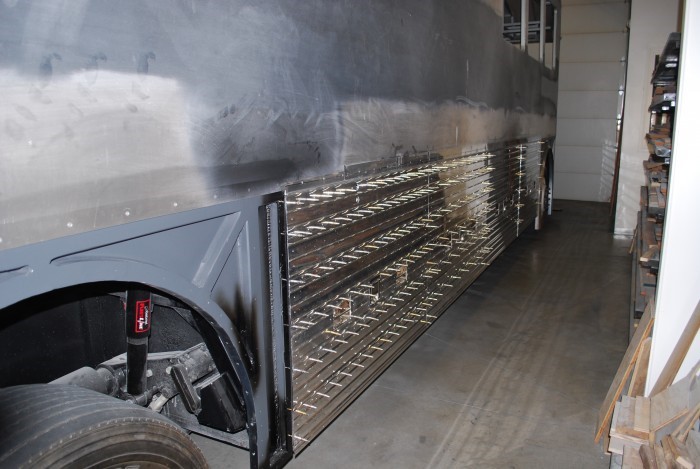
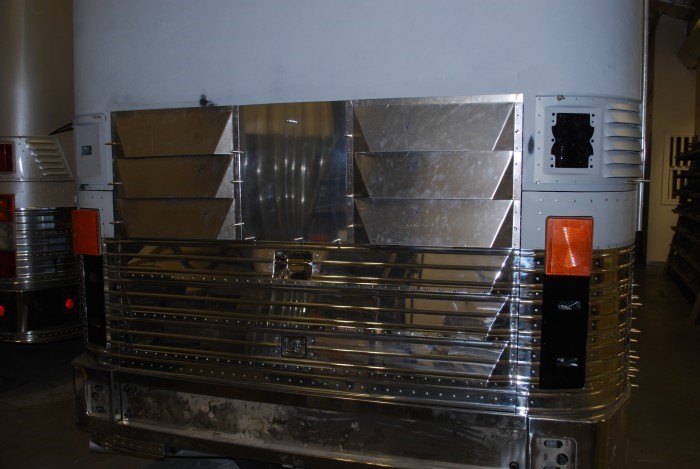
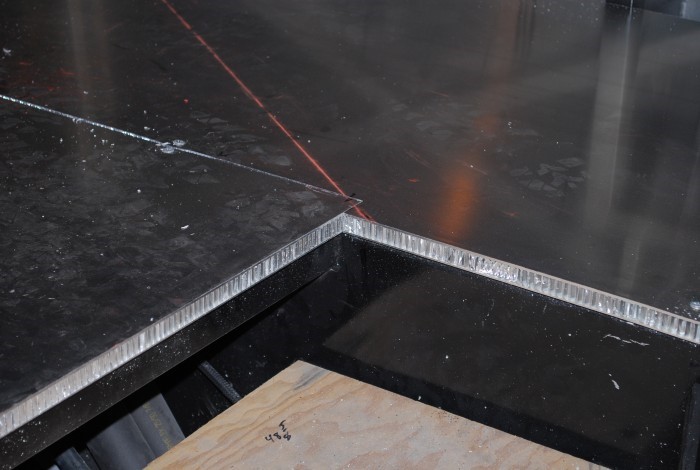
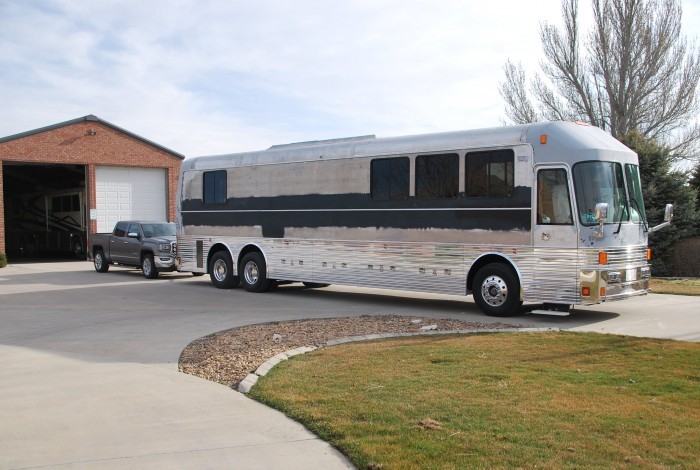
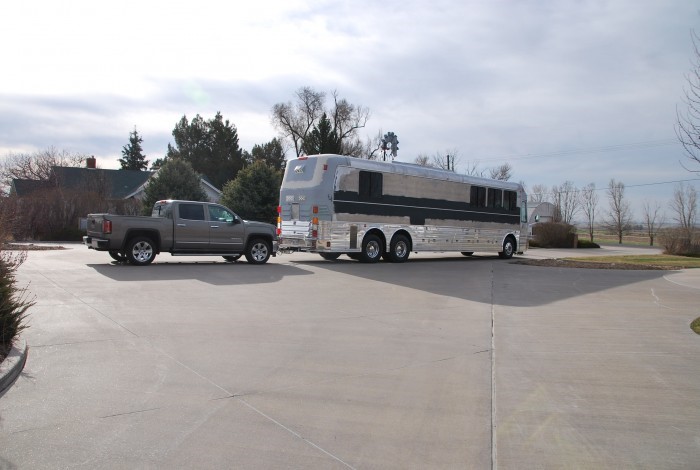
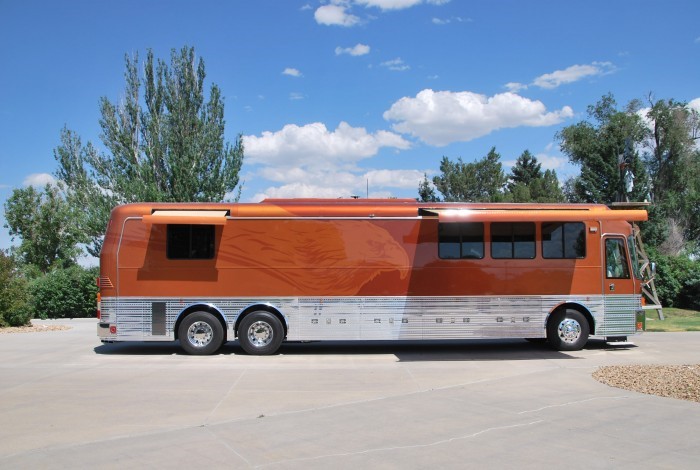
The aluminum on all sides of the coach was replaced with new 6061-T6 aluminum. The upper skin on the siding is 1/8” thick; the lower siding is fluted and glued and riveted on. He used all polished aluminum, not anodized. The roof is stock aluminum roof panels, painted white.
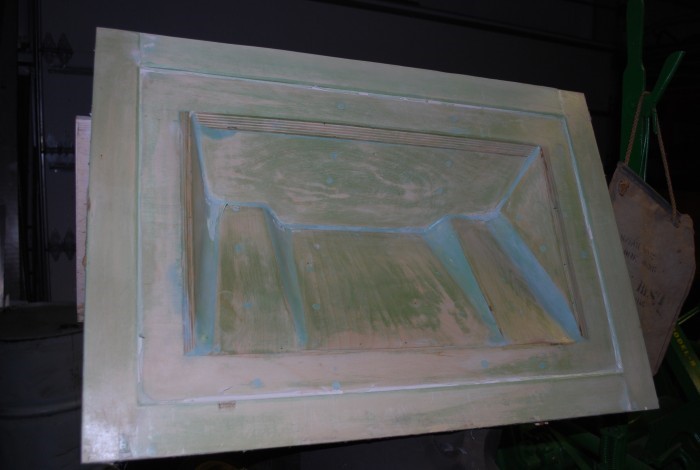
The coach’s electrical system was completely rewired before converting it. All previous wiring was removed and replaced with new wiring, and all lighting is LED, utilizing Eagle lenses that Wayne built himself.
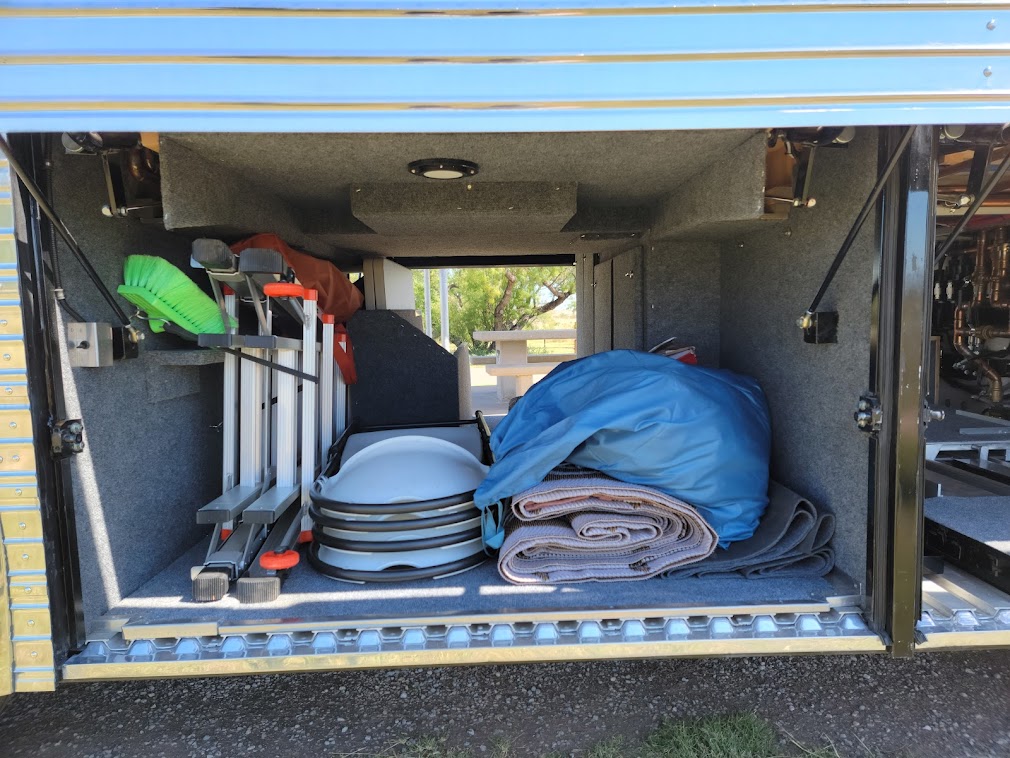
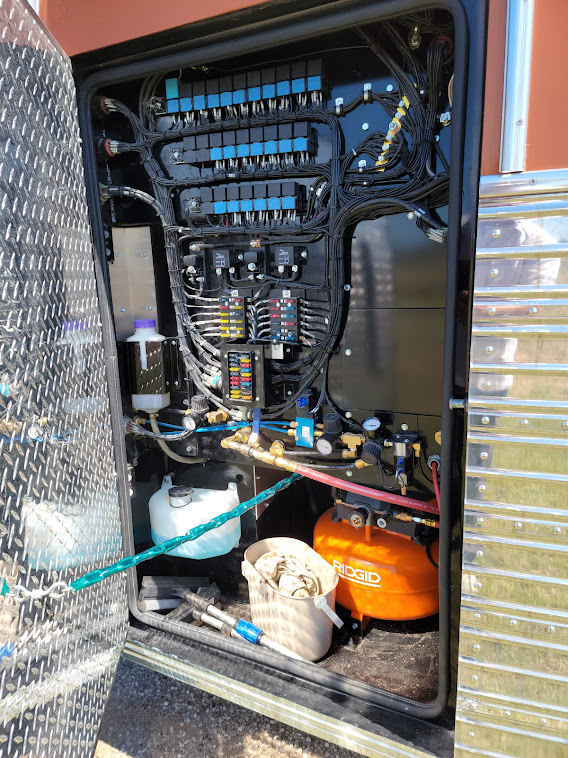
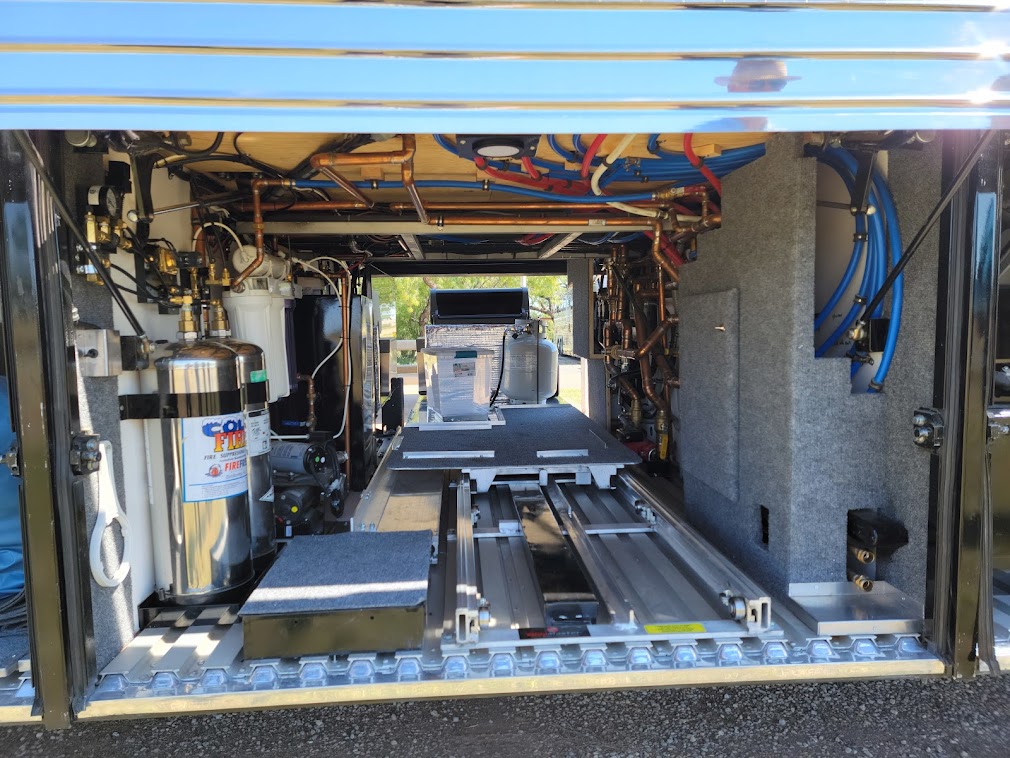
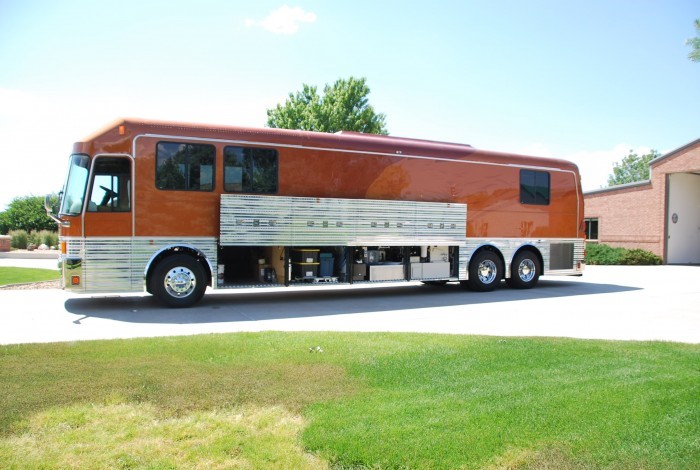
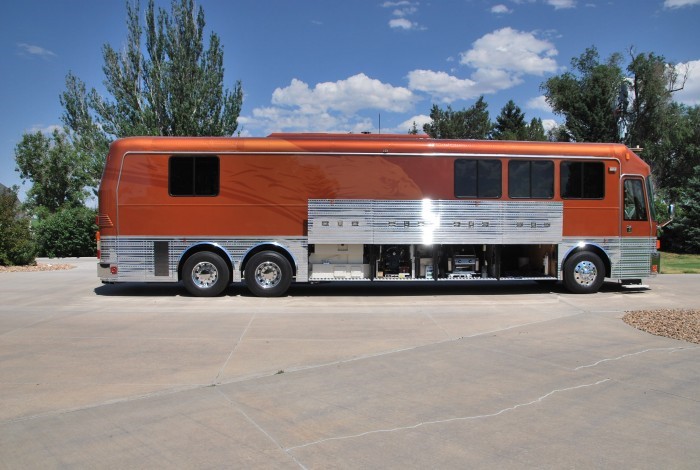
The front bay on the curbside is mainly used for storage. The second bay contains a Propane BBQ and storage on a slide-out. There is a fire suppression system in the generator and engine bay. He has a RO (Reverse Osmosis) water filtration system with a 20-gallon freshwater tank. Controls for the hydraulic system are also housed in that bay.
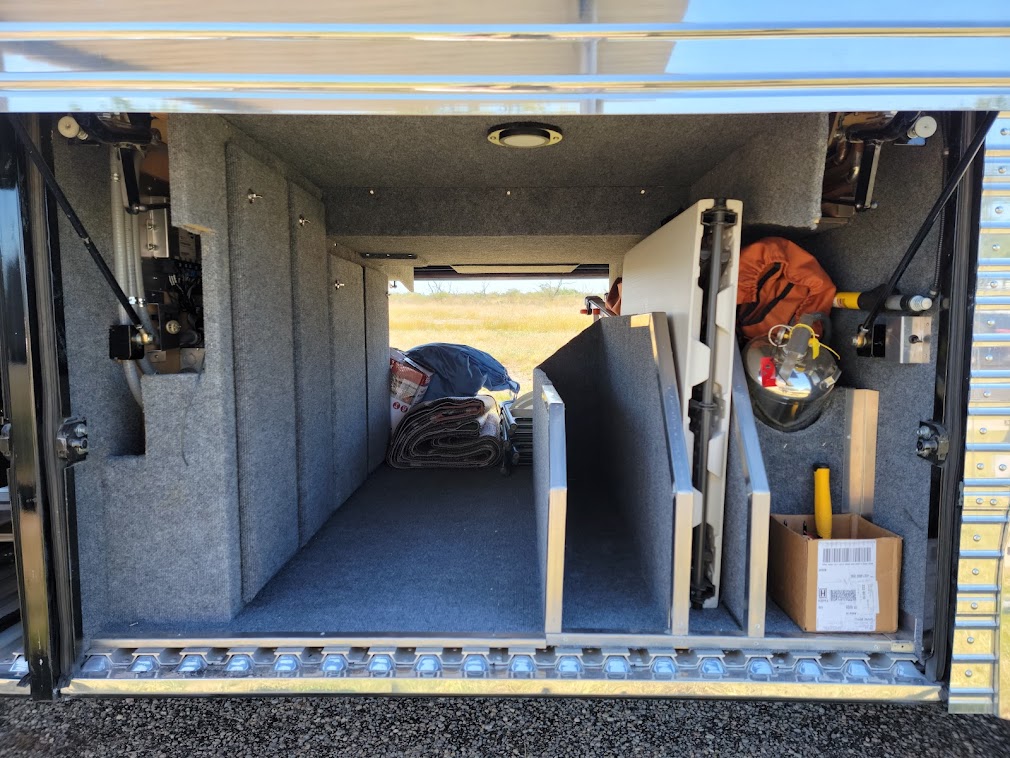
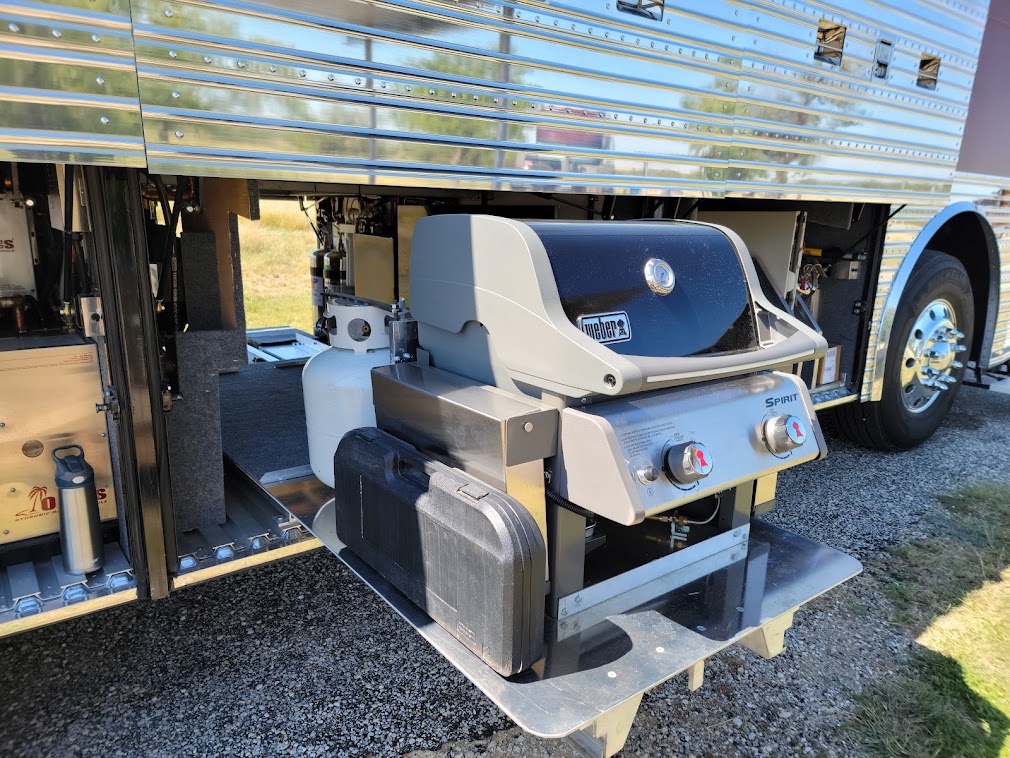
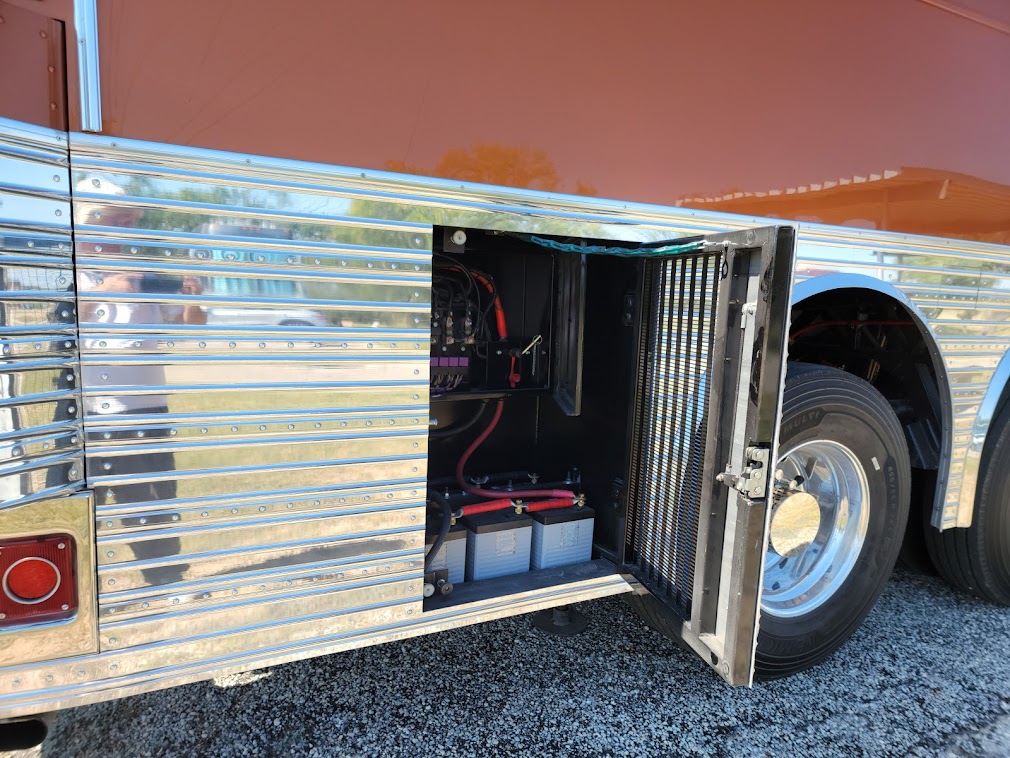
The third bay features house batteries, an inverter, freshwater tanks, a generator on a slide-out tray, and an Oasis heating system, which heats both his cabin and water, and can also be used to preheat the engine in cold climates.
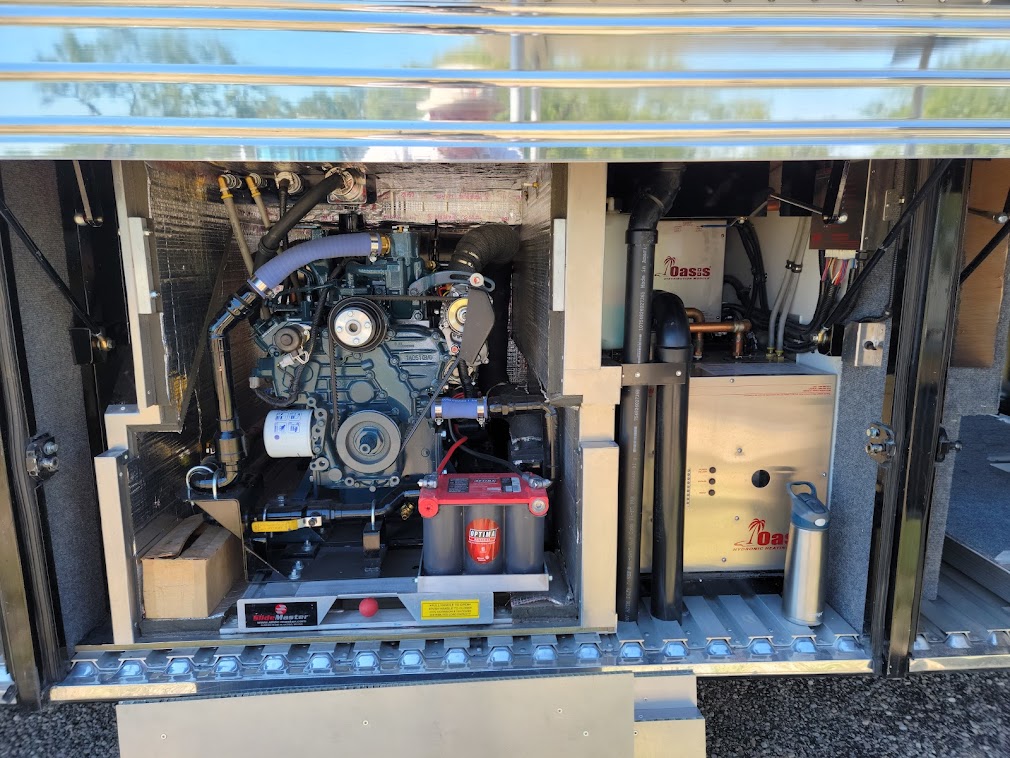
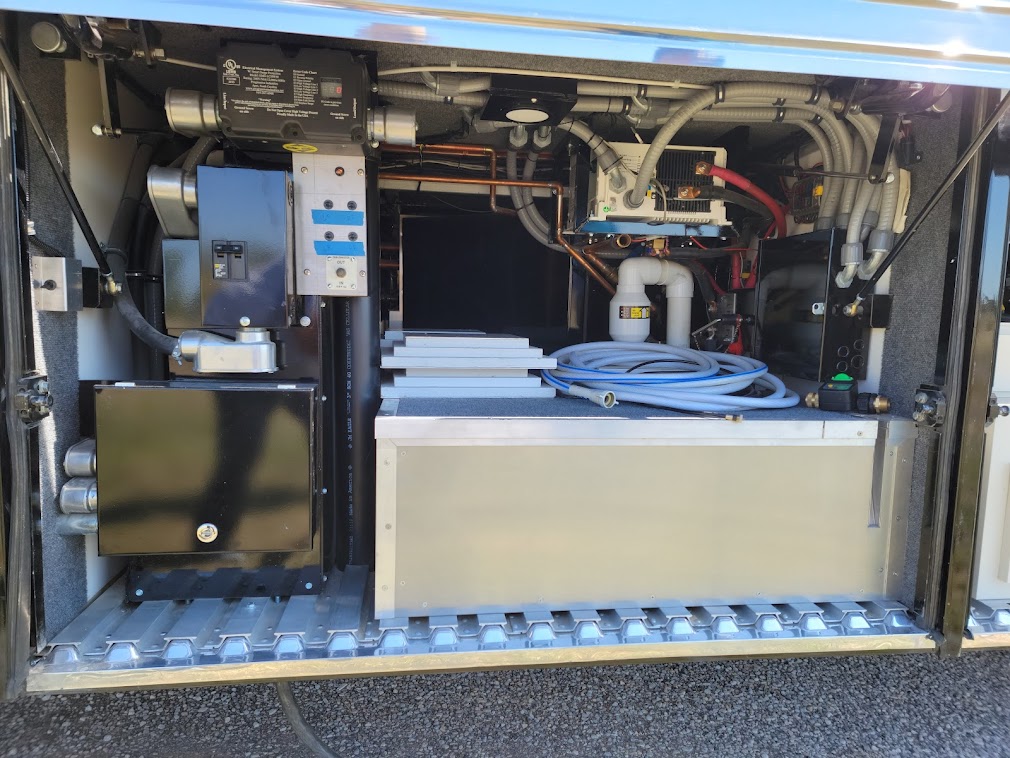
The fourth bay includes additional water tanks, including another freshwater tank and the grey and black water tanks. There are hot and cold-water faucets on both sides of the bus. Hookups for water, power, and cable TV are on the street side. The shore power is 50A, on a 50-foot electric cable reel.
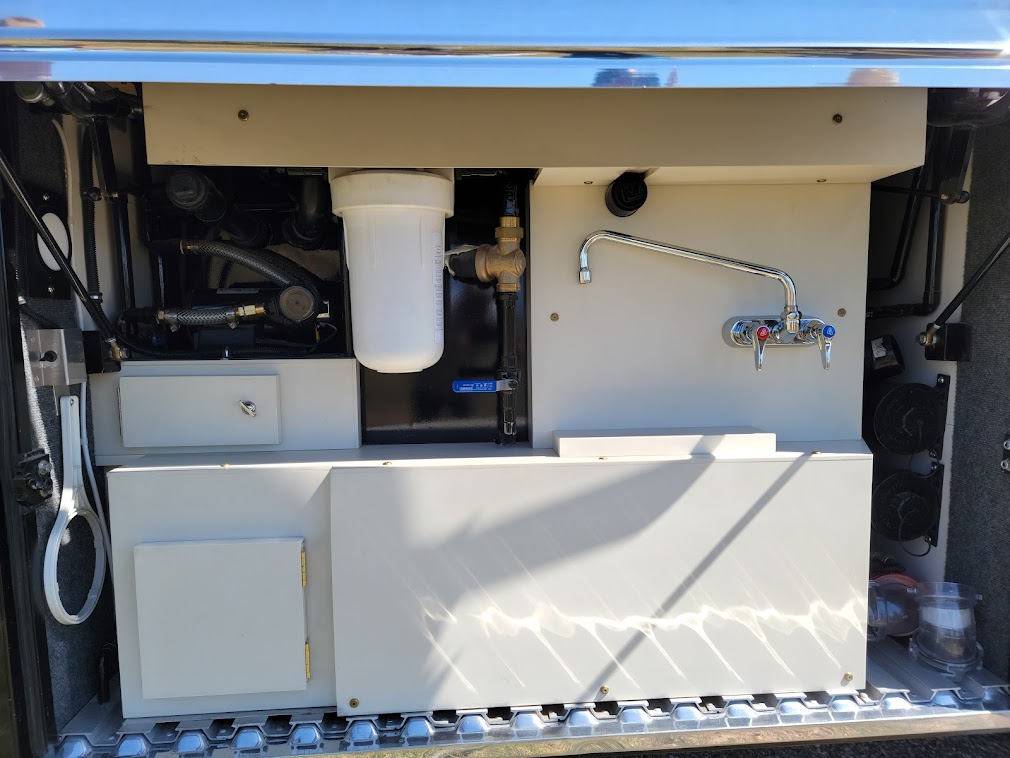
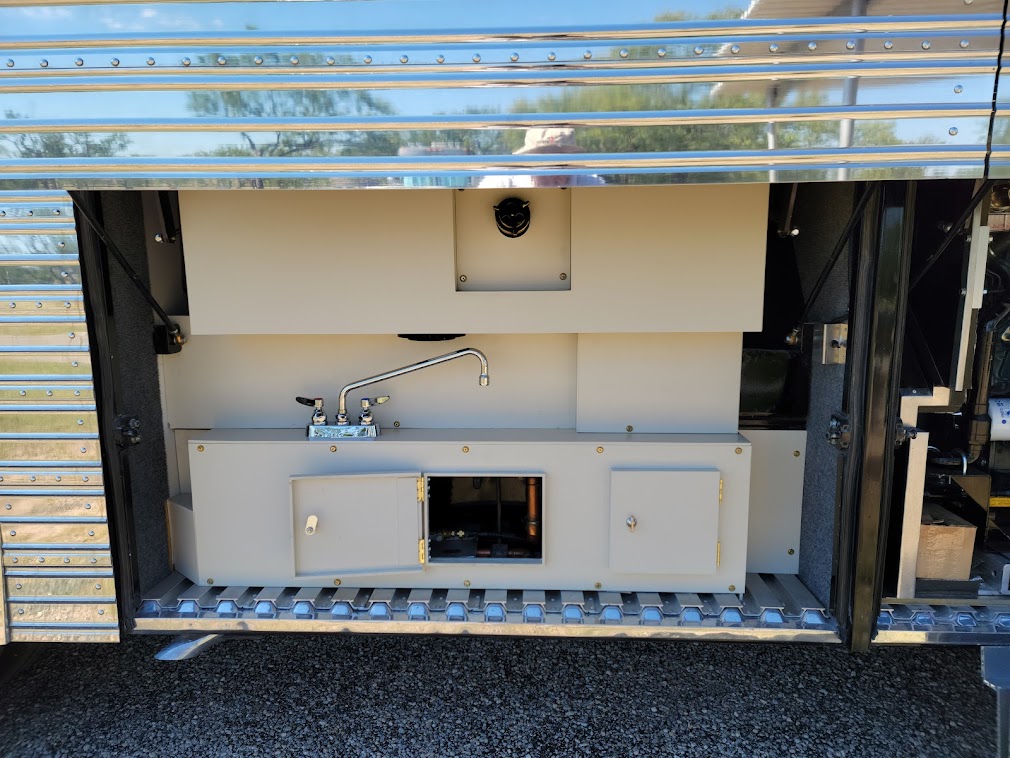
All bay doors are Pantographic Eagle Bodie doors, featuring two handles each and manual key locks. Wayne did not install electromagnetic locks on the doors because he was concerned that if something went wrong, there would be no way to access the bays.
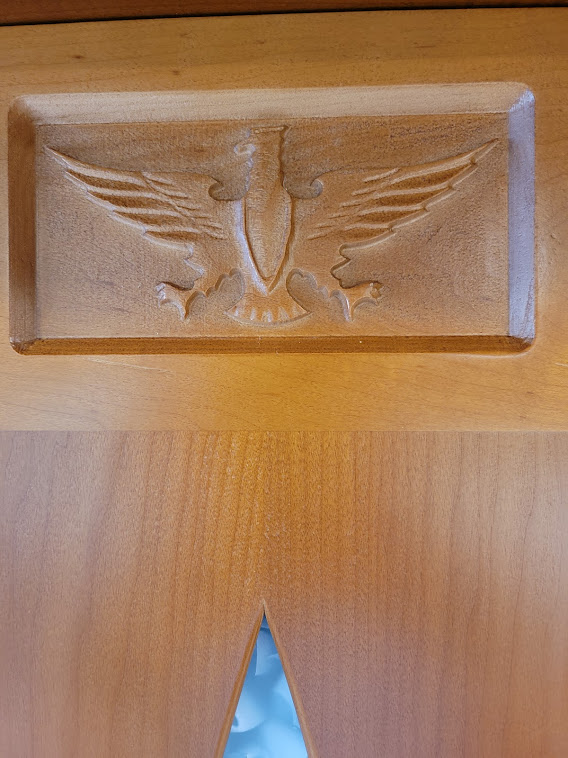
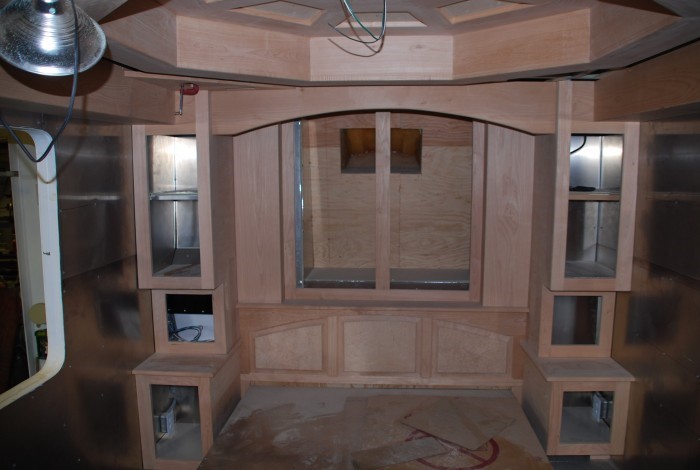
The interior of the bus is built of all Maple wood, in Wayne’s shop, and the raised panes are made of Birds-Eye Maple. There are about a dozen Eagle emblem carvings inside the bus, using a Craftsman CNC machine.
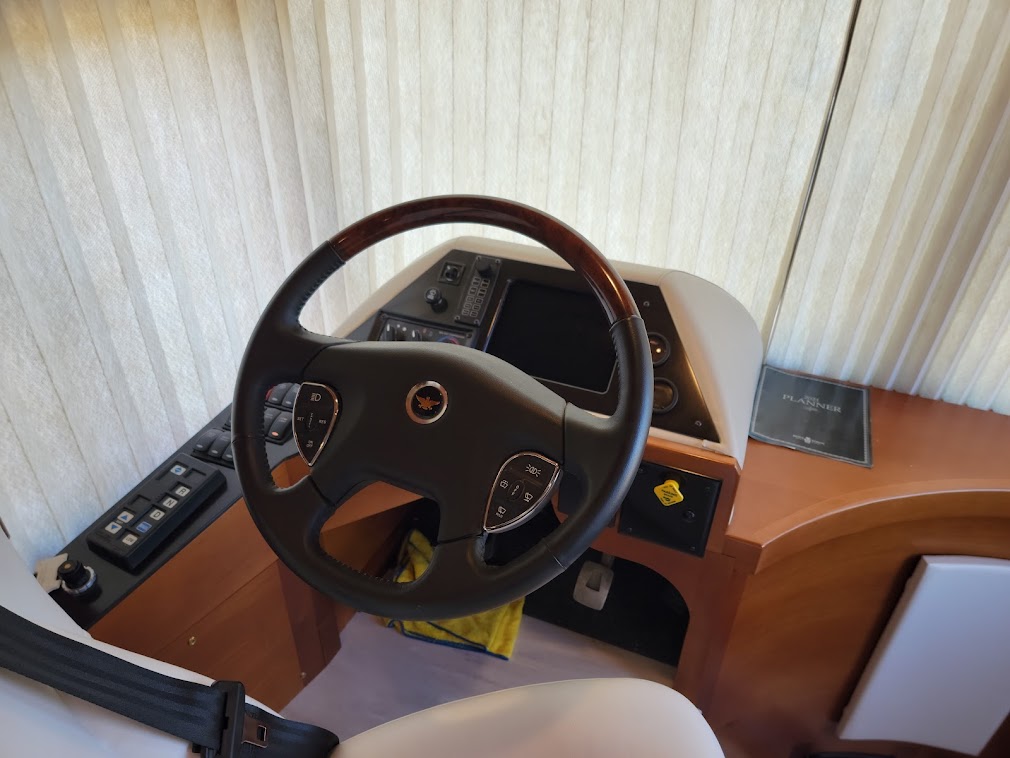
There is a retractable upper dash in the cockpit, which has a built-in GPS and Backup camera, fire suppression monitors and controls, TPMS, generator controls, and several gauges.
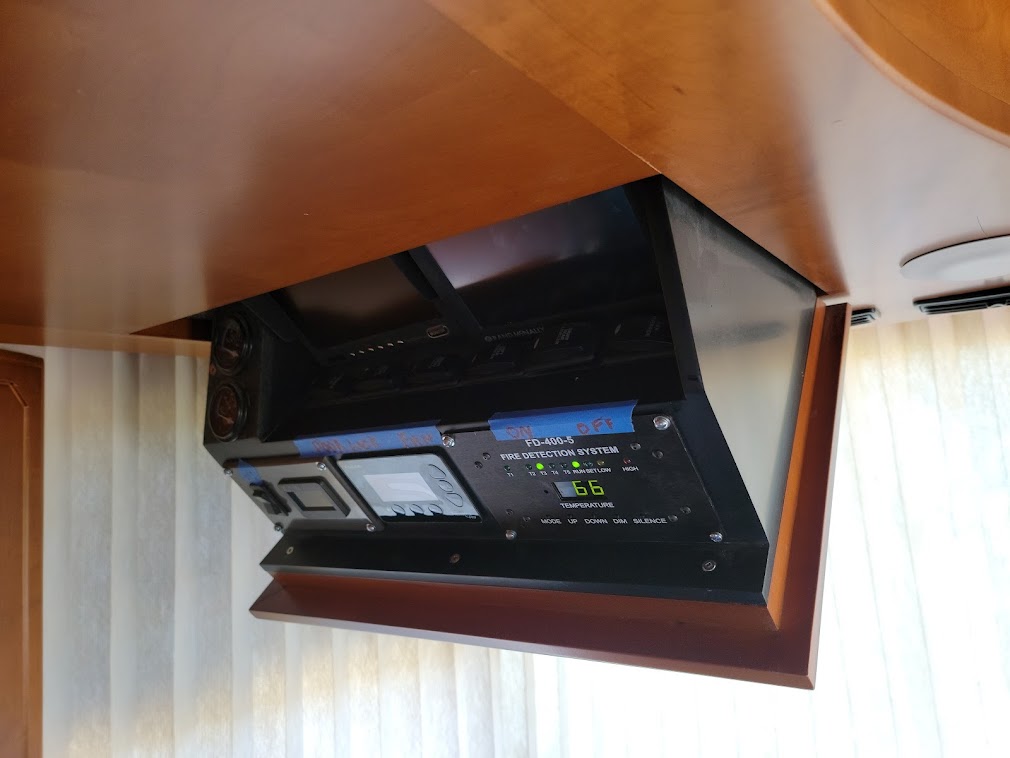
All windows, except the windshield, are in valances and are electric, featuring backlit accent inset panels. The Valances also have Eagle emblems carved into them. All dash rocker switches are custom-labeled and backlit, allowing them to be seen at night.
All paneled privacy doors are handmade with Eagle emblems carved into them. All are hinged. They are not pocket doors like many buses have, and all are dual-purpose as they can be used to close off one room or the other.
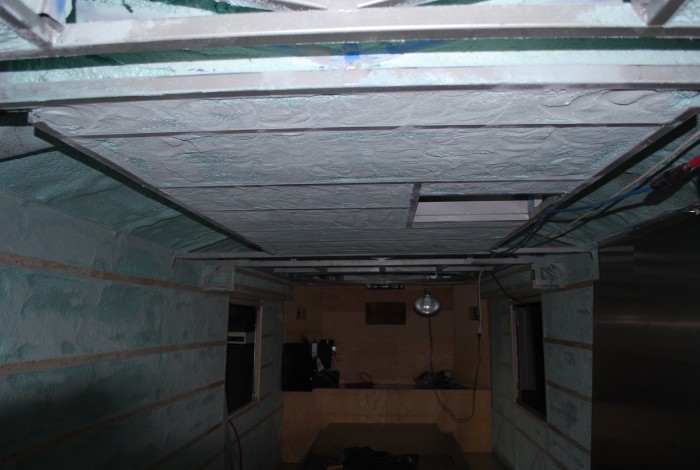
The ceiling is lowered to accommodate space for air conditioning ducts and wiring, and is then covered with decorative wood and backlit acrylic panels. The fabric-covered panels are held in place using magnets, allowing them to be easily removed by gently pulling on them, providing access to everything in the ceiling.
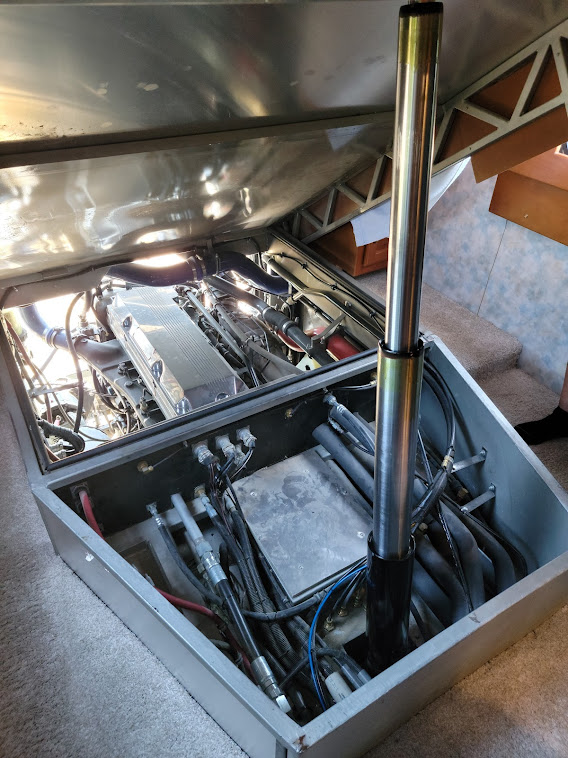
The bedroom features a forward-facing bed with a bedspread crafted from numerous T-shirts from various rallies held throughout the year, mostly Eagle rallies, with a few others interspersed. The bed can be lifted to access the engine compartment using a large 3-stage hydraulic piston that Wayne had lying around.
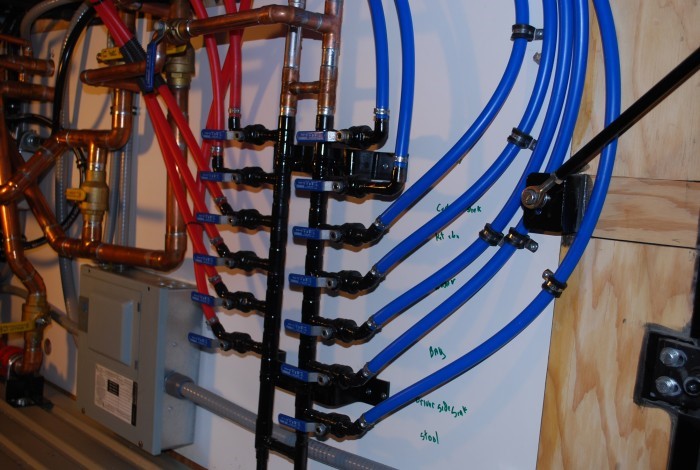
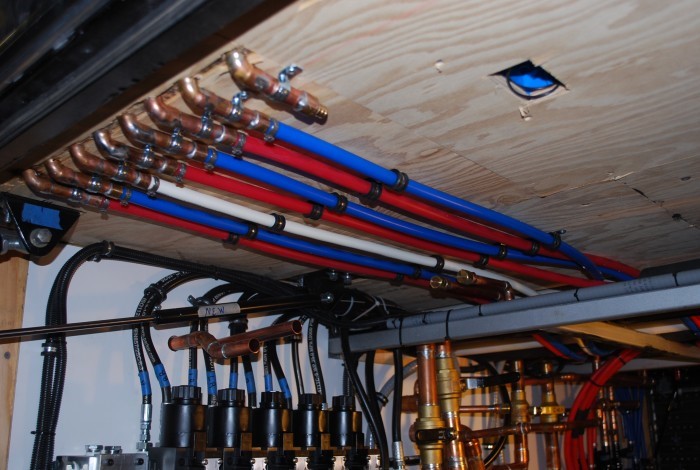
All plumbing and wiring passing through every bulkhead are done using fittings to ensure they are air-tight, preventing rodents or bugs from entering the wire channel or inside the bus.
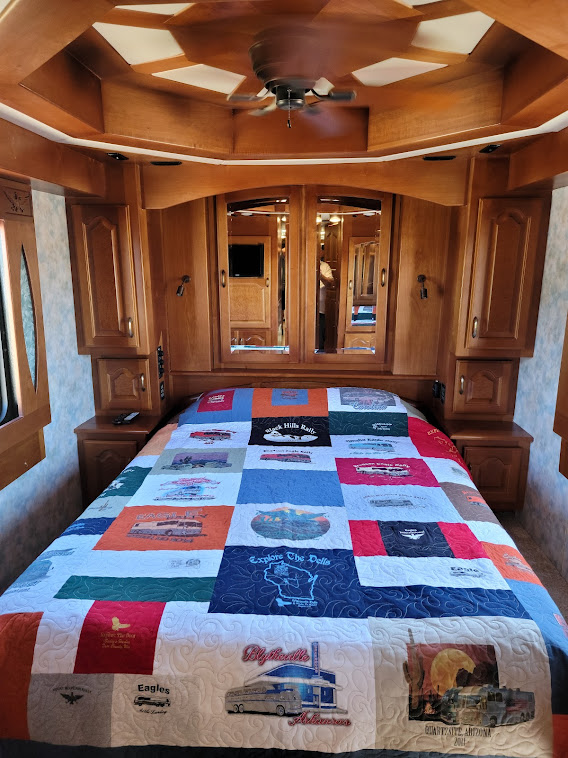
Behind the bed, there is a closet where they store seldom-used clothing items. There is also a TV in the bedroom.
In the living room, there are four Villa captain chairs with 3-point seatbelts that swivel and recline. There are also two additional seats in the same area. There is a compass rose on the floor that Wayne made himself, which is covered in epoxy. The flooring is Maple parquet flooring.
The TV in the main cabin is hidden in a cabinet that rises vertically using an electric actuator controlled by a remote. It folds down from the ceiling when they watch TV.
In the kitchen, there is a side bar dinette with two chairs, looking out the curbside windows where they generally eat their meals.
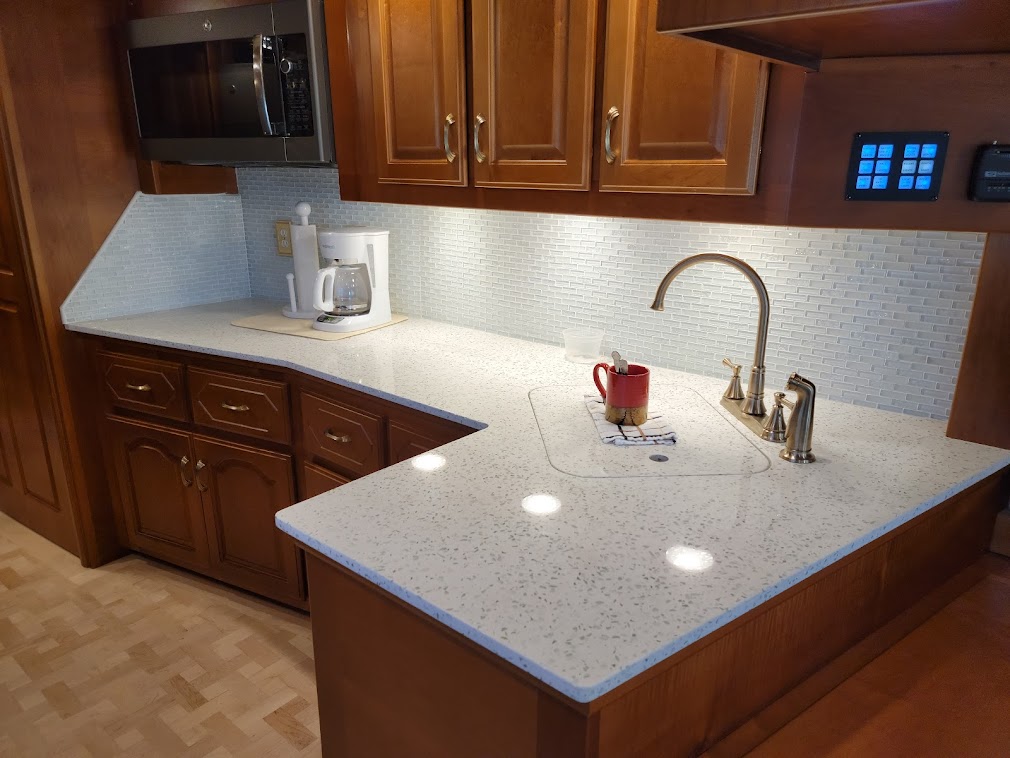
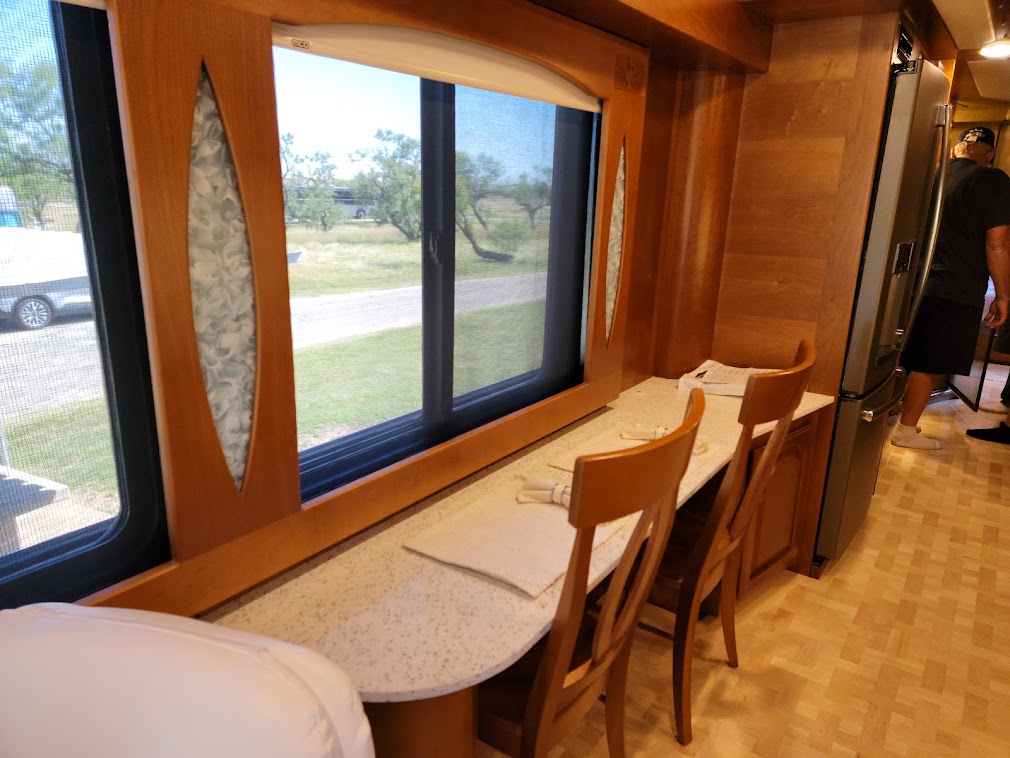
All lower cabinets feature pull-out drawers, allowing all contents to be easily accessible without requiring a long reach. All doors in the bus, as well as the cabinets and drawers, can be locked by electromagnets from the cockpit, so before traveling, he can lock everything before moving. Wayne has seen too many drawers slide out and doors swing open while going around corners in his previous buses. Storage is essential for the wife, so every nook and cranny in his coach is used for storage.
In the bathroom, there is a dedicated room for the toilet and sink. Across the hall is a second sink, allowing two people to wash their hands simultaneously. The countertops are acrylic. The shower is larger than average, providing ample room to move around in it. The bus features a hot water bypass system, enabling them to use a momentary on button to bypass the cold water initially coming out of the shower and sink in the bathroom, thereby conserving water.
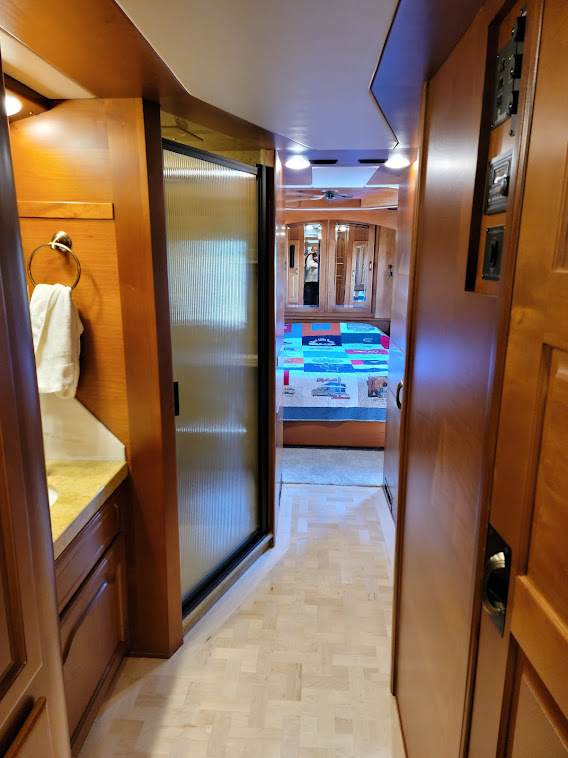
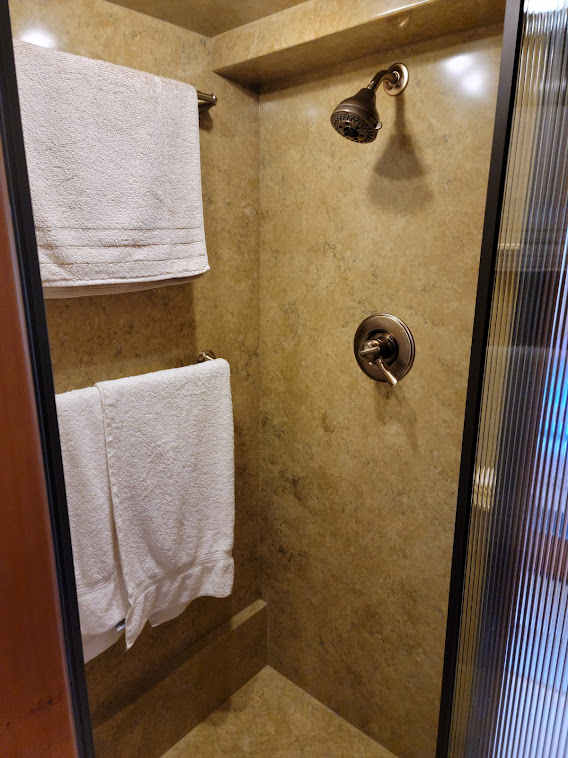
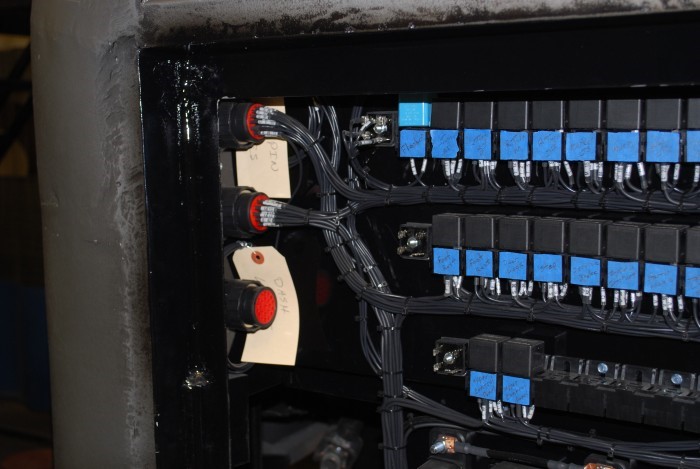
Everything in the bus was handcrafted by Wayne, except for stretching the upper outside skin, the quartz countertops, and the exterior paint. For three years, he had help with various manual labor tasks, including sanding and running wiring. Speaking of the house wiring, instead of using color-coded wires, he ran all black wires and labeled them with numbers and letters, which were then covered with clear heat-shrink tubing.
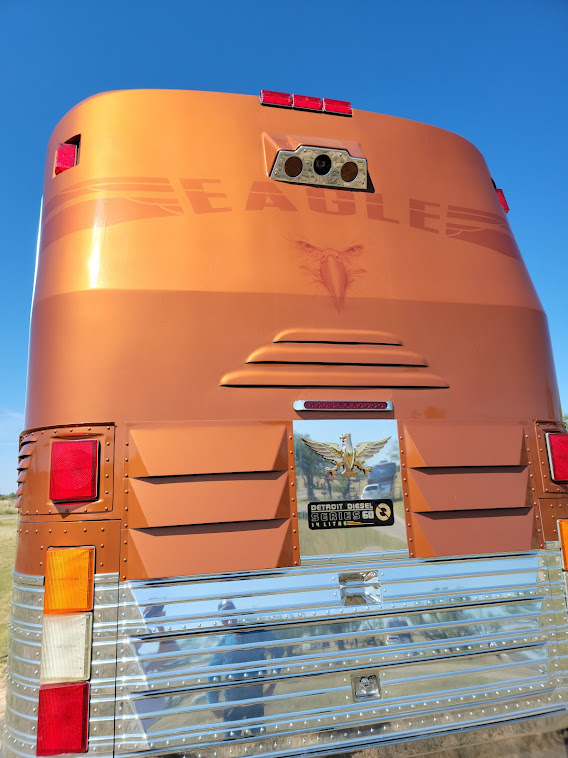
The bus never left his garage during the conversion, except to be painted once the inside was completed. The exterior paint was done by Onextreme in Hemet, California, in 2019.
This bus is one of the most beautiful Eagles on the road and turns heads wherever it goes. Anyone lucky enough to get a tour of the inside is amazed at the craftsmanship and attention to detail.
Take a video tour of this bus by clicking HERE.
Eagle 1545 Bus Conversion
Complete Specifications & Features
| General Specifications | |
| Manufacturer | Eagle |
| Model | 1545 |
| Year | 1994 |
| Vehicle Weight | 50,000 lbs |
| Fuel Tank Capacity | 140 gallons |
| Generator Tank Capacity | 40 gallons |
| Miles Per Gallon | 8 MPG |
| Engine | Series 60 14L |
| Transmission | Eaton 10-speed Auto-shift |
| Overall Length | 45′ |
| Overall Width | 102″ |
| Overall Height | 12′ 4″ |
| Raised Roof | 8″ |
| Electrical System | |
| Solar Power | None |
| House Batteries | Three 8D AGM |
| Electrical System | 12V & 120V |
| Inverter | 3,000W Magnum |
| Shore Power Amps | 50 |
| Generator | Wrico 15kW Diesel |
| Water System | |
| Fresh Water Tank | 160 Gallons |
| Black Water Tank | 80 Gallons |
| Grey Water Tank | 80 Gallons |
| Tank Material | Stainless Steel |
| Water Heater | Oasis Diesel and Electric (Continuous) |
| Plumbing Material | Copper & PEX / PVC |
| Water Pump | Shurflo 12V 5-GPM |
| Water Filter | R/O system for refrigerator ice and water |
| Kitchen & Appliances | |
| Cooking | Two portable Induction Plates |
| Microwave | Microwave/Convection Combo |
| Refrigerator | Electric Residential |
| Kitchen Counter | Quartz |
| Bathroom | |
| Bathroom Type | Shower |
| Toilet Type | RV |
| Bathroom Counter | Acrylic |
| Climate & Comfort | |
| Air Conditioning | Three Cruise air units |
| Heating | Oasis 3-zone plus engine pre-heat (Diesel & Electric) |
| Insulation | Foam R19 total |
| Roof Ventilation | Original Hatch & 12V Fantastic Fans |
| Interior Features | |
| Wall Material | Aluminum wafer board (insulated), wood, wallpaper |
| Windows | Peninsula/Motion Windows |
| Ceiling Material | 4″ foam, covered by plywood, Vinyl |
| Flooring | Maple wood and carpet |
| Bed Size | Queen |
| Slides | None |
| Entertainment System | |
| TVs | 36″ and 24″ |
| VCR | Yes |
| DVR | Yes |
| Blu-ray | No |
| Satellite | Stationary In-Motion Winegard Traveler |
| Sound System | Denon Surround Sound |
| Conversion Details | |
| Ownership Duration | 16 years |
| Self-Converted | Yes |
| Conversion Time | 14 Years |
| Inspiration | “I love Eagle buses and working with wood” |

Related reading: 1982 MCI MC-9 Gypsy Queen bus conversion, 1994 MCI DL3-45 Saguaro bus conversion, Honeysuckle Rose skoolie build story.