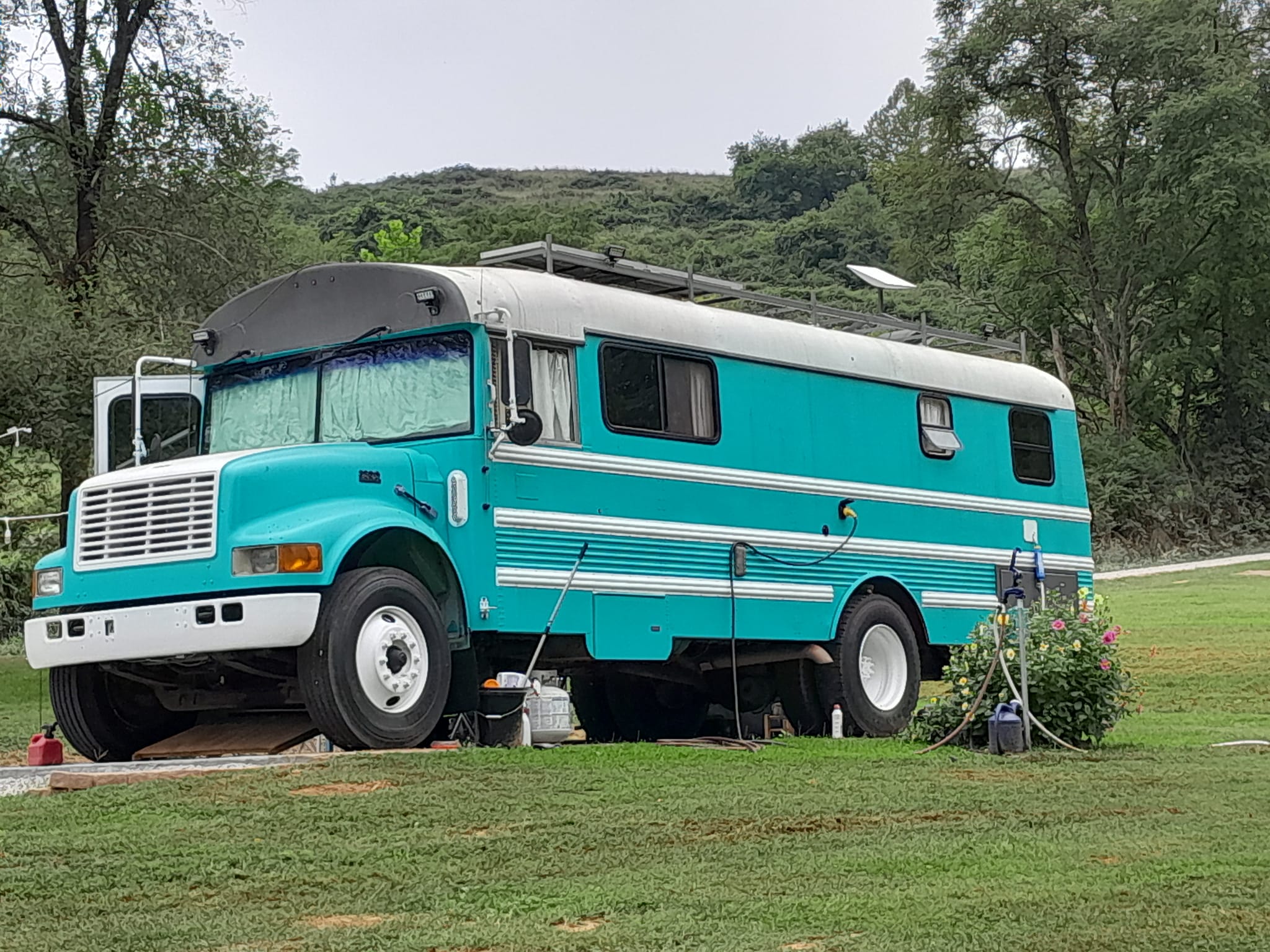




















Skool Beans Café – A 1996 Thomas Vista American School Bus - By Holly Keiser
Skool Beans Caf 1996 Thomas is a focus of this bus conversion article. Below you will find practical guidance, builder insights, and community tips about skool beans caf 1996 thomas.
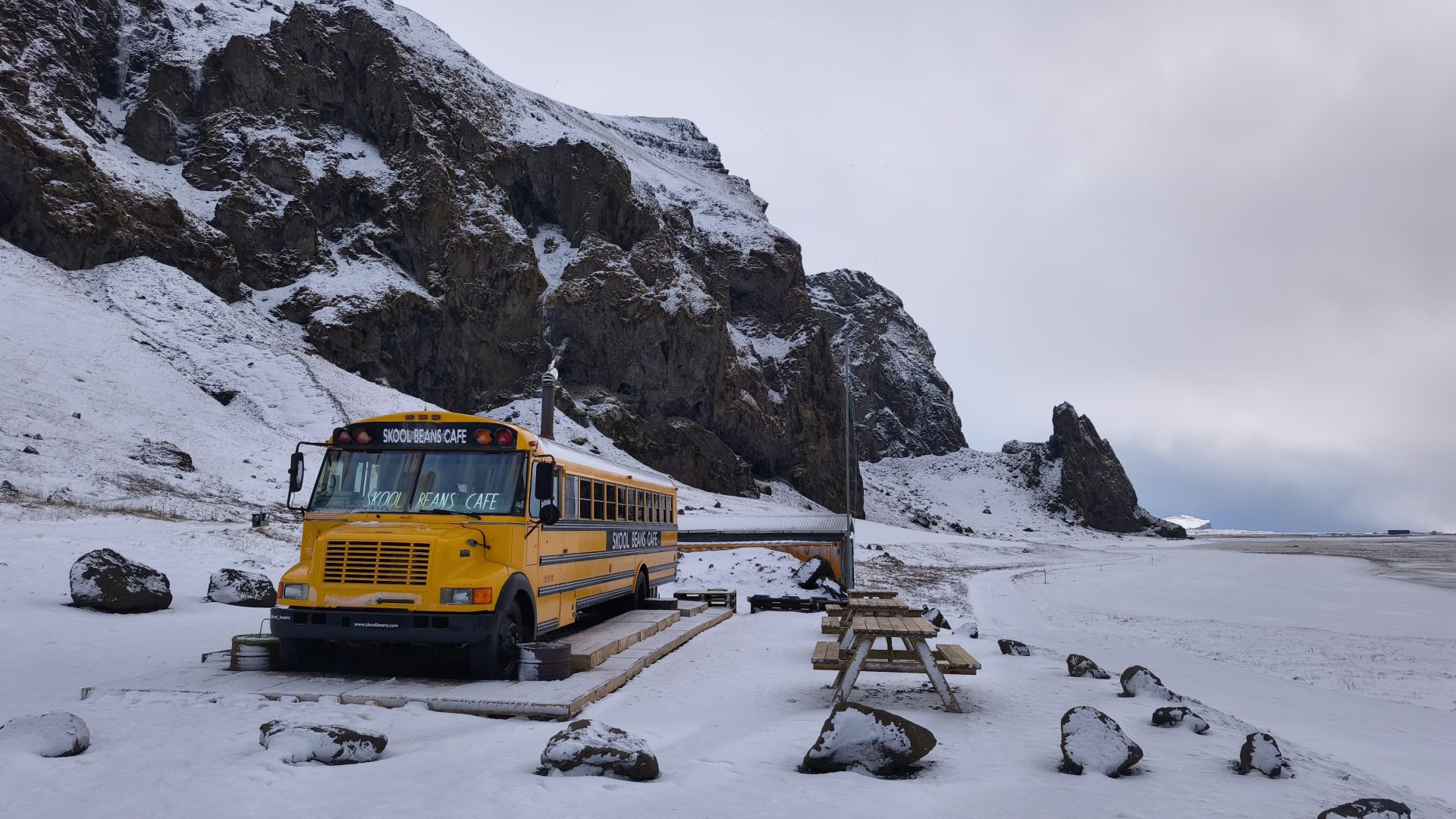
I’m Holly. I live in a remote part of Iceland, and you might remember me from an article that I wrote back in 2024 about my Skool Beans Café. I own a 1996 Thomas Vista American school bus. Now, I know what you’re about to ask! How did I get an American school bus in Iceland?




Well, we had an American military base near the airport in Keflavik that closed down in the early 2000s, and when it did, the 11 buses the base had imported were scattered across Iceland. About five remained, and I have one of them! In 2018, I managed to get my hands on one only moments before it was destined for the junk yard. With a very handy friend and a sprinkle of hope, we drove it away, laughing all the way to my village three hours away!
After a couple of years of hard grafting (See previous article for all the deets), I finally opened my dream cafe in 2020, Skool Beans…. During a global pandemic, which wasn’t exactly part of the plan!
Needless to say, as I sit here now writing this handy troubleshooting guide, we are still going strong against all the odds. So, what’s happened since we last locked eyes?
Problem solving mostly! Iceland is EXPENSIVE, lacks American school bus supplies, and, where I am located, is fairly tough to repair. Import fees are astronomical, and many countries won’t ship to Iceland for reasons I still don’t fully understand! The closest big hardware store is still a 6-hour round trip, and the local shop charges over 27 dollars for a box of screws. So how do I make it work? Let’s start with some of the most common issues I've come across.
I stand by my first point about owning a bus: “Learn to love your leaks!”
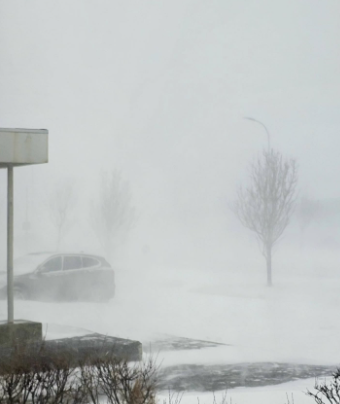
Iceland is a country where nature wins. Whether it’s an erupting volcano, a glacier flooding, an earthquake, hurricane winds, or a sand storm, you’re going to need to expect at least one of these a month. As a consequence, the bus moves. It expands and retracts with the temperature changes, and leaks pop up here and there. Windows smash all sides of the bus in the storms, and the roof hatches are tested to their limits.
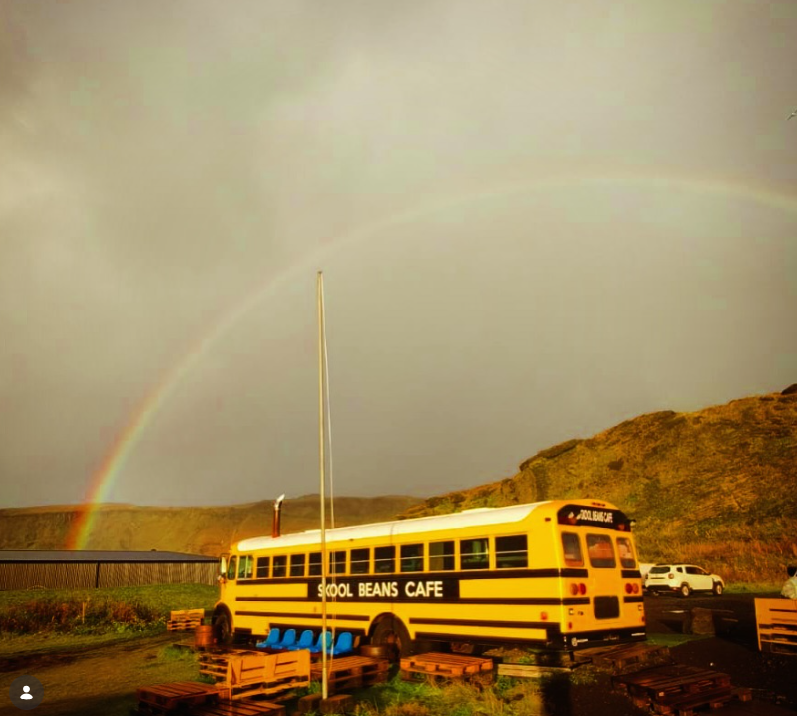
Hatching a plan!
The roof hatches have been my biggest pain. Yes, I could remove them and weld them closed permanently. Skool Beans Cafe is open for business during the months when this is possible and closed in the deep winter months. She (her name is Evelyn) doesn’t drive, and it’s wired into the main power grid, so when winter hits, the bus gets buried with snow and hibernates during the winter months, and it’s hard to try and convince someone to climb on roof to remove the hatches and weld a new cover onto her during a blizzard. It’s my main goal one day, but it seems like that day might never come, since it’s been this way for six years now!
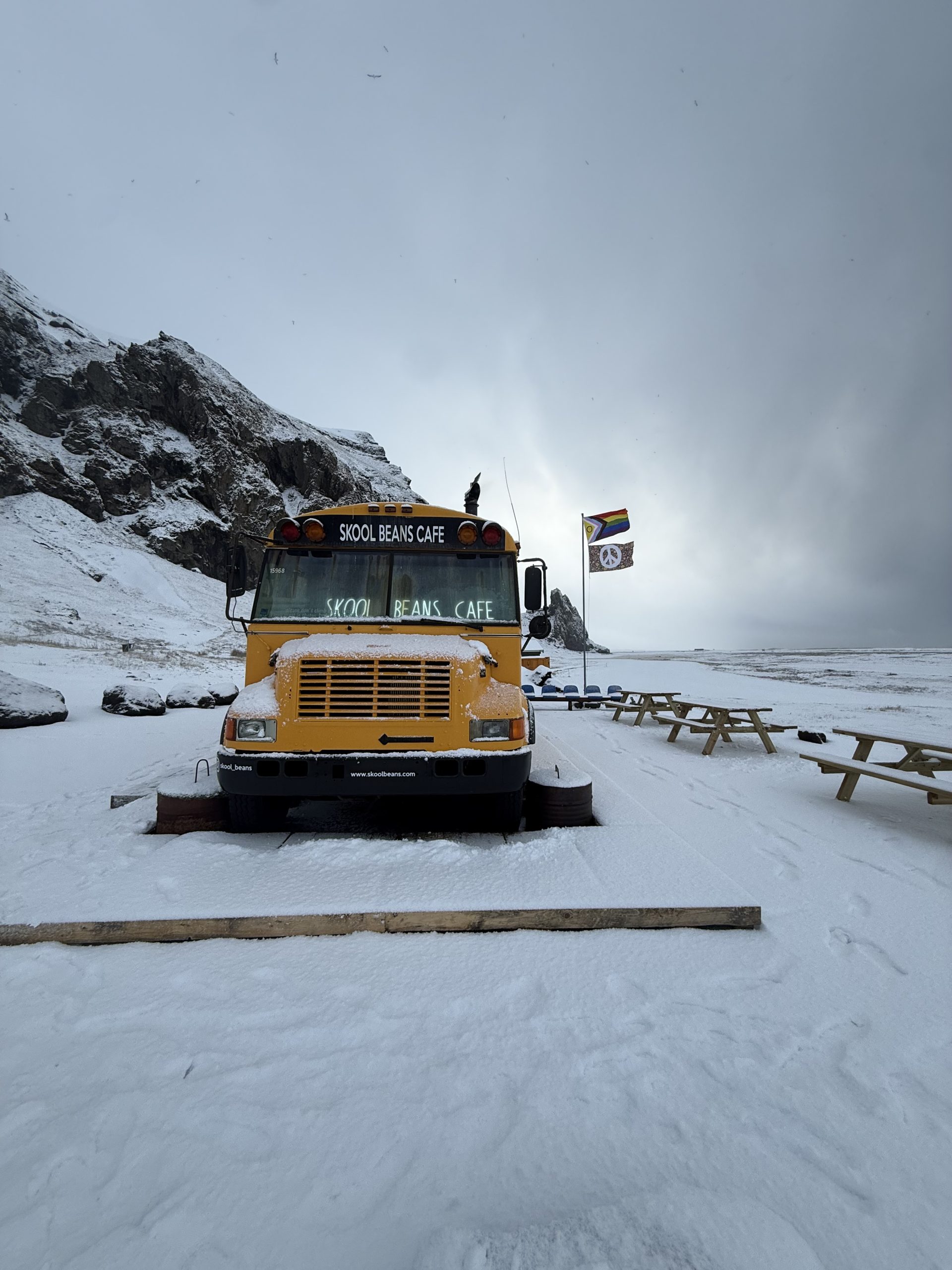
So, what’s a gal to do? I used zillions of screws, gallons of sealant, and paint (I use ship paint with a fine foam roller to paint the bus), and finally, I found the most amazing spray sealant that can be painted over! Maston Spray seal so far has survived a summer. In Iceland, it can get warm enough that the roof metal feels hot.
We have a VERY wet winter. Hurricane-force winds are so strong that the roads are closed, and the blowing sand strips paint off cars. Snow, ice, and a fair amount of bird poop (We are in a bird habitat under a mountain). This spray has been amazing. I used a few more coats than suggested, and it’s fairly messy to work with in a breeze, but since you can paint over it, it doesn’t matter much.
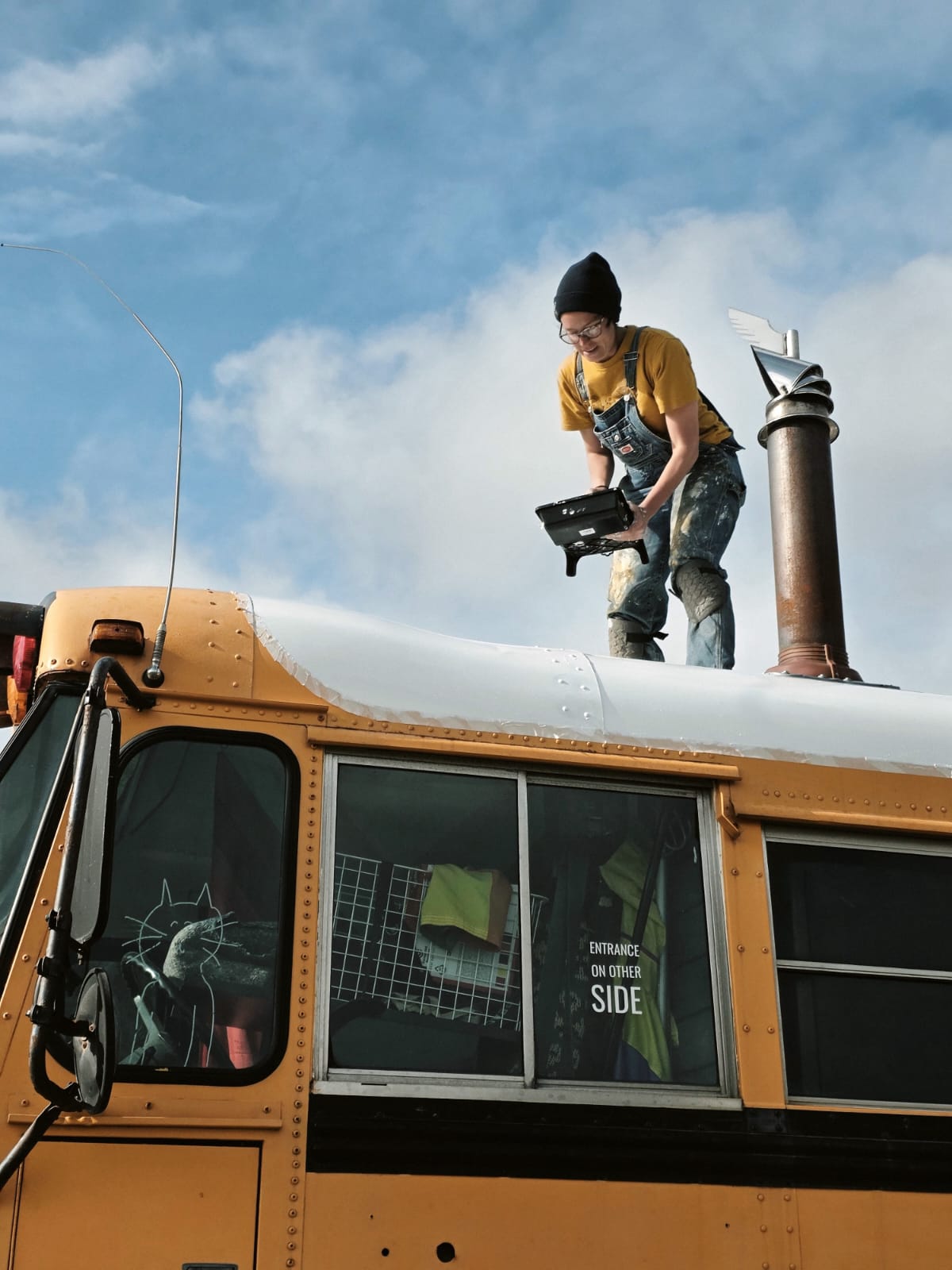
The paint I used over it is solvent / oil-based, and it’s still going strong. So, this solved the leaking roof hatches, which was one issue. The windows… “sigh”. I have nine replacement windows, and the rest are the original. The replacement ones are simple Flexi-glass, a bulletproof plastic material, which I placed on either side of the frame after removing the broken glass. It is 10 mm (3/8”) thick on the exterior side and 7 mm (5/16”) on the interior, and bolted together to sandwich the frame. Sounds excessive, I know, but I need as much protection AND insulation as possible, and so far, it’s worked really well. The window no longer opens, which is a slight problem when the weather is nice. (But that’s rare here!)
I have tried to get complete windows sent to me, but for some reason, they either can't be shipped or the cost is simply too high due to shipping and import fees. As a 9-month seasonal business, cost is always a factor.
I am open from the first of March until the last day in November, which, as a rule of thumb, helps us avoid the snowiest part of the year, when access is impossible. For the remaining windows, I have invested in 3M protective film, which I will install this summer. Much like a screen protector, it is installed on the outside to protect the glass from impact.
The windows do tend to leak, though, and I have yet to find a sealant that will withstand Iceland's tests. I would love advice on this one, folks!
Do I hear a squeak?
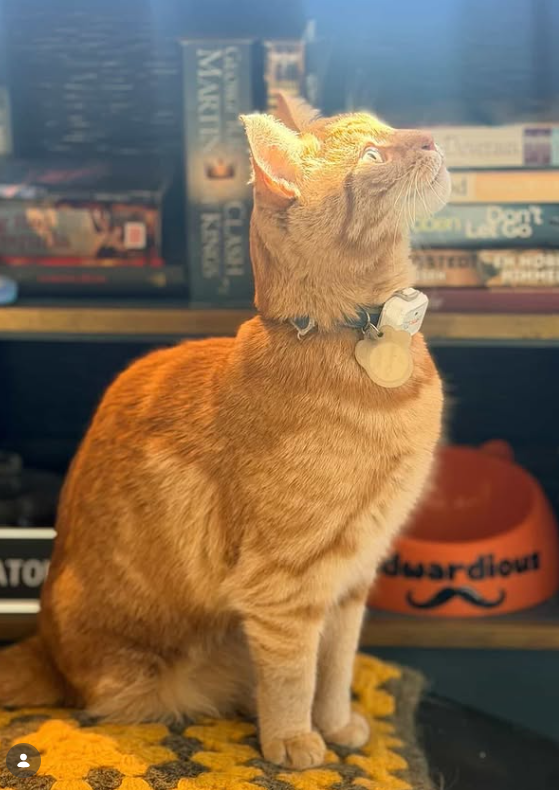
I don’t know if you are aware, but Iceland is home to the cutest mouse. They are super hardy, but if there is a chance to find a warm, cozy cafe to explore and sleep in, then they will. My cat, Jeff, who often wanders himself to the bus for the occasional customer pat and a snooze in the driver's seat, doesn’t even deter them. They come in through the engine compartment if the area isn’t treated.
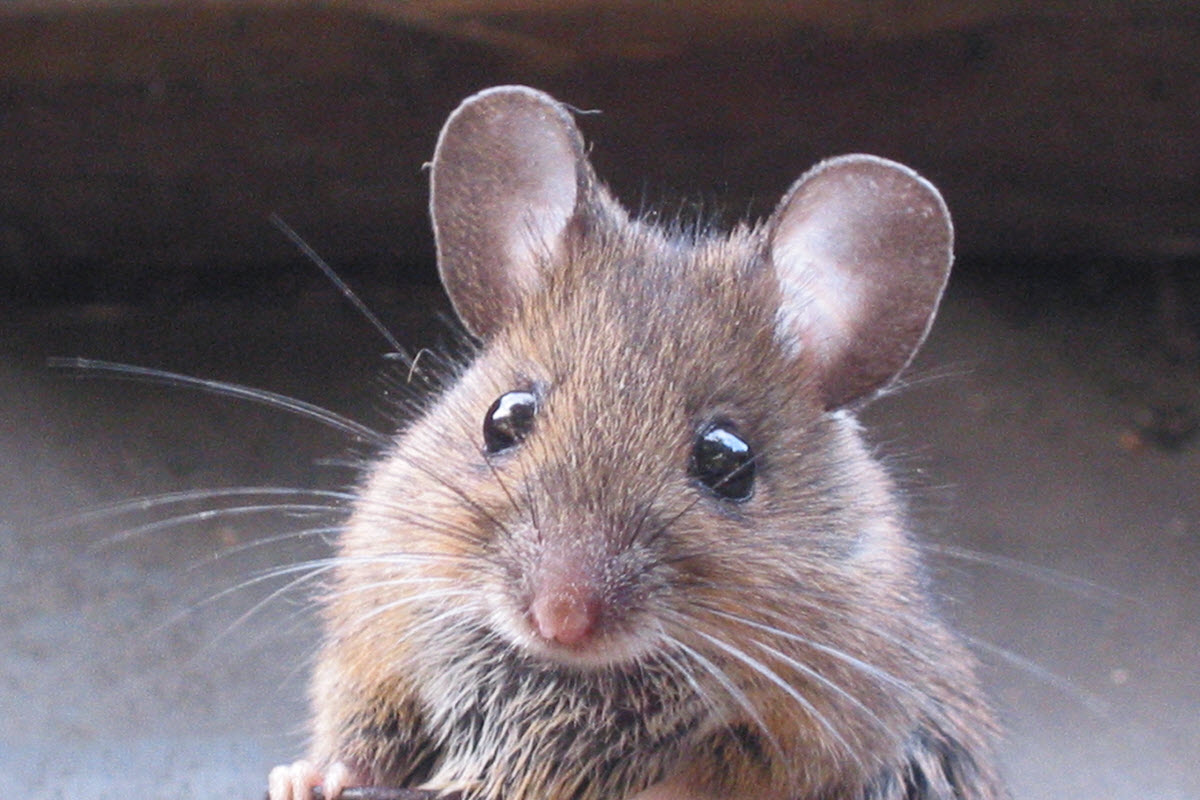
Now, as an avid lover of all things living, I refuse to put kill traps out. So how do I keep them away? I spray a circle around the bus with natural anti-rodent spray. I refresh this after a particularly rainy day and generally add it a few times a year around the bus. Around the door, around the wheels, and in the footwell of the bus where the foot pedals are. If you decide to try this, do a test sample somewhere first, because some leave a very sticky residue that can affect the paint or leave a nasty smell. Citronella works too.
We use the “Mouse Hotel” if we have a persistent one that climbs a ladder, drops into a bin full of snacks and a bowl of water, and then we drive them a short way out of town and release them, fed and watered, onto new adventures. We seem to have won the war over the last few years, and our methods are kind and environmentally friendly.
Time to sparkle and shine!
I opened Skool Beans in 2020. Painted and looking super-duper shiny and lovely! In 2025, it was time to repaint the bus. I think five years of exposure to the Icelandic climate and regular sandstorms, along with ocean spray, is a bloomin' good run! So why change what worked the first time?
With a light sand and a deep clean, I was ready to paint again. I went with the same method. A fine foam roller, oil-based ship paint, and some fine bristle brushes. Wait until the first coat is tacky, then apply the second coat. Be sure to remove any masking tape while it’s still very wet to avoid pulling off the fresh paint, but make sure the paint has dried VERY well before applying masking tape if you are painting a new section a different color. I recommend very low-tack masking, sometimes called painters' tape.
It took me five days to paint the bus by myself outside in Iceland while the business was open! So, if I can do it, you can too! The fear of starting it was far worse than the reality. I remember this with most things in life, and it’s a nice way to shake off the ‘overthinking feeling’.
It’s getting hot in here!








I’m not sure if I mentioned it, but we are located in Iceland! The clue for the climate here is in the name, so ensuring I had adequate heating was very important. I installed a wood-burning stove, which is designed for far bigger spaces. As a cafe, the door is opened and closed all day, often ajar, and the space isn’t zoned, so heat can get trapped, making it important to maintain a constant heat flow. The stove is amazing on so many levels. The heat output, the look, and the cozy atmosphere it provides. That said, it is far, far too big for a tiny house environment. When we are not there, I have a heater that I can leave on to stop the water tanks, coffee machine, and so on from freezing.
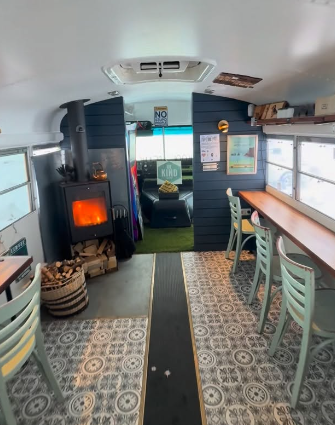
Freestanding oil heaters put out a lot of heat, but it’s not a lasting heat. It’s more of a low-temp ambient heat, and I needed more. I use a freestanding electric heater at night. It puts out a lot of heat, dries the air, and is small enough to tuck away when we turn it off upon arrival at work.
Iceland is a 100% green-energy country due to its geothermal and hydropower resources, so electricity costs are not extreme. Don’t get me wrong. It’s still not cheap, but I understand that an electric heater in some countries might not be a cost-efficient way to maintain a warm temperature in the bus. For Skool Beans, it’s my go-to choice for sure.
Life’s a beach!
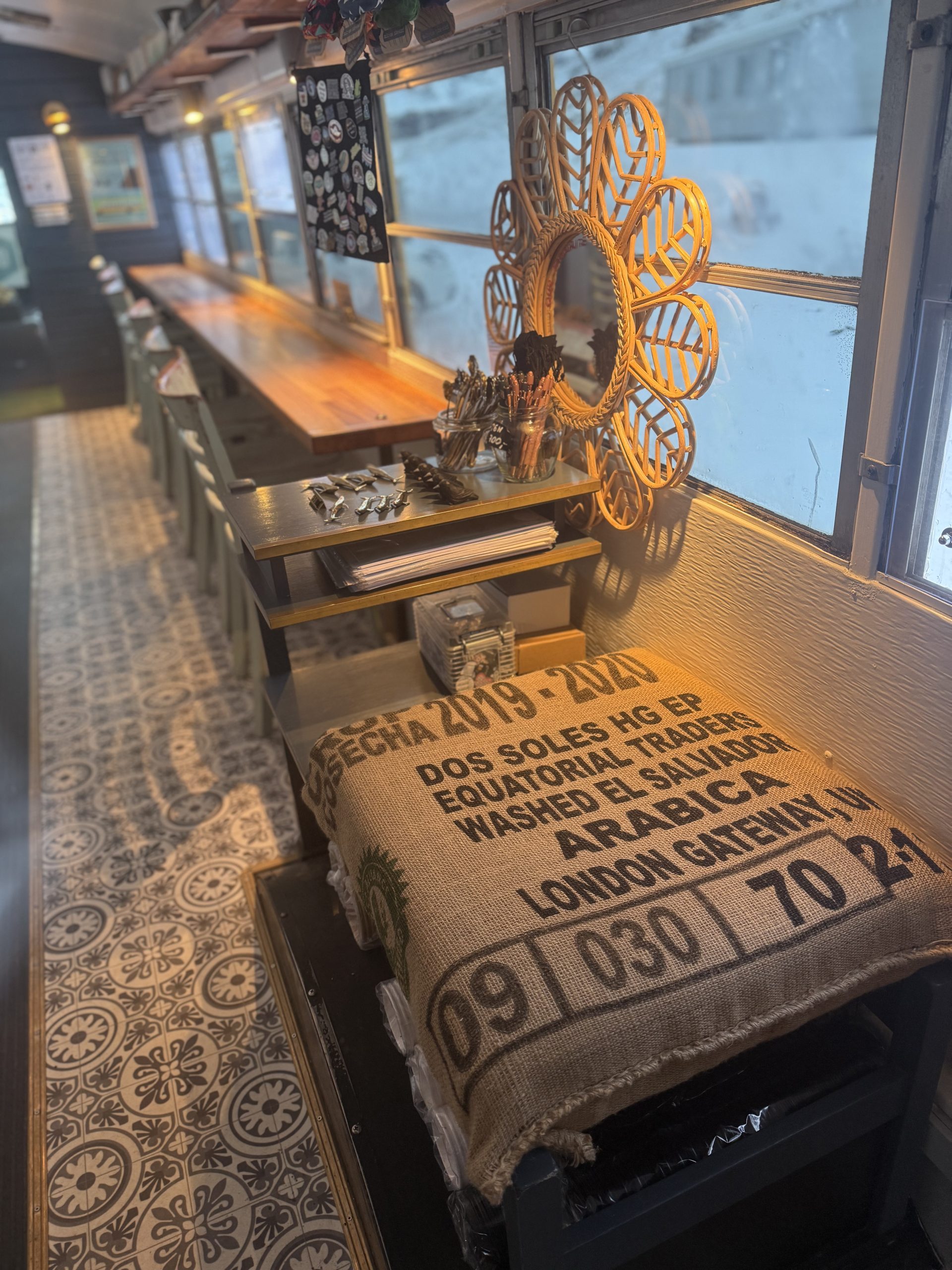
If, by the time you visit Skool Beans, you haven’t been to the famous black sand beaches, simply look at our floor! The village we are in, Vik, is built on new land formed by the giant volcano Vík, beneath which Katla sits, when she erupts. We are basically a massive sandpit.
To help control the amount of sand that comes into the bus, I installed artificial grass up the entrance steps and in the entrance area. This is a really effective way to minimize the sand, but of course, we still get a fair amount to sweep up throughout the day. Even if we were not located in a sandy area, I think this would still be my go-to entrance material. Go for good quality because the cheaper stuff will stretch and wear quickly.
What is it like to run a business from a Skoolie?
Business as (un)usual. I think it depends very much on the business itself, the height, the climate you’re in, but as a whole, it’s really fun. We are busy from open until close, but given the limited seating availability, I never expected to make zillions from it.
People assume we are rolling in it because it’s always busy. But it’s always busy because we can’t fit many people in the bus. Don’t get me wrong, we make it work. I pay my staff well, and I turn a profit, but it’s not always a walk in the park. Perhaps because we have to close for winter, so we are a 9-month business, and we are in a very remote location on the outskirts of the village, but typically people don’t go to a food truck business expecting to spend a large amount of money, regardless of whether you were voted best specialty cafe in Iceland (cough, cough, just wanted to drop that in there!)
I Want to Move It!
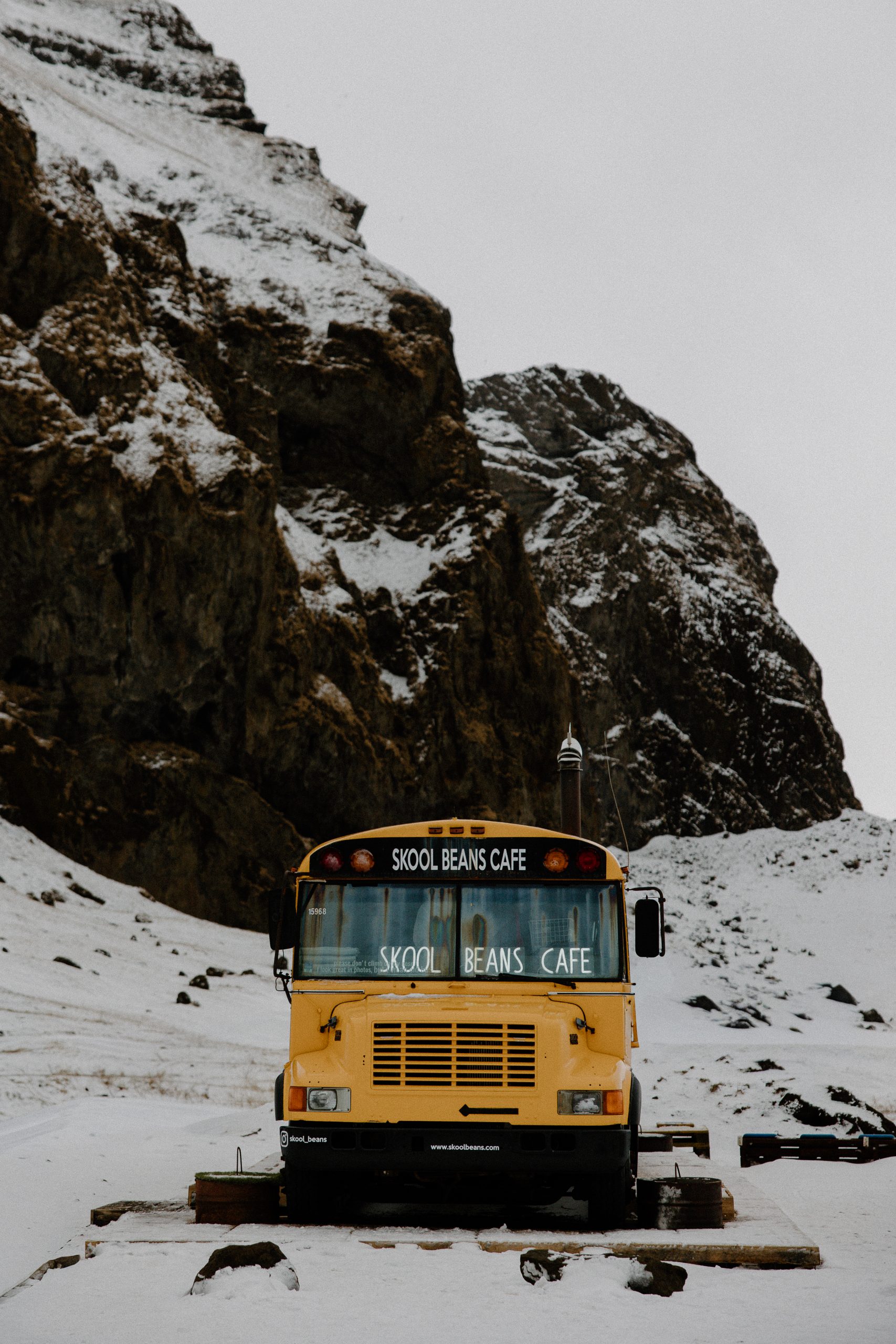
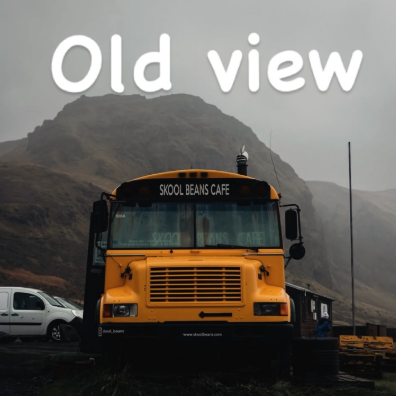
2026 became the year that we decided to relocate. Not because we were no longer welcome, but because the small village of Vík is slowly expanding. Originally, we were situated next to a small campsite on one side and a golf club (a little wooden shed) on the other. Because of the demands, as in so many places around the world, the village made some changes, and the campsite expanded onto our old site.
What was formerly a mountain on one side and open land on the other turned into us going to work, the bus surrounded by campervans, with various items on the laundry line, or hanging from the bus's wing mirror. Now, as much as Evelyn can pull off someone's freshly laundered frilly fancies, the last thing we, and customers, wanted to see was someone emerging from their campervan in their grubby grouts for their morning stretch, fart, and cigarette. The romance between Skool Beans and that location was officially over. The golf club was asked to locate 600 meters up the road, under the old sea cliffs, and within a bird habitat. We jumped at the chance to move with them.
Now, what I thought would be a simple move of disconnecting the power, turning a key, and driving 600 meters, became a 4-day event in storms! Step one was digging the bus out of the ground! The car park had been raised, which meant the bus was essentially buried halfway up the wheels. Coupled with the grass growing and the bus settling over the last 5.5 years. It was a LOT of work.
I called on some amazing friends and with the help of two excavators, two mechanics, a 6’ 8” support Vikings, and the happiest dog on the planet giving us zoomies to take the edge off the stress, we got it moved!!! We used six cans of starter fluid, two new batteries, new diesel fuel in the tank with some fuel treatment to kill any mold, a new oil filter, and after we had cut the fuel cap off (as it had fused shut)!!! Finally, the engine came (semi) alive, and we were able to run it long enough to build up air pressure to release the air brakes.
We knew that each time we touched the brakes, we would have to go through a lengthy process to release them again because the air compressor wasn’t working. The aim of the game was to tow the bus 600 meters along the old road that runs under the mountain, because it avoided the issue of driving on Route 1, the main road that circles Iceland.
As we started towing the bus, the front wheels turned well, but the rear wheels were stuck. This left the most impressive tracks in the car park until the brakes released, and we trundled off along the track. It looked like the Delorian had been in the car park, leaving big, deep tracks before suddenly disappearing! So, only our future! (See what I did there!)
As we were being towed, we realized we were going too fast for the VERY big pothole I knew was coming, but the tractor driver didn’t. I called him and, in a panic, told him he needed to slow down for the big hole. He slammed on the brakes, and we continued to roll towards him. I screamed GO, GO, GO, he sped off, and we all bounced and bumped over the pothole, almost staying in our seats! A few heartbeats skipped, and a sheepish silence of relief, and we arrived.
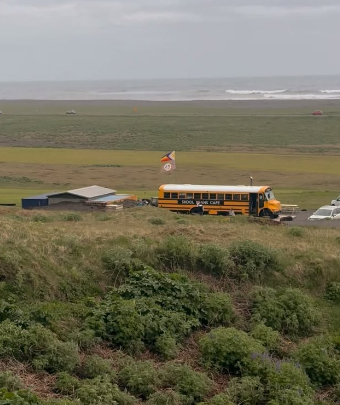
It’s amazing. A towering bird filled mountain on one side. Ocean views on the other, and open lands in between. The drive up to the bus is so dramatic, and each day I go to work, I am blown away by the view. Finally, no more knickers on wing mirrors and farty morning stretches!!!
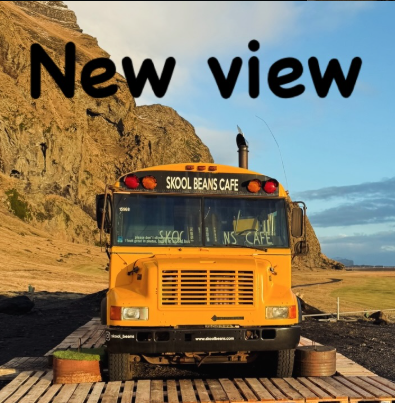
PRO TIP FOR BUSES THAT WILL BE PARKED FOR A WHILE - Start your engine more than once every 5.5 years! AND OPEN THE FUEL CAP NOW AND THEN!!!
Here is a snippet of what life was like during moving days!
Day 1 – The Big Dig!
Day 2 – The Big Dig Continues!
Day 3 – How it all really went down. (Watch till the end for the scenic views)
Folks, I hope this simple guide to my troubleshooting methods helps you in some way. If you have some amazing advice, please get in touch with me at hello@skoolbeans.com and share away! Thank you so much for your time and for supporting this amazing magazine. It’s been an honor sharing my world with you all!
Takk!
Holly
Bus Specifications
| General | |
|---|---|
| Year | 1996 |
| Manufacturer | Thomas Vista |
| Model | 3000 |
| Overall Length | 11 m |
| Overall Width | 220 cm |
| Overall Height | 190 cm inside |
| Raised Roof | None |
| Solar Power | None |
| House Batteries | 2 |
| Electrical System | Connected to shore power, which is 100% green energy via geothermal power. |
| External Equipment | |
| Fresh Water Tank Capacity | 3 × 25-liter tanks |
| Black Water Tank Capacity | No toilet, this is a food truck with access to an outside staff toilet. |
| Grey Water Tank Capacity | 2 × 25-liter tanks |
| Black and Grey Water Combined? | No black water on site |
| Tank Material | Plastic |
| Water Heater Type | Coffee machine and electric taps with built-in heating elements, compact and affordable. |
| Propane | None |
| Internal Equipment | |
| Stove | Dual-burning, low-emission log-burning stove |
| Heat | Electric heater in winter |
| Microwave | None |
| Convection Oven | None |
| Microwave/Convection Combo | None |
| Refrigerator | Two |
| Air Conditioning | In Iceland, definitely not! Ha-ha! |
| Heating | Wood-burning stove |
| Ceiling Fans | None |
| Generator | None |
| TV | None |
| VCR | None |
| DVR | None |
| Internet | Yes |
| Satellite TV | None |
| Beds | Just a very small cat bed |
| Interior | |
| Wall Material | Original walls, painted |
| Ceiling Material | Original, painted |
| Flooring Material | Lino and original aisle |
| Type of Insulation | None |
| Cabinets | None |
| Countertop Material | Solid dark wood |
| Window Coverings | Some are original, and some are flexi-glass, a durable plastic tougher than glass. |
| Lighting Type | LED downlights |
| Miscellaneous | |
| How long have you owned your bus? | 7 years |
| Did you do the conversion yourself? | Yes |
| How long did it take? | 2 years, working full time and building on days off. |
| Cost of Bus and Conversion | 41,000 USD, Iceland is very expensive. |
| Notable Features | 3-legged ginger cat |
| What would you do differently? | Roof hatches. If the bus weren’t in Iceland, they would have been replaced with clear domes. Other small improvements included replacing 4-seater tables with side benches and adding a 20 cm extension behind the counter. |
| How many buses did you look at before buying this one? | This was the one and only bus. It was destined for the scrap heap after sitting in a remote yard for 2 years. A friend fixed it with two new batteries and a new ignition cable. It was purchased for approximately $750 USD. |
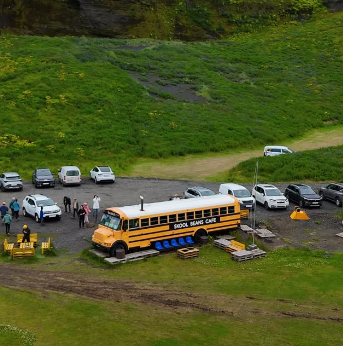
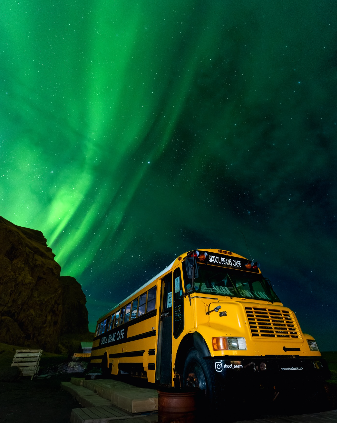
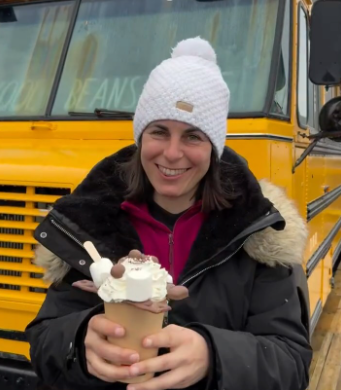
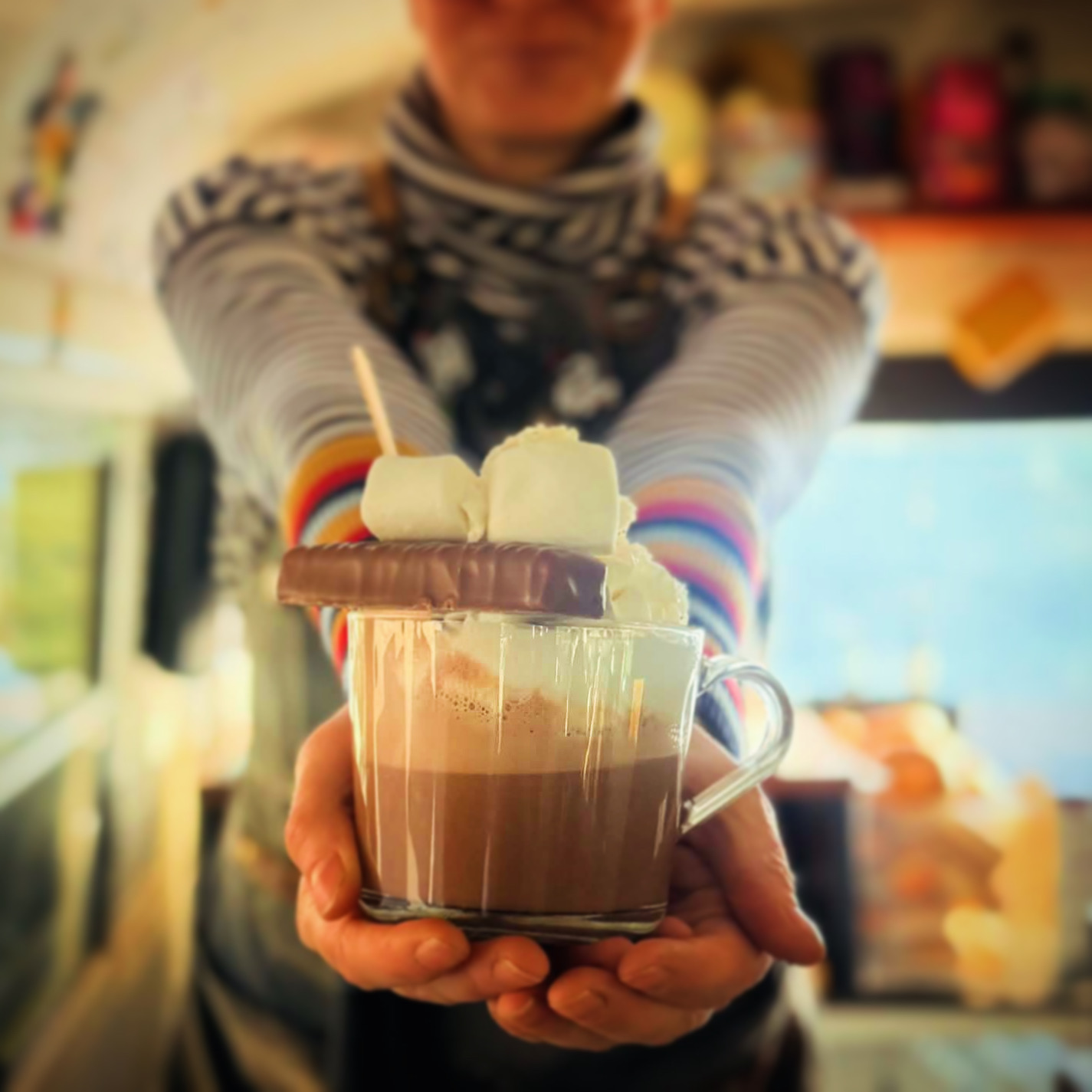
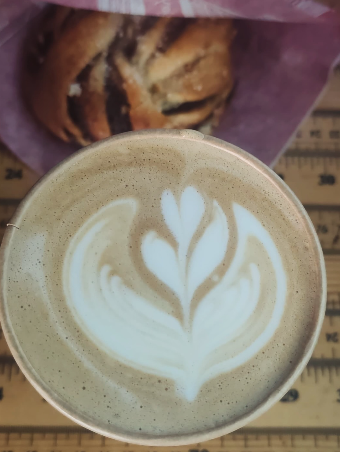
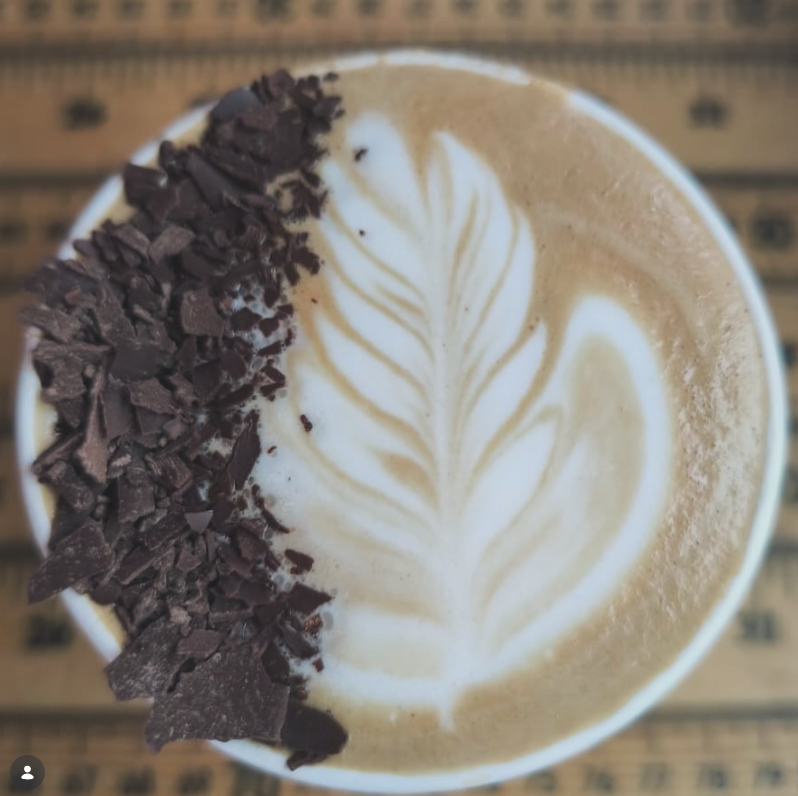
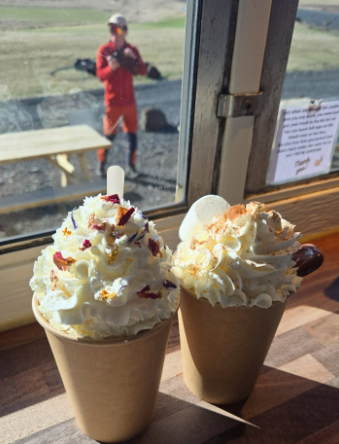
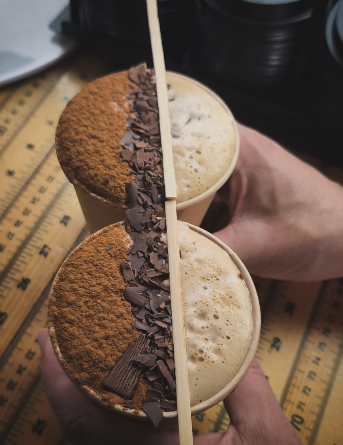

Holly is the eternal optimist. She takes challenges as opportunities and when she moved to Iceland from Australia, she had an itch she had to scratch! Which is exactly how she ended up building Iceland's first micro roaster, tea lab’ and chocolate mixologist converted Skoolie!
She just didn’t plan on the pandemic rules hitting on opening day!!! She believed in her business and stood strong, fueling herself with cheap food and low-cost living to fight to survive financially, never losing hope or optimism.
Four years later, she is now Iceland's best-known cafe and was just awarded ‘Iceland's best specialty cafe’ by the prestigious European Coffee Trip!
“Being part of the Skoolie family was such an unexpected surprise. I’ve felt supported from day one with an endless supply of happy, knowledgeable people, willing to give advice. I’ve made friends around the world through our love of Skoolies and the fun they bring”
to open the company's website.