






No products in the cart.
Phil and Ginni Lyons
December 25, 2025
75 views
Mini split(s) - How many BTUs for a Converted Vehicle?
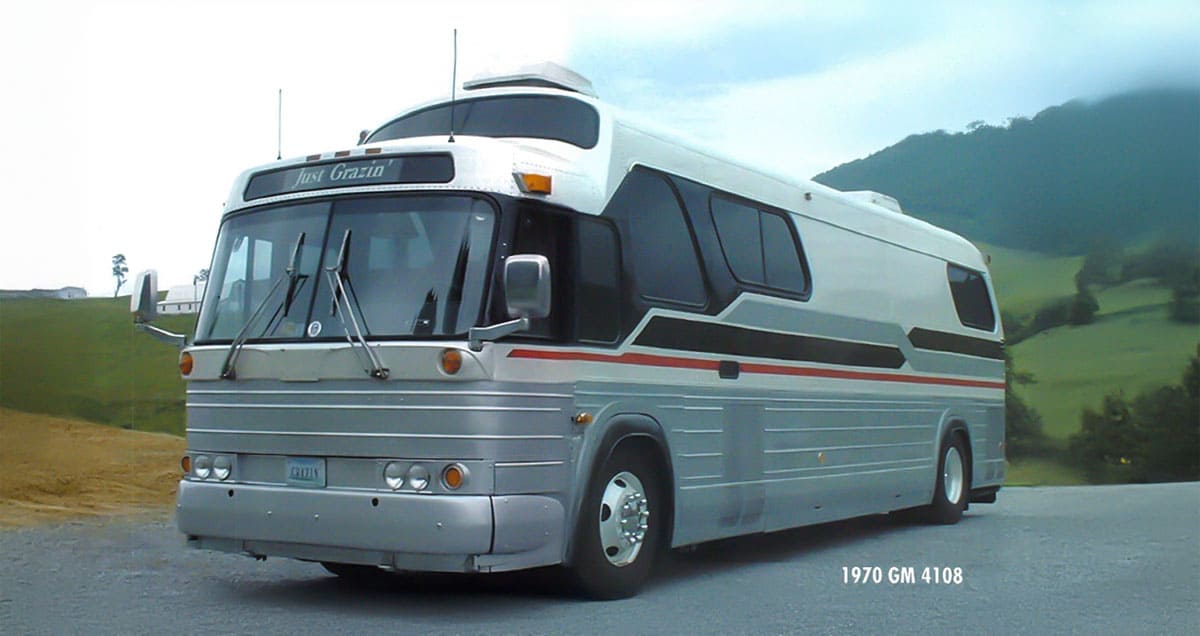
We are often asked the question, What size mini-split do I need to heat/cool my converted rig. The BTUs you need to heat or cool a bus depend on many factors, such as where you plan to travel, how well insulated your rig is, and how many windows you have. Here are tips from those who have installed them. Post by: belfert
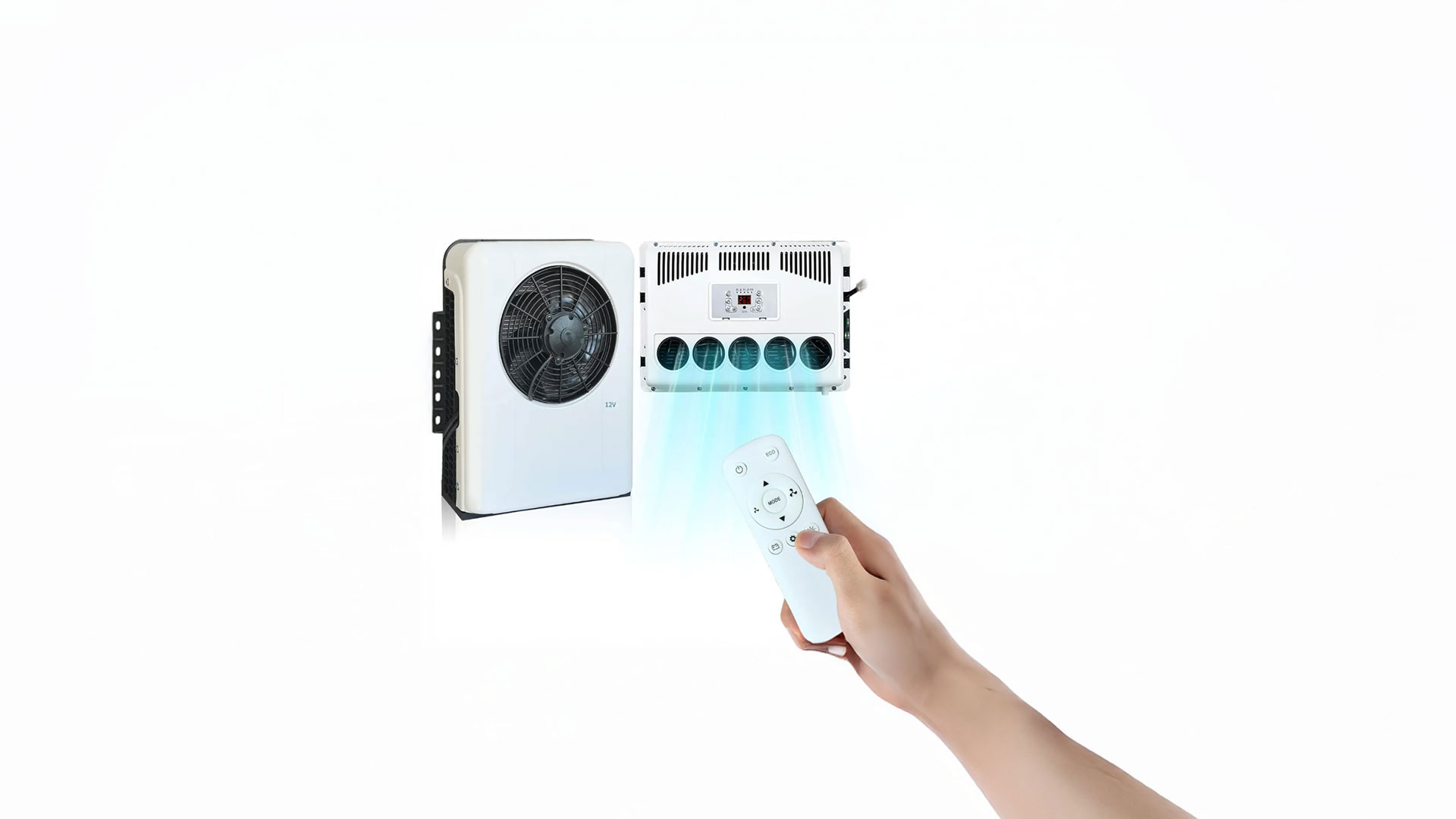
Publisher's Note: The above photo shows a 12V DC 9600 BTU Split unit Air Conditioner sold by EEZ RV Products, which is very popular with DIY converters. Mention BCM for a 5% discount on all EEZ RV Products. Click HERE for their website for mini-splits, solar panels, and lithium batteries.
My 1995 Dina has three 15,000 BTU rooftop air conditioner units. I have one in the rear bunk area, and two in the front living/kitchen area. The two up front can barely keep up on a 90+ degree day. One of the front A/C units appears to have lost its refrigerant. We were struggling to keep the front area at 85 degrees with only one working A/C unit.
For my 1999 coach, I want to use a mini-split air conditioner. How many BTUs would I realistically need to adequately cool it? 36,000 BTU seems like a lot, but it's less than the 45,000 BTU rating of my air conditioning in my 1995 bus. I understand that rooftop A/C units can be very inefficient. Can a more efficient mini-split be smaller? My 1,300-square-foot house only has a 30,000 BTU central A/C system. I recently saw a video tour of a Van Hool double-decker conversion. They said they have an 18,000 BTU mini-split. That seems relatively small to me.
Post by: luvrbus
The air conditioning BTUs you need depend on where you plan to travel in your rig, the number of windows, and the insulation value of your rig. A bus shouldn't be that hard to cool when parked in the shade. Here in Arizona, with summer's high temperatures, mini-splits struggle to keep up.
I know an owner who has three 9,000 BTU mini-splits. He went with 9,000 BTU units because they are 110V. He ended up putting one rooftop back on to speed up cool-downs. Once it cools down, he does okay with two mini-splits running while the bus is parked. However, the A/C units cannot keep up when a bus is moving down the road. Consider this: The dash air on an automobile is around 27,000 BTU with the fan set to high.
My friend Kenny went with three of the new inverter-type (like a mini) 13,500 rooftop units on his Prevost. They do a good job here in AZ. He went that way to get away with losing bay space for the condenser and fan, plus the lines routing for the mini-splits. He loves his new units, and they are quiet, too. He is like me in that he doesn't like the look of the cassette hanging on a wall inside the bus. I don't like those in a house either. My daughter has two in her home. They remind me of a motel room.
Publisher’s Note: For more information on how to keep a bus cooler in the summer, click HERE to read Windows in a Bus Conversion and/or Air Conditioning?
Post by: belfert
I am always in the sun. There is no shade where I go. My 1995 bus only has three roof units for road air. It works okay most of the time. The 1999 has working over-the-road air. The issue is all the space it takes up, plus the ductwork is in the overhead luggage racks. I’ve also read that basement units can cost a ton to maintain correctly.
Post by: Dave5Cs
This summer, we put a Furrion Chill Cube 18,000 BTU air conditioner on the roof in the living room/kitchen area, and with the 13,500 BTU in the bedroom, the bus stays very comfortable, even in the 109-degree temps we experienced this year. I don't care about the looks of the rooftops, and I, too, don't like the ones inside hanging off the wall. The air conditioner units we have are very quiet. About 45 dB to 50 dB at full speed and even quieter at low speed. The Furrion even has a Turbo Cool mode that really cranks it up fast if needed.
Post by: luvrbus
The Furrion Chill Cubes are nice units, but I really want heat pumps. I have an Atwood rooftop unit that makes all kinds of wind noise while driving, whether it is running or not. The debate over mini-splits vs. rooftop units could go on forever. The folks who have mini-splits in their RVs really like them, especially those who boondock frequently, as they draw so little power and can be run on a good solar and lithium battery setup.
Attwood A/C units are just downgraded versions of Dometic A/C units. I had an Attwood that didn't last two years. Your A/C is your choice. No one can make that call for you. If you duct the rooftops, they are very quiet.
I had three Coleman 15,000 BTU units with heat pumps on my Country Coach. You can barely hear them running. What I didn't like was that the heat pumps were useless when it dropped below 30 degrees outside. However, I had floor heat along with the Aqua-Hot, so I seldom used the heat pump. The coldest temperature we experienced was minus 5 degrees, and I used the floor heat when connected to shore power. It never made a sound and kept us very warm. If I buy another RV, it will have floor heat. In our Eagle, we had three Cruisair basement units. They were quiet with variable-speed fans. The only thing I didn't like was the price.
Post by: epretot
I have two 18,000 BTU air conditioners in the bus, one on the back wall and one over the windshield. In direct sunlight, it can get very uncomfortable at times. The windows are the issue.
Also, the air conditioner in the back of the bus is oversized. I probably should have done 24,000 BTU and 12,000 BTU units. It causes the bus's small space to increase in humidity. Three air conditioners would be great, but I didn't have a place for the third one. If I had it to do over, I would double the BTUs.
Post by: luvrbus
That is some good information for Belfert. I have always said that when you see mini-splits offered by the big-boy converters and motorhome manufacturers, somebody has figured it out. That won't happen until the mini-splits are manufactured for RV under mobile use conditions.
I know Taylor tried it on a few of their entertainer buses a few years ago, but running 100,000 miles per year, they didn't hold up. They went back to five roof units on their buses. And where do you get service for mini-splits installed in a bus? No A/C Company will work on a mini-split in a bus. We tried for a friend, calling a dozen places without success.
Post by: Jim Blackwood
I've discovered that I have a very close friend who spent his career in the HVAC industry, often designing custom systems with multiple units. His son also entered the business and remains active. He has volunteered to review my sketches and specs for the system I want to build and then pass them along to his son for evaluation and recommendations. If both of them need more expertise, they know where to find it.
I talked with his son about the system I envision. The key is finding three high-efficiency soft-start compressors with about 18,000 BTU capacity that run on 110V. The next step is designing a suction-side manifold that ensures proper oiling for each compressor and prevents any of the three compressors from starving for oil. Ed is familiar with such manifold designs.
So now I need to sit down and write up the specs as thoroughly as I can, and once I pull this one off, I will have a system that uses all the original OTR parts, with a few more bits for stationary operation. This should end up being an absolute killer system if it all works out as intended, and not terribly expensive to install.
Post by: luvrbus
Air conditioning is all the same. You circulate freon, which absorbs heat inside and dumps it outside. You just have to figure out the most effective way to do it that works for you.
Post by: belfert
My bus has a kind of shelf above the engine in the back. Could I place a mini-split in there and bring in air from the side and exhaust it out the side? Would this work while in motion?
Post by: luvrbus
Are you saying “install the condenser inside the bus and pipe fresh air to it”? They need all the fresh air they can get to prevent high head pressure from building up and shutting them off.
Post by: belfert
| Post by: luvrbus Are you saying “install the condenser inside the bus and pipe fresh air to it”? They need all the fresh air they can get to prevent high head pressure from building up and shutting them off. |
Yes, it’s not really any different from placing it in a luggage bay, as some do. Also, it’s not much different than drawing air through for the generator in a luggage bay. My Dina has limited luggage bay space due to its 43 feet versus 45 feet and its short wheelbase. I would prefer not to take up a luggage bay. I would build a box for it with gasketed doors so I can work on it. The side and back walls of the bus would have large vents for airflow.
I realized the one reason not to do this is how hot it gets back there. I chose not to put my LiPo4 batteries back there due to the heat. I built an insulated wall with a gasketed door to try to keep that heat out of the rest of the coach.
Post by: Jim Blackwood
Systems can be simple or complex. For example, the MCI 102 over-the-road air conditioner has one condenser, one compressor, and four evaporators. It can run any of the three smaller evaporators while powering the main one, or none of them except the main one. Simple solenoid valves control the flow, and the compressor cranks out enough freon for about 13 tons of cooling in total, as I understand it. The use of smaller compressors and valving to direct the freon to the smaller evaporators should allow satisfactory cooling for stationary use. That's my plan anyway, we will see how well I can implement it.
Post by: silversport
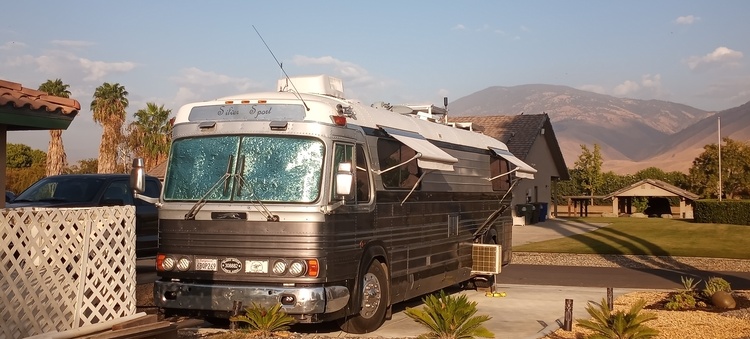
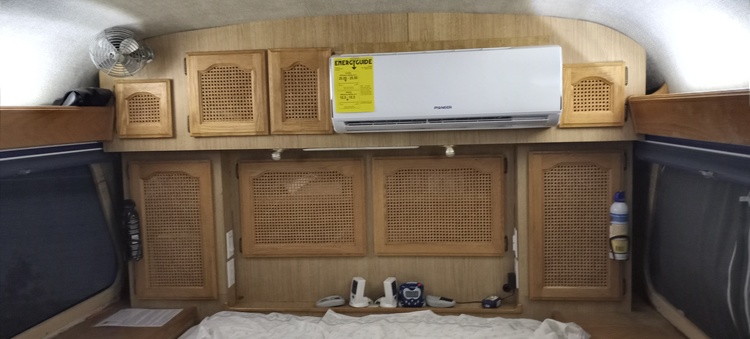
Three and a half years ago, I installed a Pioneer 9,000 BTU 120V in our bedroom. Our GM-4106 is fully sprayed-foamed, with double-bubble wrap inserts for all window covers. Since this is in the bedroom, I knew we wouldn't be running it on the road. I installed the condenser in the bay on a turntable to maximize airflow at triple-digit temperatures. The first surprise was how much we enjoyed the heat pump, which is used more than the A/C. Being so quiet, we can have it on when we sleep. There is no high-amp start-up, and it pulls only 6 to 7 amps while running. Also, we can run it on a 20-amp circuit.
Post by: luvrbus
I looked at a 2026 Prevost yesterday. A friend was transporting the bus from Oregon to Florida. The coach had four roof air units and one basement unit. You couldn't hear the four roof air conditioners running. The basement unit was loud outside. The sticker price was over 3 million dollars for something with laminate-covered cabinets
Post by: peterbylt
We live in Florida. We have both a Pioneer 12,000 BTU mini-split in the front and a Coleman 15,000 BTU rooftop unit in the rear. We love the mini-split. It works fantastically; Very quiet and it sips electricity. We can run it off our solar system for much of the day. It keeps the entire bus cool by using a box fan in the middle of the bus that blows into the back. The problem arises when it gets into the mid-90s. At that temperature, the mini-split can’t keep up.
That’s why we bought the Coleman Mach 15 Rooftop unit. This A/C is powerful. It cools the bus off in just minutes. And it holds its own into the upper 90s and beyond. But there is nothing efficient about this unit. It’s loud and consumes a lot of electricity, so it can never run on the solar system. It requires the generator or shore power.
Between the two solutions, we are very happy. We usually run both to cool the bus, then shut down the Coleman and maintain comfortable temperatures with the mini-split.
These units only keep the bus cool when stationary. Once we are rolling down the interstate, all the cool goes out the window (literally). Not sure why, I know there are plenty of air leaks, or possibly the hot air moving by the bus? I have kept the original over-the-road A/C. It does not currently work; It's on the list of things to fix.
Post by: plyonsMC9
We are trying a mini-split to complement our basement air, with a single roof air for quick cool-downs. The "trying" refers to the mini-split being 24 VDC. It does not require the generator to run, as it draws power directly from our Lion Lithium house batteries. Being a DC mini-split, it doesn't need to run through the inverters, so hopefully it's more efficient. In addition, it is a ducted mini-split, so no cassette is required on the inside wall. The cool air is pumped through in-wall ducting.
We are still experimenting, as there are a few quirks to work out re: load draw. I'll follow up as progress is made.
BUT WAIT... THERE'S MORE!!!
Click on the link below to read additional comments that may have been added after we published this article. There may be many more comments with even more information that may be useful to you and your bus.
Forum content extracted by Phil Lyons, our Chief Forum Moderator. To read the rest of this discussion in the Forum, click this link:
https://www.busconversionmagazine.com/forum/index.php?topic=37552.0
Discussions like this take place on a daily basis in the BCM Online Discussion Forum.
To read them go to:
https://www.busconversionmagazine.com/forum/index.php
Anyone can read the discussion board, but to get the most out of the Forum you need to join by clicking the “register” link above the login box in the upper left section of the Forum page.
Registration is free and once registered you will be able to view all the available discussion boards, view images, lookup and contact other members, reply to other members, share your own experiences for others to learn from, and most importantly, post your own questions.
See you on the Forum!
Article written by Phil and Ginni Lyons
Phil Lyons has been a Bus Nut and moderator of the BCM forum for many years. He and his wife Ginni live in the central highlands of Arizona. Phil’s day job is in IT Security and Ginni is a retired Registered Nurse.
They are the proud parents and grandparents of daughters, granddaughters, and two spoiled dogs.
Phil and Ginni are part of a bluegrass/gospel trio called Copper Mountain String Along, are members of Bethel Baptist Church in Prescott Valley, and volunteer and serve in various capacities in the church and the community.
RVing has been part of their lives for over 35 years, and they both hope to enjoy the bus lifestyle for many more years.
You can contact Phil via email at
Phil@BusConversionMagazine.com
To be the first to read all new articles and to read thousands of articles about conversions back to 1992, become a member of BCM.
Click HERE to become a Member now!Click on any image in this column
to open the company's website.
to open the company's website.
