


No products in the cart.
Jerry Work
November 9, 2025
15 views
How to get by on 30-Amps or Less
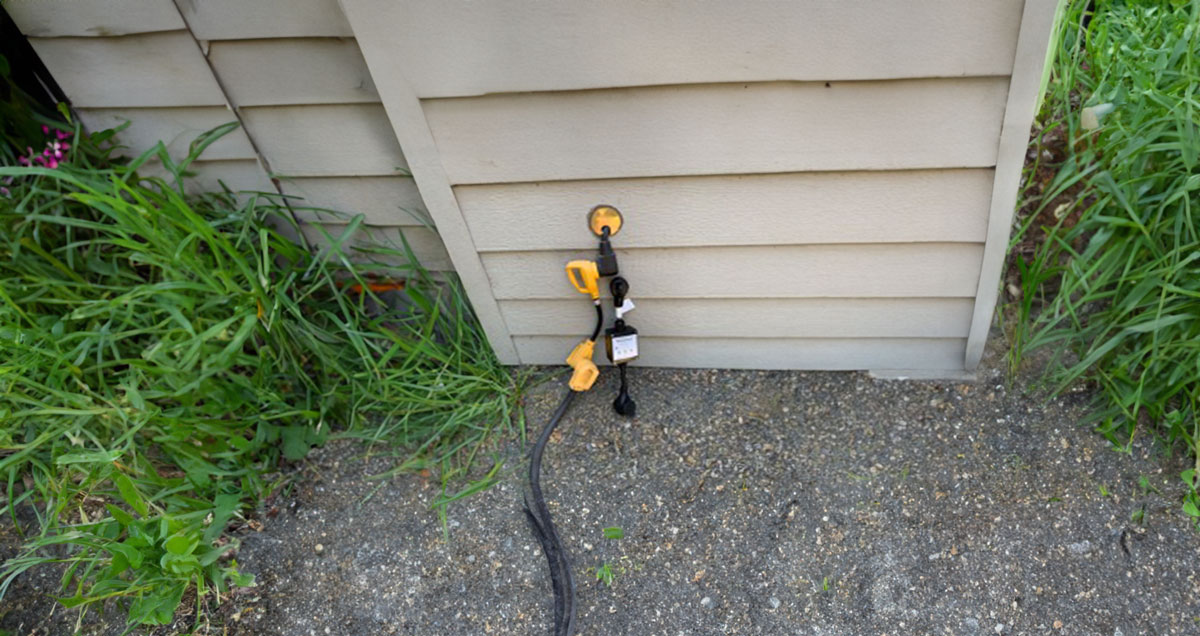
Active Start simply plugs in place of your 30-to-50-amp adapter to provide a soft start for all your induction loads.
Most bus conversions and some truck and van conversions were designed around the electrical system having 100 amps available to run all the 120vac appliances in the RV. Those 100 amps come either from being connected to the typical “50-amp” shore power plug - which is actually two 50-amp services providing a total of 100-amps, or by running a large on-board generator. 100-amps provide plenty of electrical power to start and run roof air conditioners, microwaves, water heaters, residential refrigerators, and just about any other appliance at the same time. So, we seldom even think about the amp draw from our coach when plugged into a “50-amp” shore power receptacle.
If you travel south or north of the border, it is not at all uncommon to be in a campground with minimal power and only 15, 20, or 30-amp receptacles available. The potentially most embarrassing situation is when you are visiting friends, and they offer you the use of a 15-amp plug-in not realizing that your coach is expecting 100-amps to operate normally. Exacerbating these issues is the fact that often the circuit breaker protecting the wire to that plug can be old or weak and not able to hold even the stated amp draw indicated.
If you’re careful and diligent in these situations you can turn off things like your battery chargers, space heaters, air conditioners, and hot water heaters to try to keep from tripping the breaker on the power plug available. In addition, most of us have learned to coach our family members how to use only certain appliances at the same time so as not to trip the circuit breaker. How embarrassing to have to wake up your host in the middle of the night to ask them to reset a breaker!
We all know the struggle it can be to try to run one or more roof air conditioners on limited power. Those roof air conditioners generally consume 10 to 15 amps each when running but several times that when starting up so even with 30 amps available it is hard to consistently run more than one at a time and still have power for other appliances.
In the last few years, vendors have offered soft start products that can be wired into a roof air conditioner to try to limit the start-up amp draw and they seem to work quite well for many. The issue is that you must install them on each roof air conditioner separately and that can get expensive quickly. I am also not a fan of asking customers to make changes to 120vac appliance wiring. Some will know how to do that correctly and safely, but many will not.
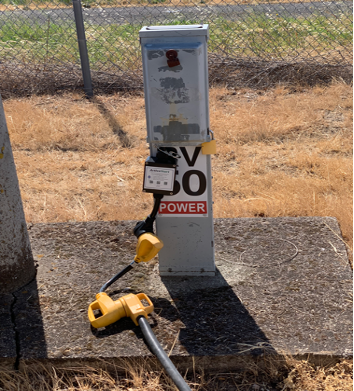
A relatively new product called, “Active Start” from Active-Controlsllc.com, offers a partial solution to many of the issues surrounding running your coach on less than 100 amps of electrical power. The owner/inventor has been in the electric controls business for most of his professional career. He says he applied that knowledge to building a plug-in unit that sits between whatever power outlet you have available and the shore power cord running into your coach. No wiring is required, just plug and play.
This unit provides soft start capability to ALL your induction loads (i.e.: electric motors, magnetic appliances like induction cooktops, and some microwaves) including all your roof air conditioners and your residential refrigerator. Just plug it in and allyour induction loads throughout the coach are provided with soft start functionality.
Active Start won’t change the running amps of any appliance, only the starting amps. The amp ramp-up only affects the induction loads and not the resistive loads (i.e.: heaters, lights, non-motorized appliances, TVs, etc.) so nothing else in your coach is affected when the soft start circuitry is activated.
It is far more than just a capacitor. When the device senses an amperage spike it ramps-up the amperage slowly to dampen the big amperage spike so you will be less likely to trip a breaker. That means you can most likely start and run two roof air conditioners on a 30-amp breaker. Also, you can start and run one roof air conditioner on a 15 or 20-amp breaker and still have power left for a few small amp draw appliances to run at the same time.
It also means you may be able to start and run a roof air conditioner on a small portable generator, like the 2000 to 3000-watt units popular with van conversions. This was actually the design target for the Active Start unit and their website shows several examples of different size roof air conditioners starting and running on these small generators.
A major benefit from my point of view is the impact it has on day in/day out living in your coach when plugged into less than “50 amp” shore power plugs. You still have to be careful not to overload the breaker on the outlet you are plugged into by running too many appliances at once, but the device will reduce by up to half the start-up current spike from 120vac electric motors driving air conditioning compressors, air compressors, 120vac water pumps, residential refrigerators, some induction cooktops, and some microwave ovens.
On the “inverter” microwave units it is not uncommon to see 17 or more amps on start-up but only 10 to 12-amps while running. That means you will be less likely to trip a breaker when these devices first startup if you are using the Active Start unit.
This high amp draw on startup inverter microwave behavior really tripped me up one time when working on the electrical system of one of my restored GMC motorhomes. I had what I thought was a large enough inverter, but every time the microwave started up the inverter shut down. I finally tested the microwave by plugging it into an extension cord. Sure enough, the start-up amps were more than the inverter could handle while the running amp load was just fine. Nowhere in the specs for that microwave was that surge in amps at start-up referenced.
Another benefit is that by limiting the start-up amperage spike, electric motors will generally run cooler and last much longer when soft-started thereby saving you money in the long run on your coach appliances. Technically, when the motor is first started, it is in what is called locked rotor mode (not turning). It takes a strong magnetic field to get the rotor to start turning and that is what causes the high amp inrush of current.
That high amp inrush causes heat buildup in the windings of the motor. If the motor is under load when trying to start (i.e.: head pressure on the A/C compressor), then an even higher magnetic field will be required to get it to start so more amps and more heat result in shorter motor life. Soft start reduces the inrush of current and causes the magnetic field to build up more slowly so fewer amps and less heat result in longer motor life. In the same way, it will also significantly increase the life of a residential refrigerator or chest freezer.
The Active Start also provides up to 2100 Joules of surge protection to limit the damage that can be caused if your shore power is subject to electrical surges. On first plugging it in between your coach shore power cord and the shore power receptacle, the Active Start will warn you about improper wiring in the shore power receptacle. It also monitors the incoming voltage and will shut down if the shore power receptacle voltage goes above or below safe levels.
If you already use a shore power plug monitor or plug-in protection device, you can plug Active Start in-line with those other devices to get even more protection from power anomalies as well as a soft start for all your electric motors and other induction loads.
The unit has Bluetooth connectivity built-in, so the company also makes available for free, a very nice phone app for both iPhone and Android phones. It has a modern-looking interface that clearly shows real-time the status of the unit along with the volts, amps, watts, and frequency of the power currently passing into your coach. It also gives you the ability to reset back to zero, information about total usage since the last reset, and how many times the unit detected amperage spikes it dampened to a soft start mode.
The unit I tested was the 30-amp version of Active Start because I wanted to focus on how to help you deal with situations where you have less than 100 amps available. They also have recently released two “50 amp” versions, one which plugs into a standard “50 amp” shore power plug to give you soft-start capability and surge protection for all 100 amps of incoming power and the other a wire-in unit if you want to install it permanently in your coach.
I have been impressed by how very useful the 30-amp unit is in all those cases where you have less than 100 amps of electric power available. We frequently park our Prevost where the only outlet available is a 30-amp plug which is limited by the breaker to a 20-amp load, so we don’t inadvertently draw too much power.
The Active Start is ideal for this situation since it will limit any initial start-up load if we need to leave the residential refrigerator running for a few days or if we need to run one air conditioner while loading the coach for our next adventure. We are careful to turn off both battery chargers and both water heaters before plugging in and so far, have not tripped that 20-amp breaker which would be a major inconvenience.
We also used the Active Start with great success while attending an FMCA Area rally where the only power available was 30 amps from the fairgrounds where the event was held. We happened to be on a designated power pole while others had 30 amps from temporary power lines stretched out around the parking areas. Those are situations notorious for tripping breakers during summer rallies as everyone on a string tries to start and run their air conditioners.
You can never tell when voltage will sag or the amperage draw will spike on those temporary power runs as the air conditioners, air compressors, residential refrigerators, and other induction draw appliances go on and off on RVs that are plugged into the same string that you are.
Active Start is a great way to modernize the incoming power for your bus or van conversion and comes highly recommended. From their website at the time, I wrote this article (spring, 2023) the prices were $465 for the 30 amp ‘plug and play’ unit with surge protection, $750 for the 50-amp version with surge protection, and $750 for the 50-amp unit without surge protection. The devices are also sold on Amazon.com.
Though more expensive than some of the stand-alone, one-roof A/C soft start units (typically $200 to $350), Active Start appears to be a bargain when you consider that it provides a soft start for all your inductive loads in the coach, requires no wiring, adds surge protection and correct wiring checks, cuts off if pole voltage goes too high or too low, has a great phone app, and is a simple ‘plug-and-play’ unit.
One thing I did not expect was how much quieter my roof air conditioners are when starting up while the coach is plugged into the Active Start unit. They don’t shake like they do when the Active Start is not in the system and that is a welcome benefit, especially for my wife!
Article written by Jerry Work
Jerry Work spent his professional career in technology management, first as the founder and CEO of two moderate-sized computer software companies and then as the Associate Laboratory Director for the Pacific Northwest National Laboratory (PNNL), one of the DOE multi-program laboratories. At PNNL, in addition to overall Laboratory management, he oversaw the laboratory’s work in the energy, transportation, medical and information technologies.
After retirement, he and his wife Sharon purchased a Beaver Patriot motorhome and began a cold turkey four years of full-timing which they enjoyed greatly. They then purchased a 1907 former Masonic Temple in rural Southern Oregon, restored the building and remodeled it into his studio and gallery on the first floor and living quarters on the second floor. There he designs and handcrafts fine furniture. He is well known for his many articles and tutorials about how to get the most from Festool and other-high end woodworking products.
They purchased the first of what became two fully restored GMC motorhomes, those iconic and swoopy front-wheel drive units from the 1970’s. They found the second of their two GMC’s in an air-conditioned building in Naples, FL, with just 11,000 miles on the clock following a ground-up restoration in 1984. Both of those motorhomes found their way from Mexico to Alaska and from the West to the East coast. He wrote extensively about his experiences with GMC’s and gave many a presentation at GMC club events over the years.
A few years ago they decided to go back out on the road again for longer periods of time than they could support in the GMC motorhomes so purchased a low mileage 1997 40 foot Country Coach Prevost bus conversion which is now home for more than six months out of the year. Visitors always welcome no matter where in their travels is their motto.
You can reach Jerry Work by email at:
GLwork@mac.com
To be the first to read all new articles and to read thousands of articles about conversions back to 1992, become a member of BCM.
Click HERE to become a Member now!Click on any image in this column
to open the company's website.
to open the company's website.