








No products in the cart.
Gary Hatt
September 19, 2025
45 views
Fire and Heat Protection in my Eagle Engine Compartment
In my previous article, "Keeping the Bus Bedroom Cool—Using EHP Rollboard Insulation," you read that using EHP (Engine Heat Protection) insulation prevented engine heat from entering my bedroom, thereby extending the life of my Sleep Number air mattress bed. The heat from the engine was breaking down the glue in the air mattress, so I had to have three or four air mattresses replaced before I solved the heat problem using EHP insulation.
Also, as you read in the article Buses Really Burn, engine fires are quite common. Therefore, precautions should be taken to prevent you from losing your entire investment because of this.
Over the three years since I installed the insulation, I have worked in my engine compartment several times for repairs and regular maintenance, and we are now showing some signs of wear. The insulation was glued with high-temperature glue and stapled to the plywood with short staples, but it was starting to wear out from my repeated rubbing against it.
I had a fire in the engine compartment last year in Colorado when my engine sprang a coolant leak, and when the coolant came into contact with the turbo, it ignited. I was able to put the fire out with a fire extinguisher, but it reminded me again why I like to put EHP Rollboard insulation in my engine compartment.
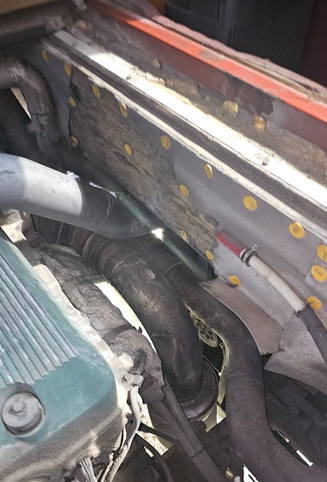
This is what I started with in my engine compartment.
The plywood sides over the turbo and exhaust pipe would get very hot, radiating through the plywood into my bedroom and heating up my mattress, especially on that side of the bed. The heat caused the glue in the air mattress to separate creating a leak.
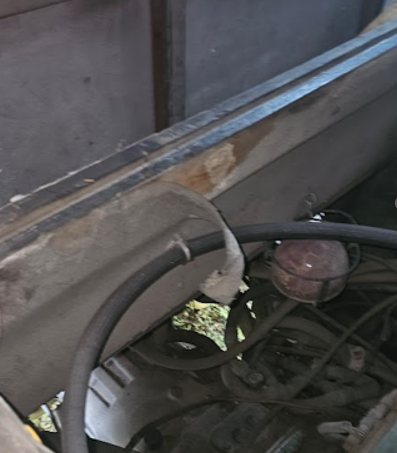
Opposite the exhaust pipe and manifold, it is not as concerning.
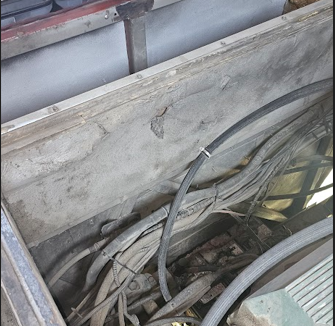
The rear of the engine compartment, with the old Rollboard insulation.
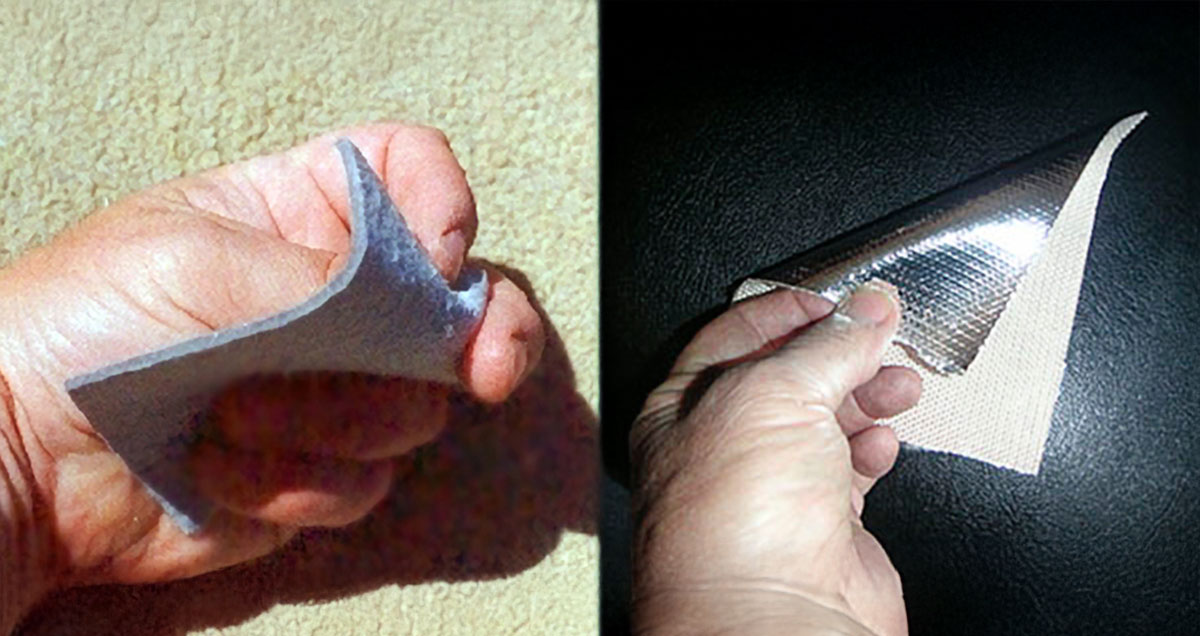
I called Penn Lenson to order some Rollboard material, and that is when Penn told me about a Foil-Covered Cloth he has on his website, http://www.engineheatprotection.com, that I can use to cover the Rollboard insulation to protect it from general wear and tear. I immediately ordered a sufficient quantity to cover the sections of Rollboard that were wearing off.
When it arrived, I rolled out the Rollboard on a table, marked it, and cut it to size, using cardboard to prevent cutting into the table I carry to potluck dinners and use as a workbench when working on my bus. I cleaned the plywood mounting surface in the engine compartment and used high-temperature glue and staples to secure it.
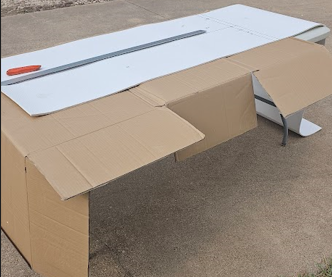
Cutting the Rollboard insulation to fit my engine compartment.
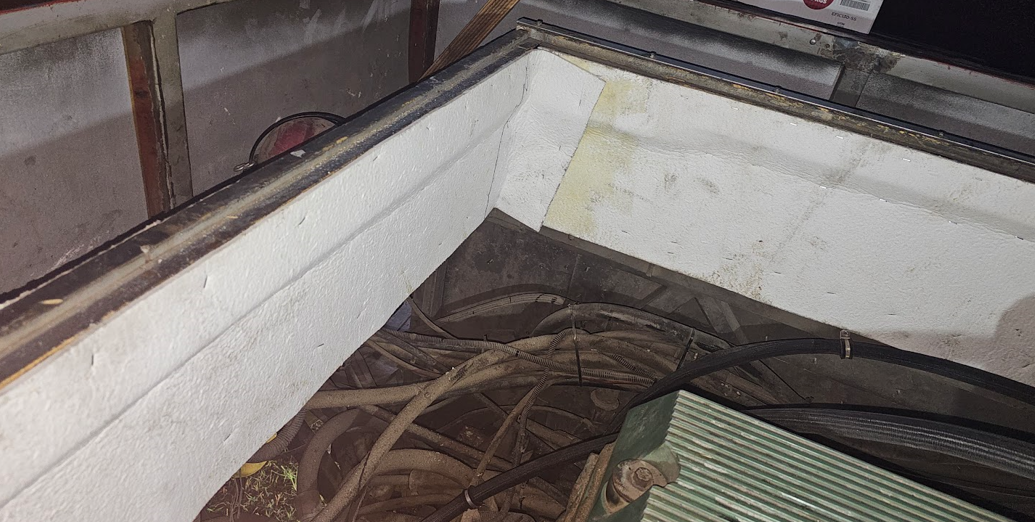
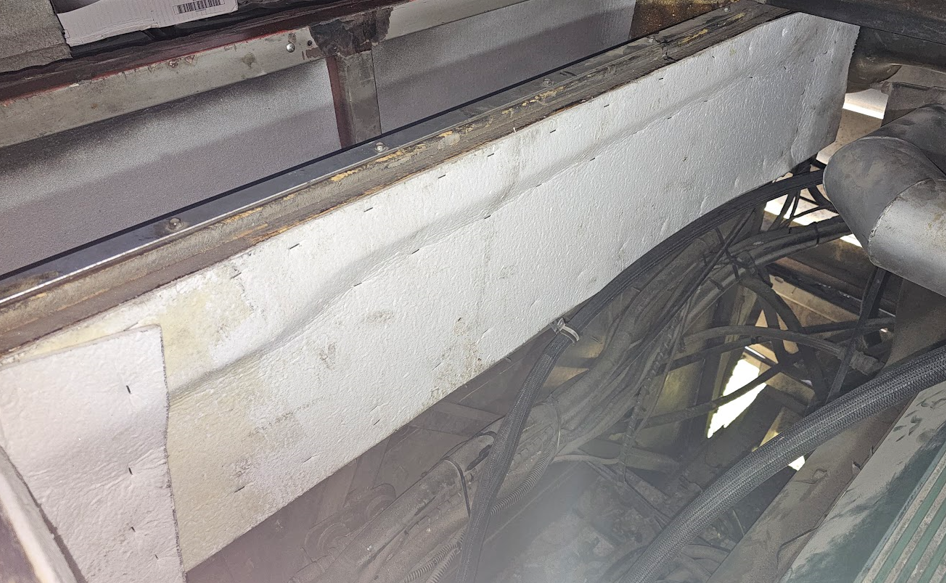
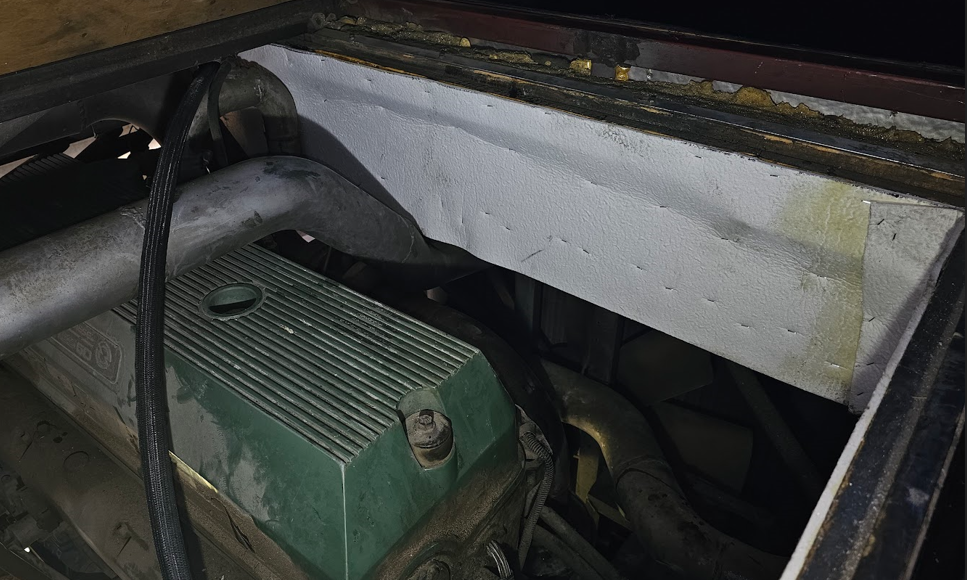
Installing the Rollboard insulation on all three sides of my engine compartment.
The Wet Blanket on the exhaust manifold was in good shape, so I left it as it was.
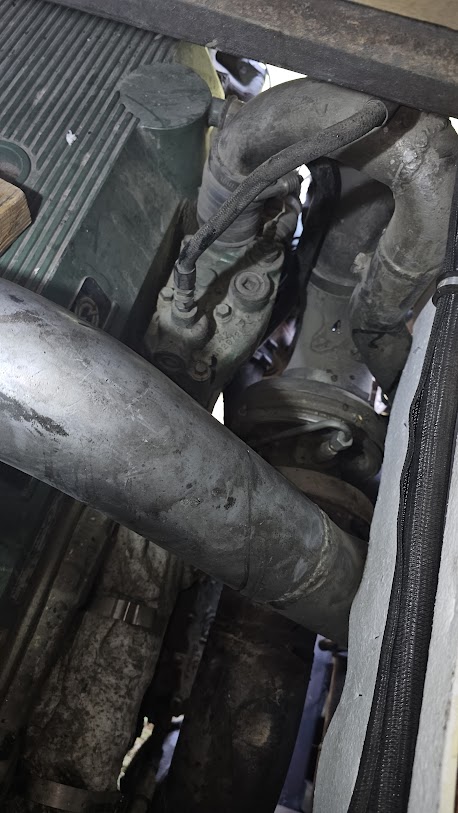
Wet Blanket on the Exhaust Manifold on the left in this photo.
The Wet Blanket, wrapped around the exhaust manifold, was a bit dirty after scraping and wire brushing the residue of the old Rollboard and glue off the plywood sides of my engine compartment.
While working in my engine compartment, I also decided to replace the EHP Wet Blanket insulation wrapped around the turbo and exhaust pipe.
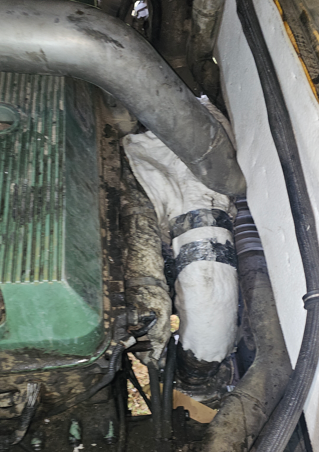
Wet Blanket wrapped over the turbo and exhaust pipe to deflect the heat down.
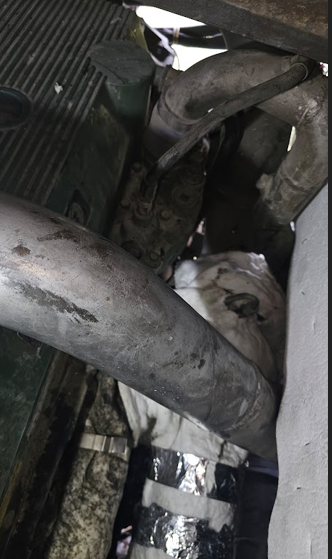
The turbo is wrapped 3/4 around. I left the bottom open to access the turbo if necessary.
I then opened the box of Foil-Covered Cloth, laid it on the table, and cut it to size with scissors to fit each of the three sides of my engine compartment. It was a simple process to lay the foil over the Rollboard insulation and staple it into the plywood.
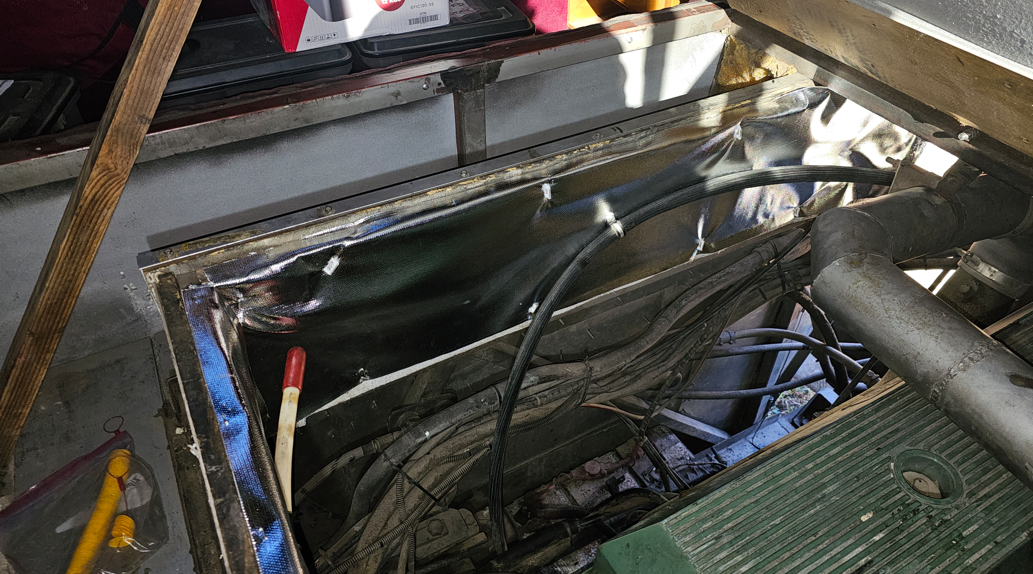
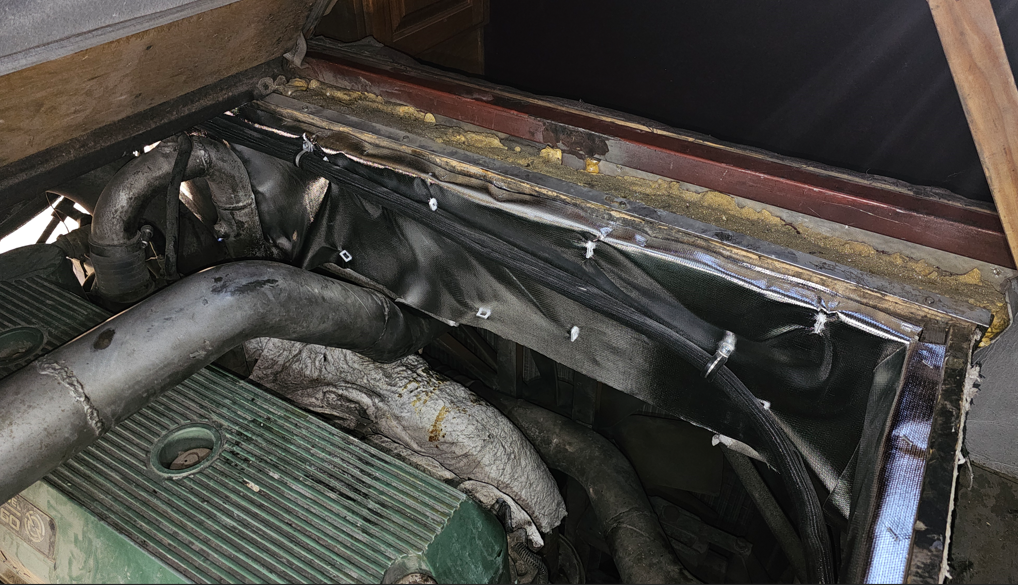
The foil-covered cloth was stapled onto the sides of the engine compartment.
I installed the new rollboard insulation, wet blanket, and foil-covered cloth. It made quite a difference, as my bed was almost too hot to sleep in after traveling all day, driving from Texas to New Hampshire in September. However, after installing the Rollboard, Wet Blanket, and Foil-Covered Cloth, the bed was not hot at the end of the day, and I could sleep on it easily.
The Foil-Covered Cloth should protect the Rollboard insulation for years as I crawl in and out of my engine compartment, dragging cords and air hoses in and out while performing maintenance and repairs, including work on batteries and other components. Thankfully, I always carry a crawl suit with me, so if I do have to work on my bus, I can slip into the crawl suit with long sleeves and keep my good clothes clean.
I highly recommend these products for anyone with a rear-engine bus to keep their bedroom cooler after a long drive. For anyone with a front-engine bus, covering the inside of the dog house with these products will not only keep the heat out of the cab area but also reduce the noise level while driving your bus.
To see a video about this product, watch the video below.
Article written by Gary Hatt
Since July 2012, Gary Hatt has been the Publisher of BCM. Gary does most of his own work on his bus with the help of mechanic friends. He has owned tents, truck campers, travel trailers, and stick-n-staple motor-homes until he bought his first bus in 1997 which was a 1972 MCI MC-7 Combo. When he had a chance to buy a 1983 MCI MC-9 Log Cabin bus with larger windows he jumped at the chance. On Thanksgiving of 2014, Gary bought a 1967 Model 08 Eagle and lived in it full time for ten years. Gary now has an H3-45 VIP Vantare Prevost conversion and lives and travels in it full time.
You may reach Gary Hatt at
Gary@BusConversionMagazine.com
To be the first to read all new articles and to read thousands of articles about conversions back to 1992, become a member of BCM.
Click HERE to become a Member now!Click on any image in this column
to open the company's website.
to open the company's website.
